
"Everything we have in a bag!"
Hans Rotenberry's songs for the Shazam in the '90s and '00s plugged in to eternal currents

The time that I’ve recently spent with Mod Lange has sent me down roads and alleys toward like-spirited bands that I’ve dug in the past. In the aughts, I was a big fan of Jordan Oakes’s Yellow Pills compilations and the bands and artists he introduced me to. In retrospect, the 1990’s and ‘00s were sun-filled, hard-charging indie pop decades for me, so many songs from that era—the Cowsills’ “Is It Any Wonder,” Devin Hill’s “Stars,” Three Hour Tour’s “Love Sick Trip,” Wondermints’ “Carnival Of Souls,” Matthew Sweet’s “Smog Moon,” the Posies’ “Dream All Day,” Teenage Fanclub’s “What You Do To Me,” Velvet Crush’s “Hold Me Up,” Material Issue’s “Goin’ Through Your Purse,” Jason Faulkner’s “I Live,” the Apples in Stereo’s “I Can’t Believe,” Redd Kross’ “Visionary,” Owsley’s “Down,” Sloan’s “False Alarm,” the Flashing Lights’ “Half the Time,” to name just a handful—soundtracking those post-Grunge years with infectious hooks, ringing guitars, and buoyant, or melancholy, melodies.
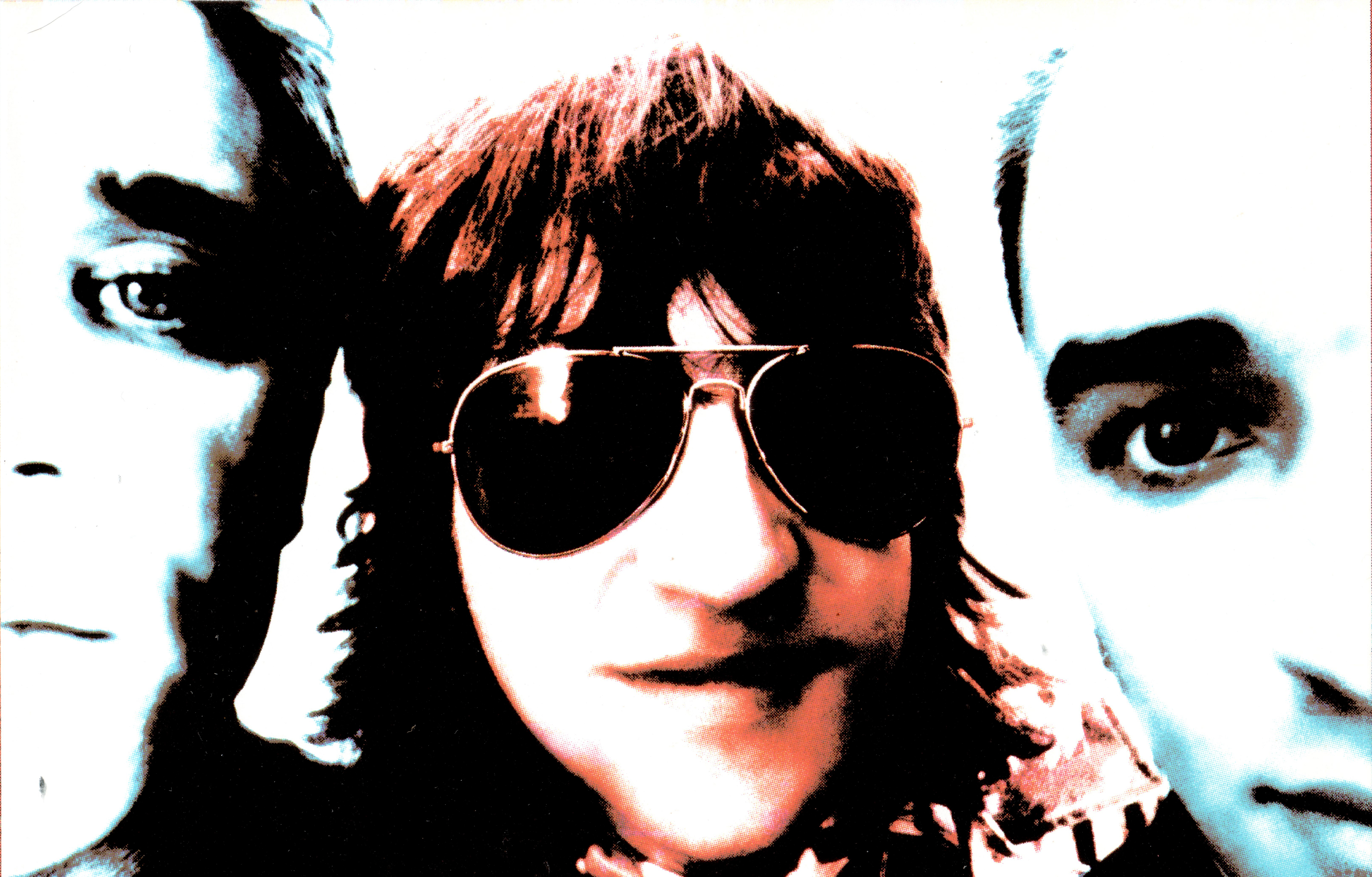
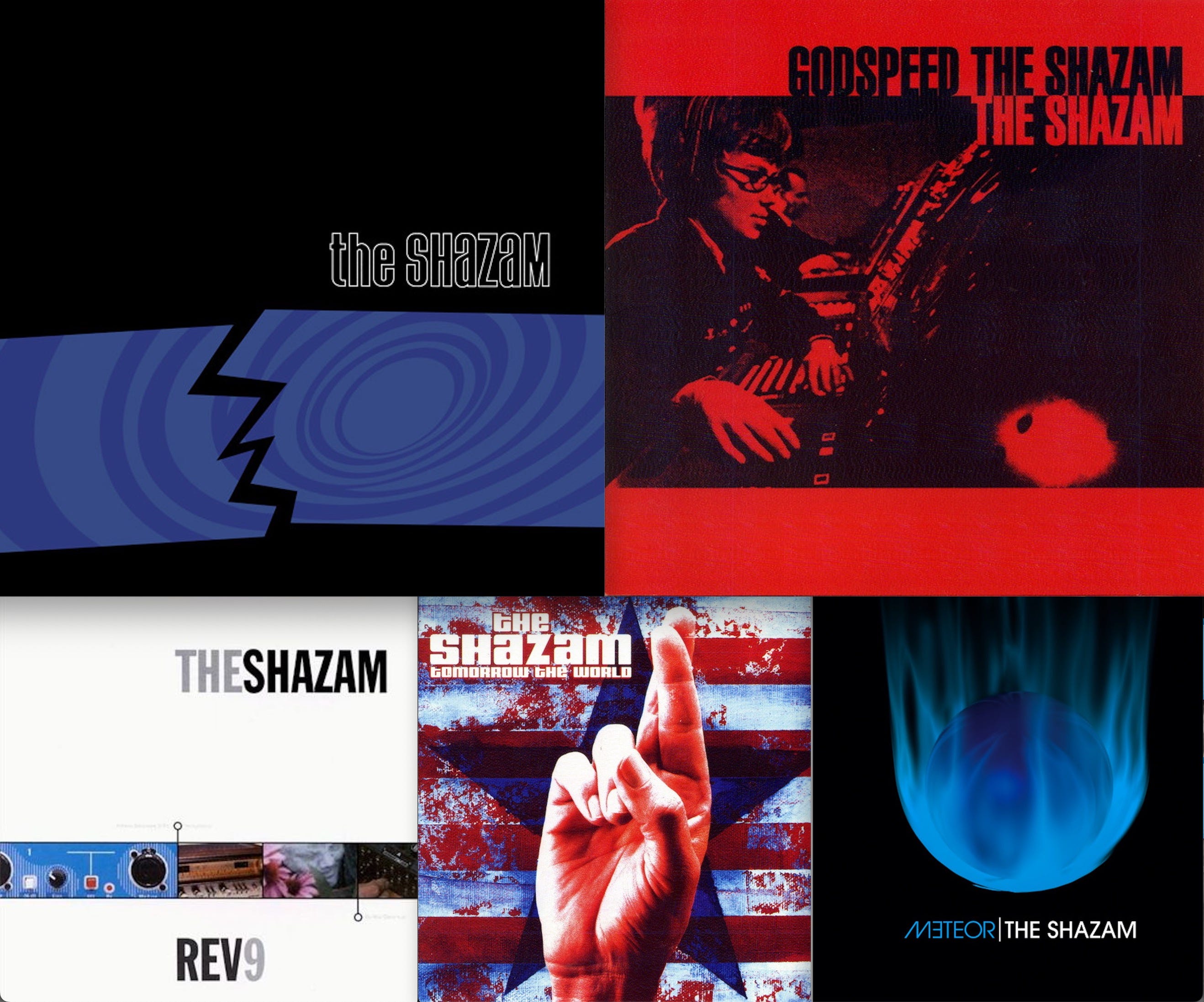
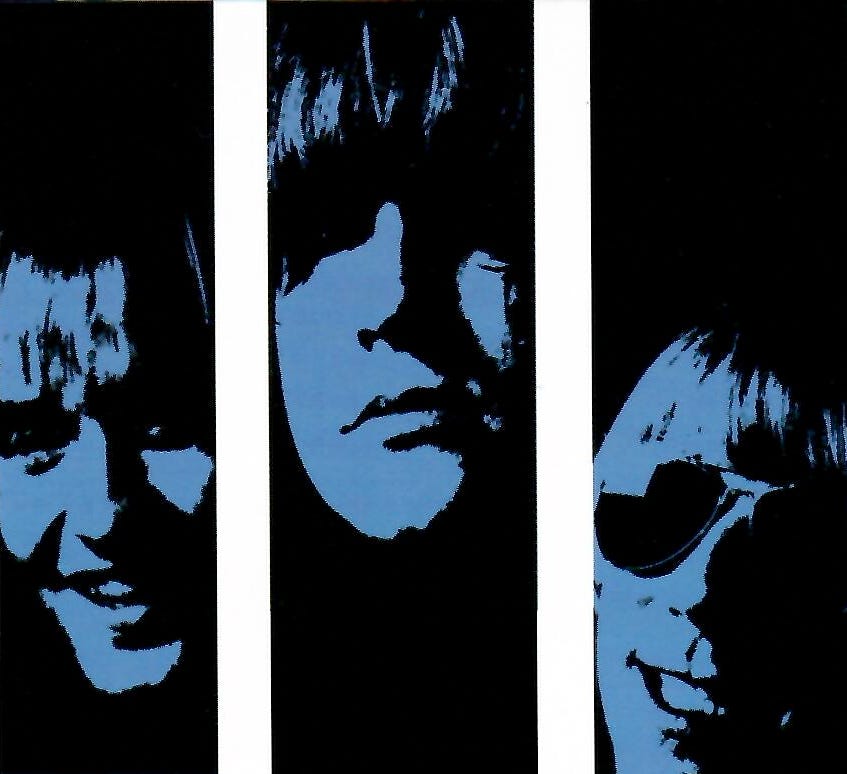
One band in particular always stood out for me, and has remained a favorite. The Shazam were formed in the mid-1990s in Nashville, Tennessee by songwriter and guitarist Hans Rotenberry with Mick Wilson (bass) and Scott Ballew (drums). By the time I’d caught up with them, in the early ‘00s, they’d released their self-titled debut (1997), Godspeed the Shazam (1999), and a mini-LP Rev9 (2000). I climbed aboard with their third full-length, Tomorrow the World, released in 2002. They’ve issued one album since, 2009’s Meteor, as a quartet with Jeremy Asbrock on guitar and Mike Vargo replacing Wilson. (Sadly, Ballew died in 2019. The band released a single in 2017, “It’s Doomsday, Honey,” yet following the personal and creative loss, Rotenberry has more or less put the band on a long-term hiatus.) When Tomorrow The World arrived, the Shazam had seem poised for big things. They played at a daylong BBC radio broadcast in Abbey Road studios in 2000, and ended up playing in England on three separate occasions that year, including a gig at Earls Court with Modfather Paul Weller on the bill, garlanded at each step with effusive praise from the British press. Back home, things were predictably tough, the Shazam suffering the trials and tribulations of any indie band. They toured up a storm, but their records weren’t selling, and radio wasn’t fully behind them. “It’s hard to really want much more,” Rotenberry remarked in Nashville Scene in the summer of 2000. “We’ve got it all except the fame and fortune.”
Yet, the music lasts. In a terrific, wide ranging conversation at the Majestyk Guitars Podcast last year, host Jeff LaQuatra described the Shazam’s music to Rotenberry as “a combination of the Move, the Who and Cheap Trick.” Rotenberry responded, “There’s a heavy Beatles influence too, I suppose. Just all good stuff. There’s a lot of ‘70s rock in there too, but you got to dig deep for that.” He agreed that the all-purpose Power Pop descriptor fits the Shazam pretty well, yet he was also eager to push back a bit. “It’s like heavy metal. You know, there’s old school metal, there’s thrash metal, there’s black metal. There’s all sorts of power pop too, there’s jangle power pop, really heavy power pop. So, whatever. We got our place in there. But we don’t subscribe to a rulebook: ‘That’s not power pop. So we can’t do it’.” The first songs Rotenberry remembers turning him on as a kid were Chuck Berry’s “Maybeline” and the Beatles’ “Love Me Do,” singles he played on his mom’s record player. “And then I got into records and then I wanted to be a DJ because it’s, like, you get to listen to all the records you want! But then it’s like, I want to do this. So I got a guitar, basically because that was the tool that you needed to play rock and roll.”
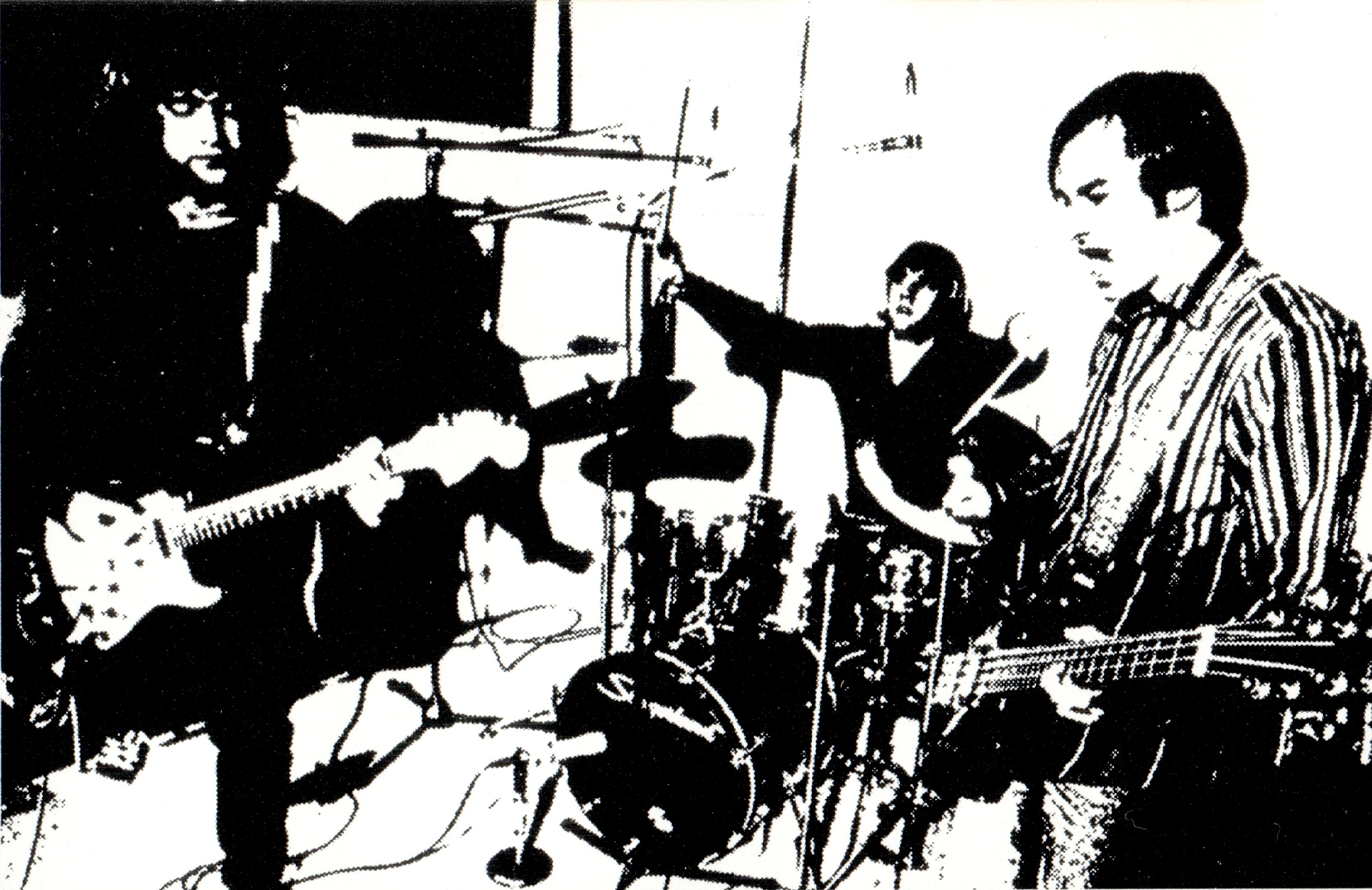
Rotenberry’s first guitar “was from a J.C. Penny’s catalog, just a little acoustic. Then I said, I got to have an electric guitar.” He found his way to owning a Memphis brand Les Paul copy, but not without suffering one or two embarrassing gaffes along the way. “I didn’t know there was a man named Les Paul,” he confessed, and the first time he entered a music store, he asked how much a Les Paul was, pronouncing it with a French accent. “I thought it was a French thing! They wouldn’t let me touch the guitar!” He was eventually gifted with a Les Paul from a guy he knew—rumor was it he was an Allman Brothers roadie—who’d asked in return not for cash, but only that young Rotenberry do something great with the guitar. He still owns it. “Although it looks awful,” he laughed, “like it was strapped to the bottom of a pier. Nobody ever told me to wipe it off! That’s my only regret about not getting famous, because it would have been hilarious to watch somebody try to recreate that.”
In the ‘90s, Rotenberry knew no one else around Nashville who could sing his songs the way he was hearing them in his head. “Most singers were Grunge-sounding guys or sang like Paul Rogers [of Bad Company]. Now, I love Paul Rogers, but that’s not the style of the kind of songs I wanted to do. I just wanted somebody that could sing like [Cheap Trick’s] Robin Zander, and nobody did. And I gave up. I said, ‘I don’t need this. I don’t need this anymore.’ But after a year and a half or so, I was sitting around playing and like… This is weird…. And I’m kind of halfway singing this.” He hooked up with local producer Brad Jones, whom he’d impressed with a four-song acoustic demo. (“I’m like, wow, so I’m singing tunes, this is new.”) I marvel that Rotenberry initially distrusted his own voice, as I think that he’s one of the great rock and roll singers of his era, with uniquely expressive, winning, and full-throated pipes. He couldn’t find anyone to sing like Zander; meanwhile, he discovered that he himself could.
After recruiting Wilson and Ballew, the Shazam cut their first album, at Alex the Great studio in Nashville. “We’d go in in a one day session and we blast through four or five songs. And then I’d work and save money and then come back three or four months later and we’d blast through another three or four songs.” He added, “It was just a natural progression. We were playing live a lot. We’ve been doing demos now. Okay, well, a record.” Their debut was “just the state of the band as it was with some overdubs. It felt like a very natural. It was a lot of fun.”
Shazam’s best songs have lived inside of me for a long time, but three in particular remain in high rotation in my internal, alternately starred Top 500. “Where Do We Go,” from the debut album, is mid-paced jangle, the ringing guitars and dramatic, rousing riffs masking the song’s essential dilemma: the singer’s fucking lost. On the band’s long-dormant web page (thank you Wayback Machine!), Rotenberry remarked that the tune was among the first he wrote for the band, and that it “pretty much speaks for itself lyrically, it’s where my head was at the time and I didn’t even notice I had written it ‘til I found myself singing it for the 3rd or 4th time.”
Recorded well, mixed thickly, propulsive in the band’s signature style—Wilson and Ballew really knew how to get behind Rotenberry’s tunes and to power ‘em—the song’s one of those that sounds loud even when played at a low volume. The vulnerabilities aren’t muscled away, though, and with a lot of space to sing, moving around his lazily evolving chord sequences and changes, Rotenberry sounds laid back, but his anxieties are palpable. “Oh, it’s been so long / and I’m ready for the change,” he sings in the on-ramp to the deceiving, singalong chorus, leading the way to a blistering guitar solo that, frustrated, tries to say what the words haven’t. Until a killer bridge arrives to make it all honest—
Somebody said, “Hey, where are we going?”
Somebody said, “Hey, what’s the deal?”
I turned and said, “I’m doing the driving
But you’re welcome to take the wheel”
—and that aching chord change at the last line is the most truthful moment in the song.
“Gettin’ Higher” and “Squeeze the Day,” from Tomorrow the World, are each anthemic celebrations of being alive. “Rock and roll is all I got” Rotenberry hollers in “Gettin’ Higher,” a simple declaration that the song makes fact. “I don’t remember writing this one, which is usually a good sign,” he wrote at the Shazam website. “Just part of The Shazam’s manifesto, y’know: Be loud. Feel ok. ALWAYS looking up.” The song’s best moments arrive in the sexy, heavy-lidded bridge, where, riding a cowbell, the band asks, “Sunrise or the sunset, whose side are you on?” Given the large-hearted generosity in the song’s vibe, either answer you give is acceptable—but the beauty lies in how urgent one side feels over the other, depending on your mood, your place in life, the shitty town you live in, your broken love life or addictions. The line’s one of my favorite of the decade.
Ballew describes “Squeeze the Day” as a “summertime sorta put yer hands together people sorta vibe.” Composed in the studio—where, given the evocative opening chords, Todd Rundgren’s spirit was surely lurking—the song was, as Rotenberry waggishly put it, the band’s attempt “to modernize our sound from that 60’s vibe to a full blown ‘72!” The faint time- and date-stamps notwithstanding, “Squeeze the Day” is a triumph, a smilingly sunny, stoner’s carpe diem. “Feels like I’m breathing in vain,” the singer complains, “need to find a reason right away.” The rationale arrives in the blissy chorus:
Put your hands together, let your music play
’Cause it won’t be long, and it could all be gone
So let the world move on, and squeeze the day
Groovy harmonies, Badfinger-styled drop outs, George Harrison slide playing evoked in the solos—the ingredients are all there, sure, but the dish is a Shazam Special. Dig in.
I’d be remiss if I didn’t mention other Shazam songs that have taken their friendly hold on me, among them “Rollercoaster,” “Super Tuesday,” “RU Receiving,” “On the Airwaves,” “You Know Who,” the bonkers “NFU,” the hilariously titled—and rockin’—“Rockin’ and Rollin’ with my Rock n’ Roll Rock n’ Roller,” and their confident strut through the Who’s “I Can See for Miles.”
And dig their take on the Beatles’ “Revolution 9,” below. Rotenberry, anxious to discourage the band’s label in England from issuing a stop-gap, contractually obligated mini LP at the expense of promoting Godspeed The Shazam, attempted to sabotage the project by insisting that the band would cover John Lennon and Yoko Ono’s infamous sound collage. “I thought for sure that’d scare him off, but he was like, ‘Great! That sounds amazing!’ Now how the hell are we gonna do that? Anyway, it was fun. I’m glad we did,” adding, “I would do it totally different now. We did it live. One more time, not too long before Scott moved on.” How?, he was asked. “A lot of pedals.”
Rotenberry and LaQuatra discussed Cheap Trick at length, a longtime favorite band of Rotenberry’s and, as it turned, the first concert he saw as a teenager, “on the bill with AC/DC, and well, it didn’t really leave an impression on me because I was just terrified, but I was like, ‘Okay, well, wow. That’s, wow, that’s cool’.’ He rushed home and bought Cheap Trick at Budokan, fell in love with Zander, the bright spectacle, and those loud, massed guitars, and started reading everything he could about the band. “I started reading that Cheap Trick is basically the closest thing to the Beatles that we had. There was a ton of press about that. So then I got All Shook Up, and that turned everything around for me. The Beatles didn’t make me want to play guitar so much. But when I got into Cheap Trick, produced by George Martin, then I was like, ‘So, humans can do this. I see.’ And from that point on, I was like, ‘Oh, let’s see what we can do’.”
Asked by LaQuatra to name his favorite Cheap Trick song, Rotenberry politely demurred. (Asked for the worst Cheap Trick song, he chuckled, “They’ll get mad at me. I can’t say. It’s on [1994’s] Woke Up with a Monster, though.” Place your guess in the comments below.) Instead, he offered three favorites: “Downed” from In Color, “On Top of the World” from Heaven Tonight, and “Everything Works (If You Let It),” a single off of the Roadie soundtrack album. That triumvirate of rocking, anthemic, radio-ready songs stands tall over Rotenberry and the Shazam, less sonic touchstones to imitate than heartening reminders of how songs can, sometimes, say everything that we can’t, as they paradoxically urge us to pick up a guitar and try it ourselves anyway. “That’s what all my records are. Everything we have in a bag!”, he enthused to LaQuatra, adding, “That’s what my dream band is, what anybody’s dream band should be. If you’re going to have a band, it should be everything you love, you know?”
Rotenberry’s still active, playing guitars at home, sitting in with the odd local band in Nashville. There’s purportedly a Shazam double album in the works dating to sessions with Ballew, though Rotenberry appears to be on-again/off-again committed to seeing it through. Near the end of his podcast, LaQuatra, in parlor question mode, asked Rotenberry if he’d rather write a song as good, or better, than Paul McCartney, or play a guitar solo as good, or better, than Michael Schenker. Without hesitation, Rotenberry replied, “Song, song, song. Write a song.”
So, it feels appropriate to give the last word to Sir Paul, who two days ago released The Boys of Dungeon Lane, his twentieth solo album and among his most warmly received in years. At age 84, decades older then Rotenberry, McCartney’s still finding those wacky chords to inspire him. Keep on, gents.
You might also dig:
A long way from the valley

Back in 2010 I wrote a book about AC/DC’s Highway to Hell. The album had come out when I was an impressionable teen, and decades later I still loved the record. I wondered what that meant. Does my affection for the album and the band sit somewhere between earnestness and irony? (
See what’s right, see what’s there

After visiting my dying father in Maryland, scrambling with my brothers and my sister and my mom to assess and meet the thousand mind- and soul-numbing details of planning a funeral mass and an entombment, laying my dad to rest on New Year’s Eve, flying home, and continuing to attend, frustratingly from afar, to my mom’s needs, all while grieving, I nat…

All images of the Shazam from The Shazam (1997) and Tomorrow the World (2003) albums