
Never lose that beat
At the Bowery Ballroom in New York City, the Fleshtones celebrated their fiftieth anniversary with a roomful of friends

DOWN AT THE ROCK AND ROLL CLUB—“On May 19, 1976, the day Joey Ramone turned twenty-five, the Fleshtones loaded their gear into Keith’s truck and with some trepidation drove into the heart of the Lower East Side and their first coveted Tuesday-night audition at CBGB.” So I wrote in Sweat: The Story of the Fleshtones, America’s Garage Band. “Before they played that evening, Peter was gracious enough to encourage the few Queens friends who did show up to drink around the corner—as the prices were a bit steep even at threadbare CB’s. ‘We were very wound up and blasted out our handful of songs at a ridiculously fast tempo,’ Peter remembers. ‘Still, people liked us and some even danced along, an unusual event at super-cool CBGB. We were invited back for another audition’,” adding, “‘Finally, we were a real band’.” Keith Streng laughed, ‘We were horrible at CBGB! But we still passed. Hilly Kristal said to us, ‘You guys aren’t really that good. But there’s something there’.”
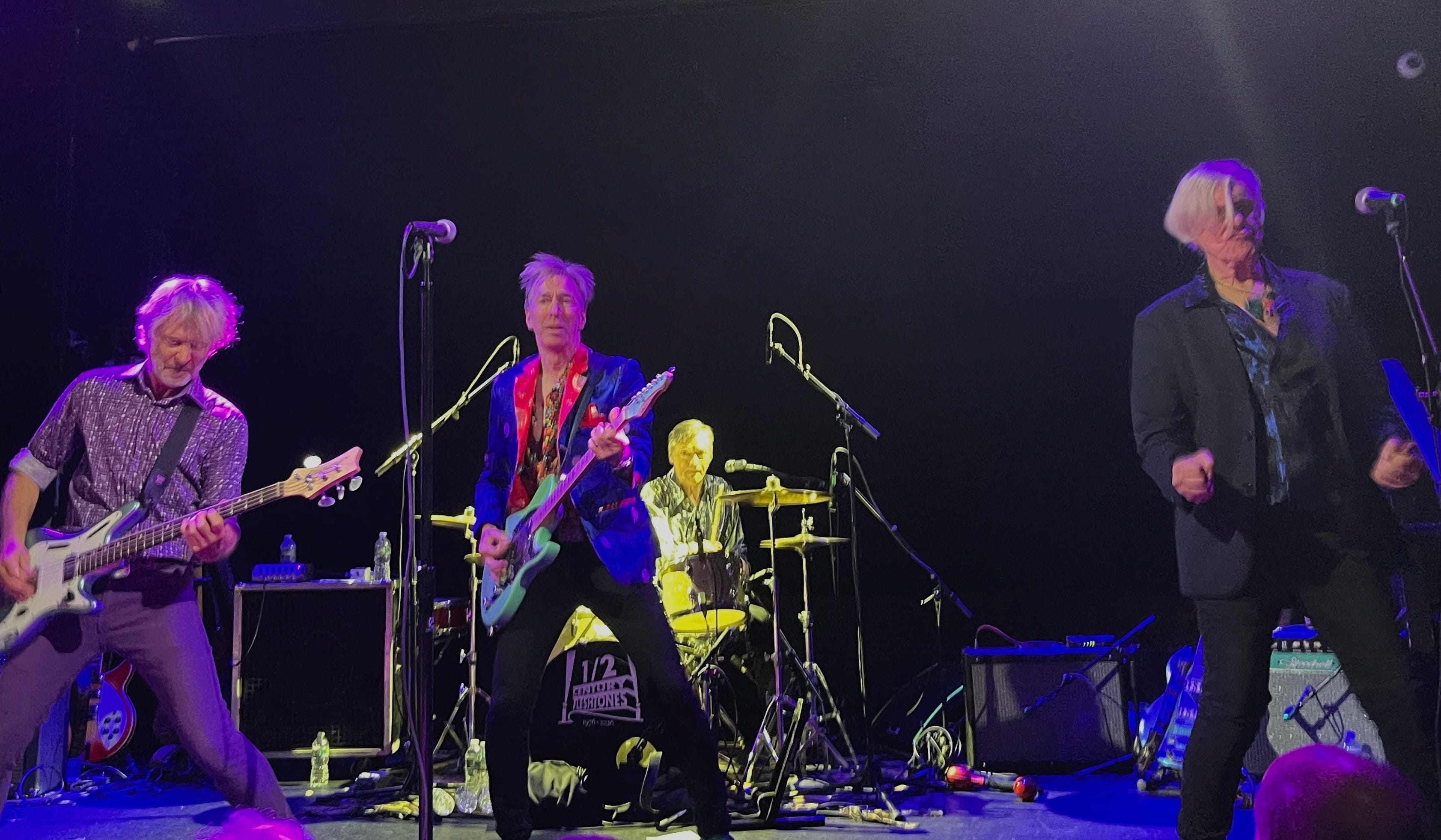
Last Friday night, fifty years after that show and about a half mile away from where CBGB once stood, the Fleshtones gathered at Bowery Ballroom on Delancey Street to do what they do best, play rock and roll and throw a party. (Drummer Bill Milhizer joined the band in 1980, bassist Ken Fox in 1990, rock and roll lifers by any measure.) They are the only band or artist that debuted at the legendary CBGB in 1976 that has never had an inactive year, and joining them to celebrate was a bunch of friends, among them Little Steven (who introduced the Fleshtones), Lower East Side legends Lenny Kaye, Ivan Julian, and Andy Shernoff, Fleshtones co-founder and original bassist Marek Pakulski, and two members of R.E.M., Peter Buck and Mike Mills who played along with Scott McCaughey, Steve Wynn, and Linda Pitmon in the Minus Five, one of two support bands on the bill (the other was those unruly, masked juvees, Goons), and who also joined the Fleshtones on several numbers during the long, twenty-five song set.
Emcee extraordinaire Mike Edison hosted the festivities. Clad in a black suit, red shirt, and porkpie hat, running on and off stage with the frenzied grace of a maître d’, Edison tossed out a handful of great one-liners (“This is one gala night, and one gal a night should be enough for any man!”, describing the trajectory of the Fleshtones’ cult career as a veritable “who’s who of who’s that?”), riffed on his tacky bar mitzvah which also occurred the year the Fleshtones debuted, and remarked on the ten United States presidencies that have come and gone during the span of the band’s career (correcting guitarist Keith Streng offstage, who’d guessed that Carter was in the White House when the Fleshtones debuted. It was Ford.) That last factoid was what struck me, and in the crowd I idly considered the numerous trends in fashion, music, and cultural mores that have arrived and departed during the long, sweaty reign of Super Rock. The Fleshtones have outlasted it all. Thirty albums, nearly forty singles and EPs, and countless shows all around the world later, they show no signs of slowing down.
The set at Bowery Ballroom was ambitiously organized; though the seams showed at times, the Fleshtones pulled it off—a nice metaphor for their career. They opened with a streak through “Bigger and Better,” “Back to School,” and “You Gotta Love, Love,” before the night of guest stars commenced with longtime pal and supporter Eric Fusco hopping onstage stage for a raucous version of “Dreaming About Work,” current producer and engineer Mike Giblin (The Split Squad, Parallax Project) joining the band for “You Say You Don’t Mind It,” and Jesse Bates leading the charge on a version of his band Los Dudes’ “I Hate You All.” Paul Johnson, at whose Brooklyn studio the band cut several albums in the late-1990s and early 2000s, grabbed a guitar for the Fleshtones’ “Do You Swing?” and the Master Plan’s “You’re Mine,” staying onstage to shred and leap about while Shernoff took the mic for a rousing version of the Dictators’ “Stay With Me.”
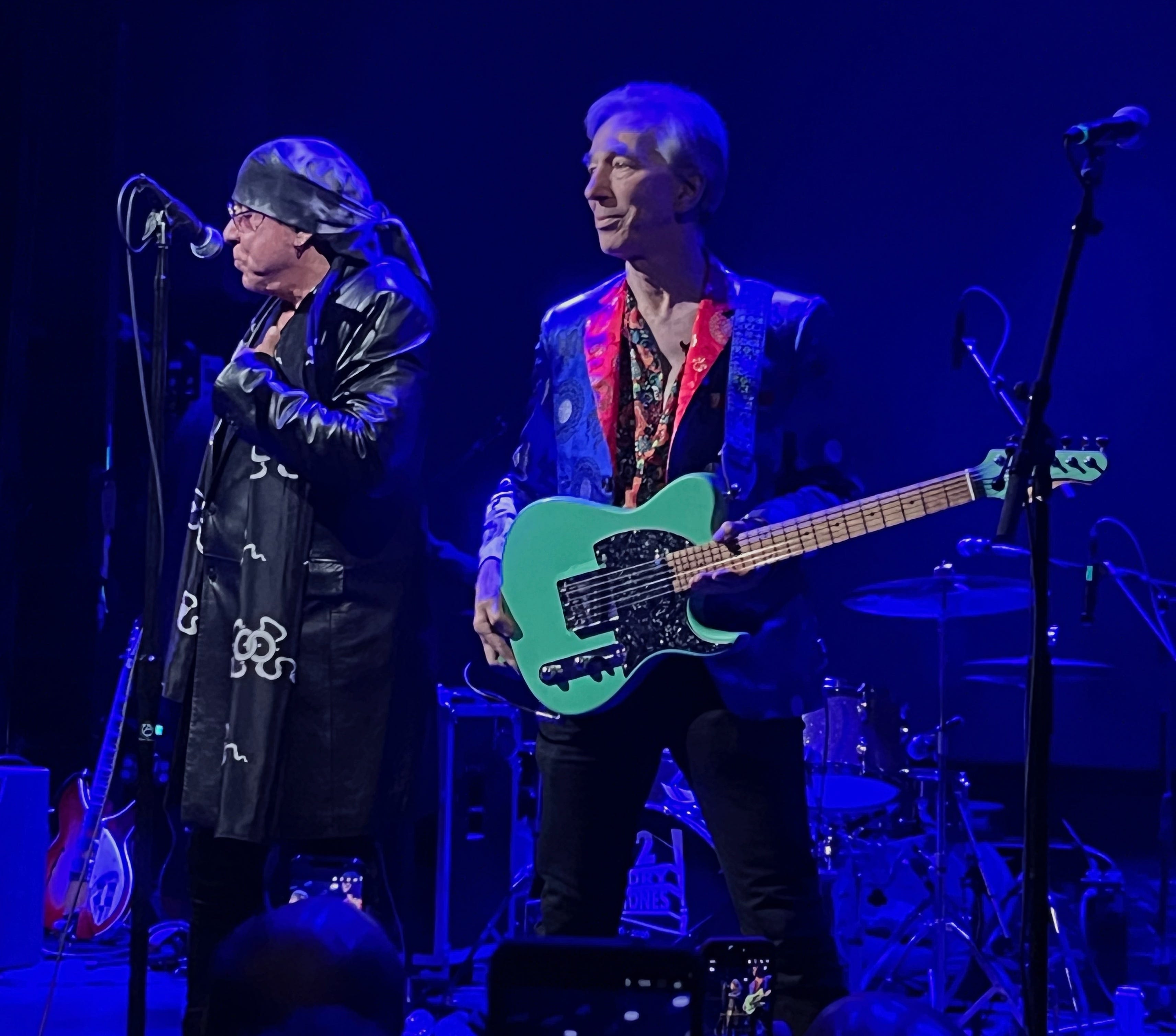
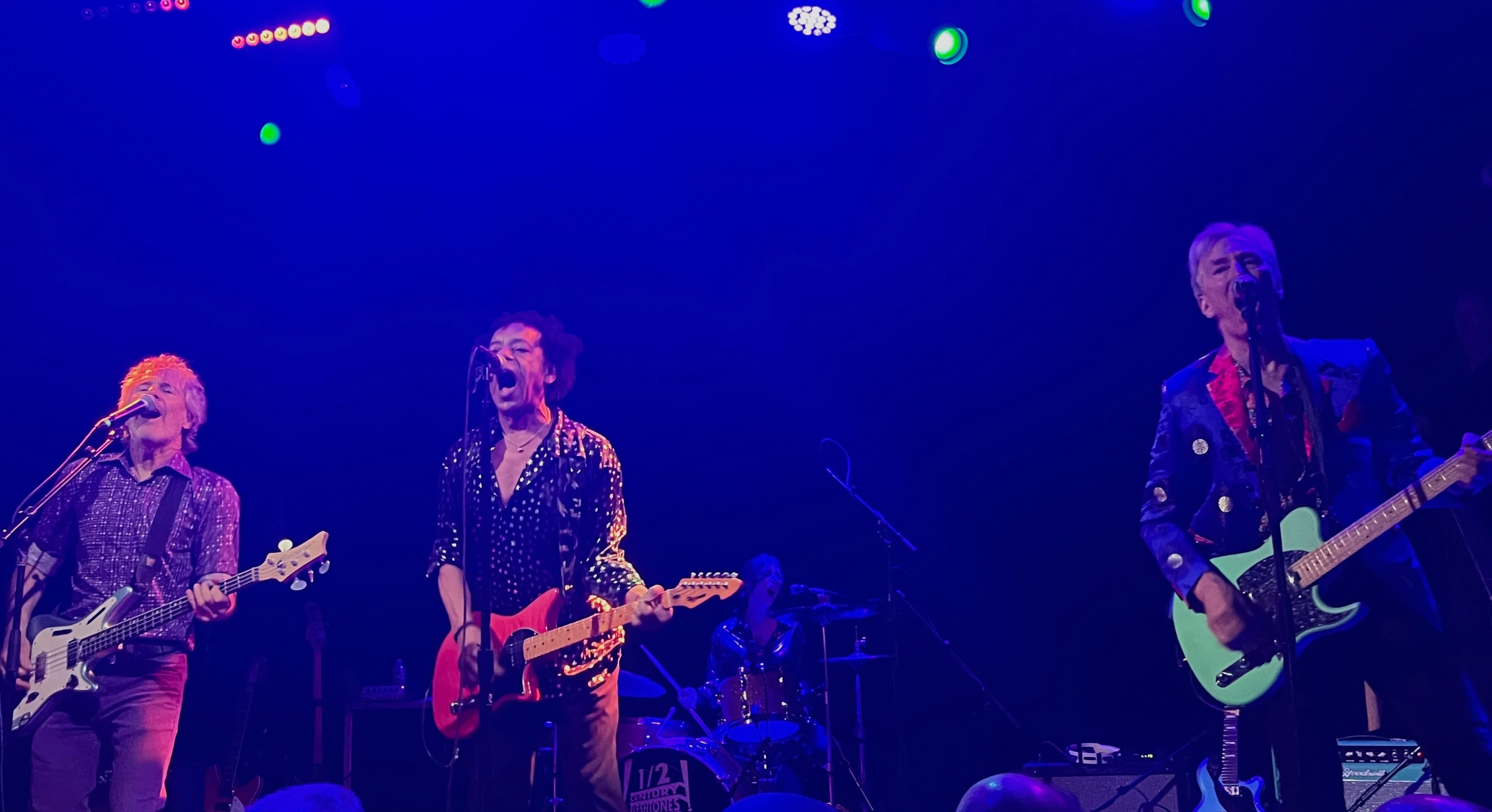
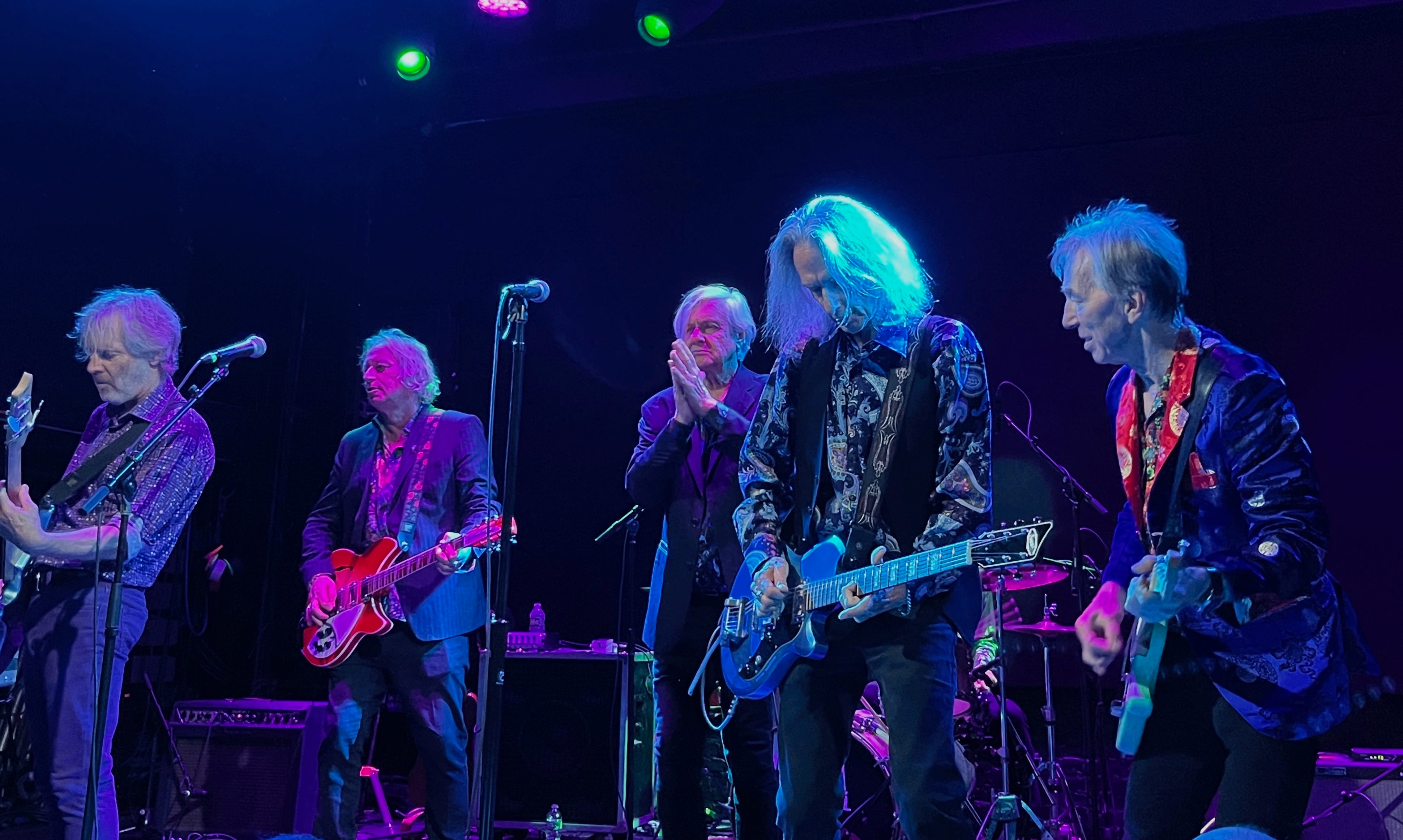
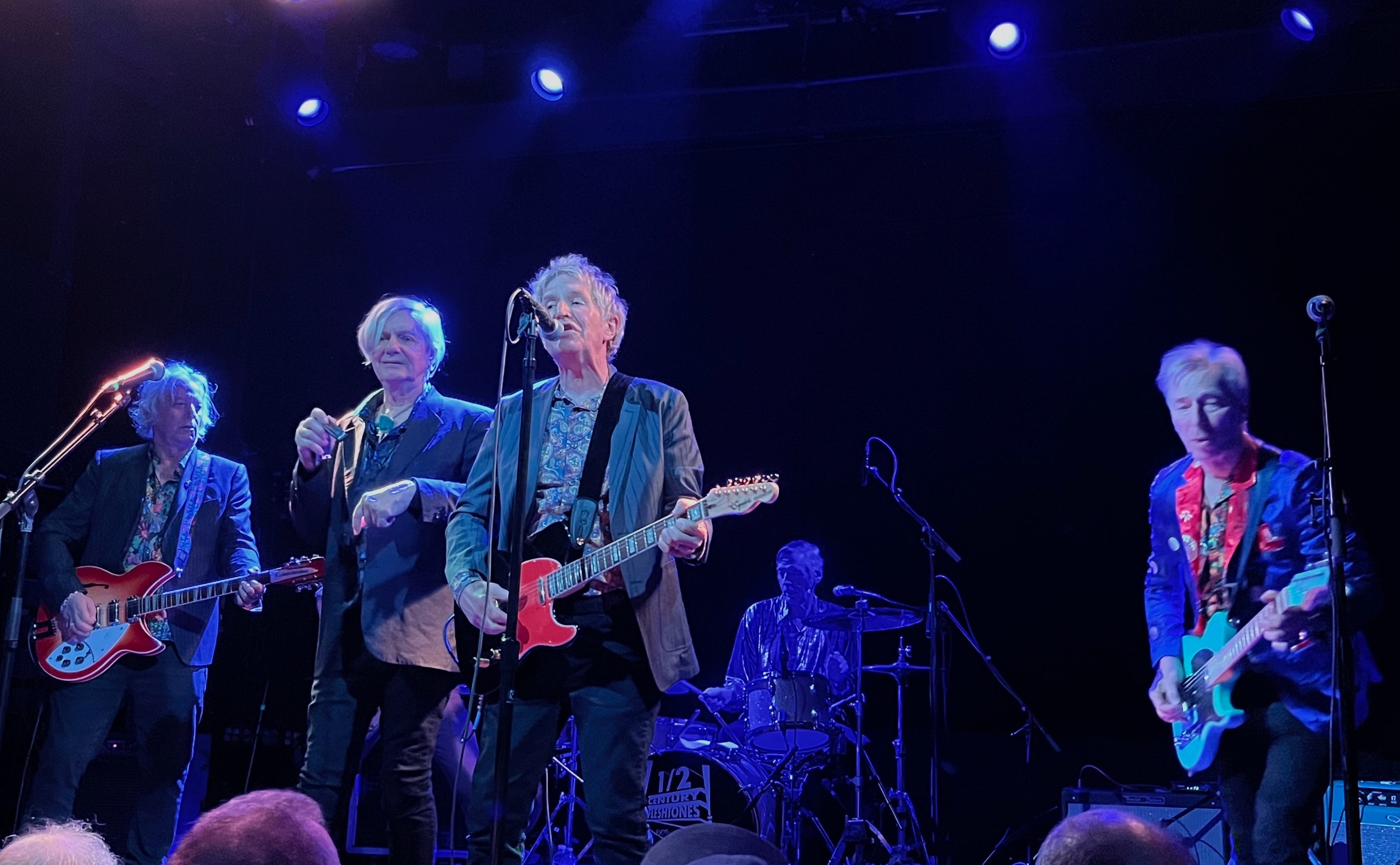
The numerous band and musicians substitutions behind the Fleshtones began to jell at this point: with downed-wire energy, Ivan Julian led the band through a rocking version of “Hardwired,” from Julian’s 2009 album The Naked Flame; Steve Wynn, remarking to the crowd that the photograph of his 1980’s Hollywood apartment on the front cover of his memoir I Wouldn’t Say It If It Wasn’t True features a Fleshtones poster on the wall, sang a superb lead vocal on “The World Has Changed” backed by Buck and Pitmon; Buck stayed onstage as Lenny Kaye sang “Crazy Like a Fox,” his 1966 single under the name Link Cromwell, and reprised his guitar playing on Sleepy John Estes’s “Rats in My Kitchen.”
A particular highlight for me was the span of three songs during which Marek Pakulski played with his old band, reuniting the 1980s potent lineup (lamentably absent sax and harmonica player Gordon Spaeth, who died in 2005 and to whom Pakulski dedicated the songs). Pakulski was a favorite Fleshtones of mine back in the Reagan years, with his unassuming, handsome looks and working class, anti-Rock Star name, a purposeful yet grooving presence onstage amidst the drug and alcohol-fueled mania of the early days. When I was writing Sweat, he told me that his favorite song to play with the band had been “The Dreg (Fleshtone-77),” from Roman Gods, and that’s indeed the first number he played at the Ballroom with his old mates, followed by a disco-fied arrangement of “Right Side of a Good Thing” from Hexbreaker and a rip-roaring version of “All Around the World,” the original recordings of which both featured Pakulski’s patented, mildly demented falsetto-screams. I’m happy to report that, decades later, he can still hit those high notes.
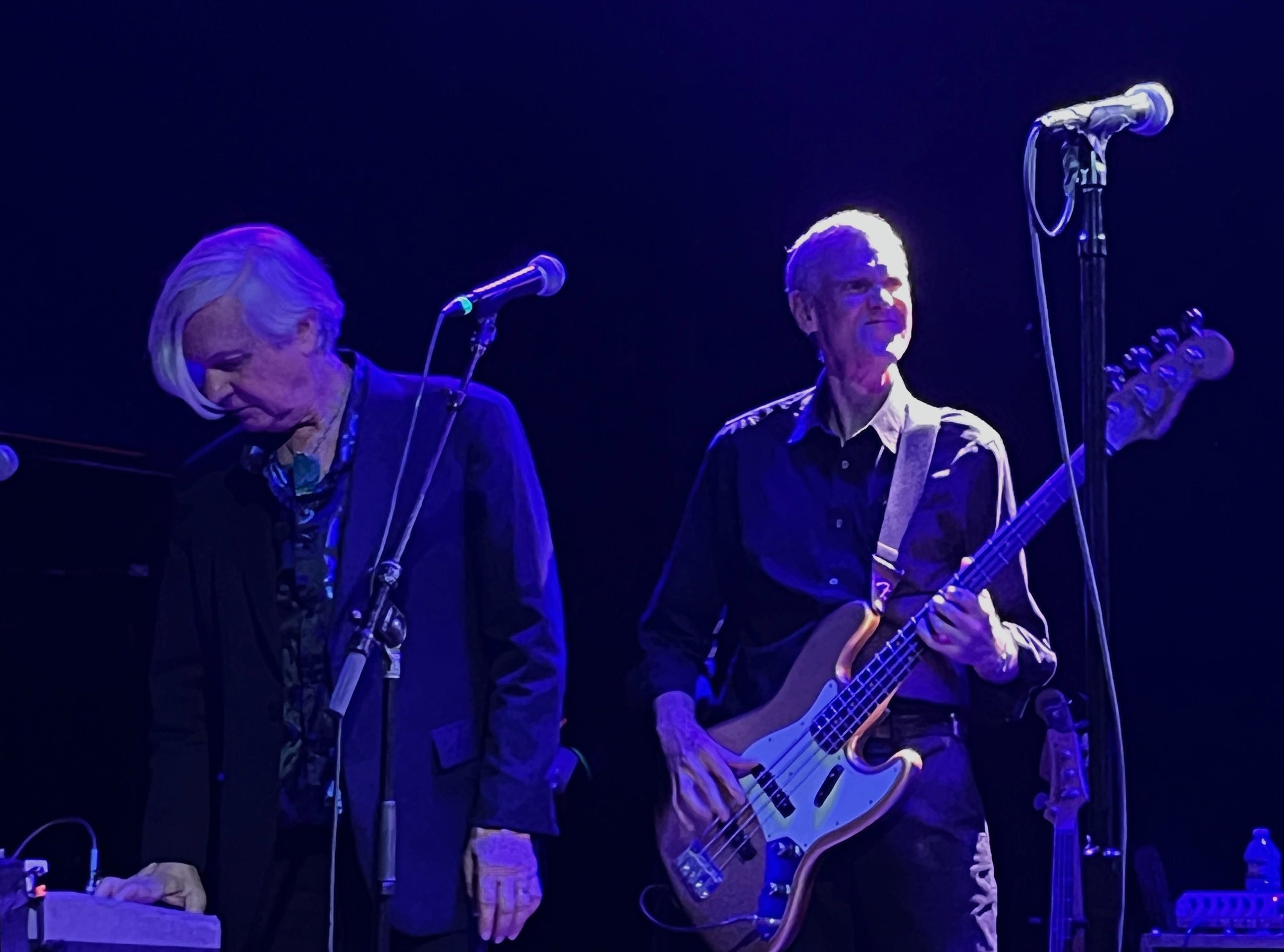
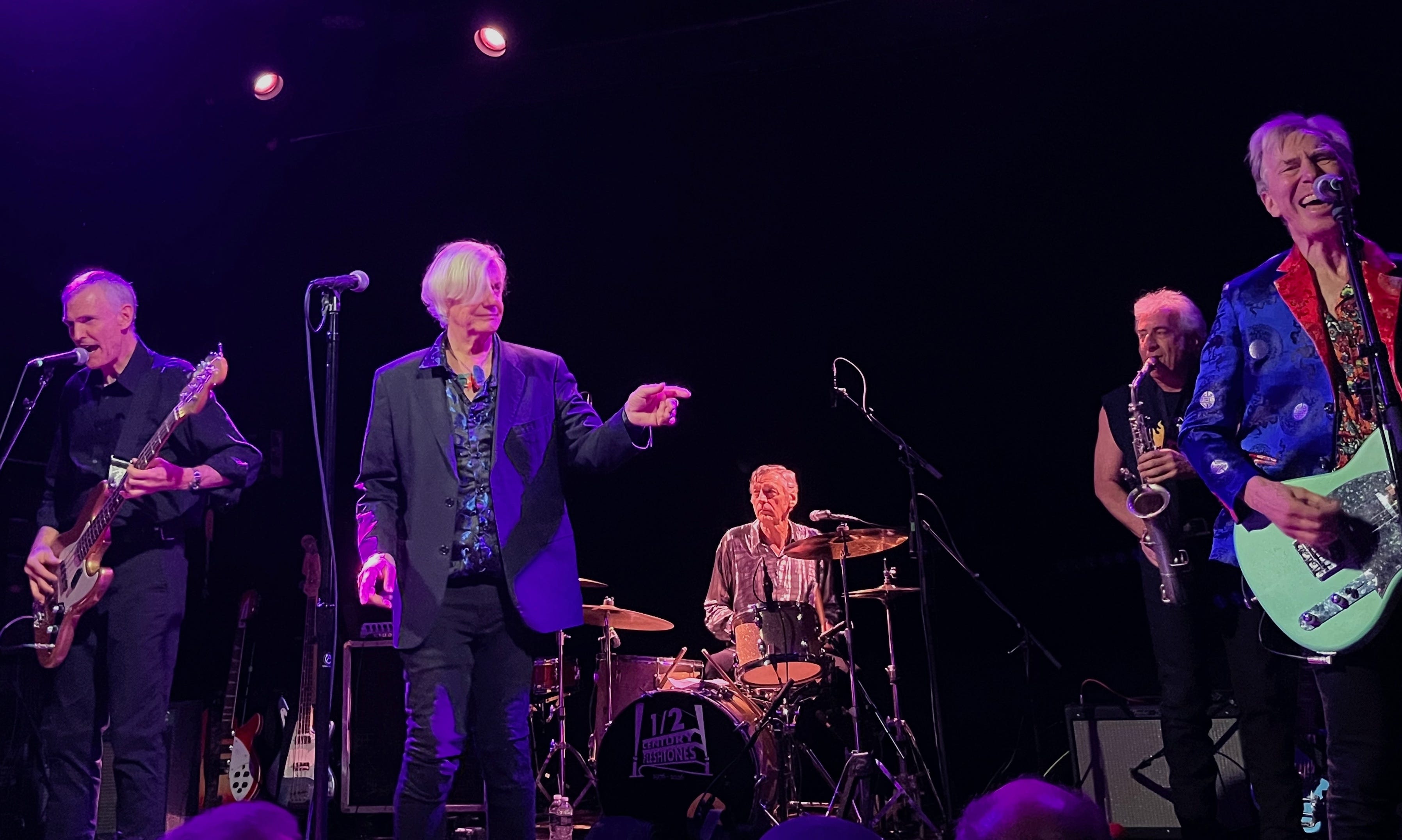
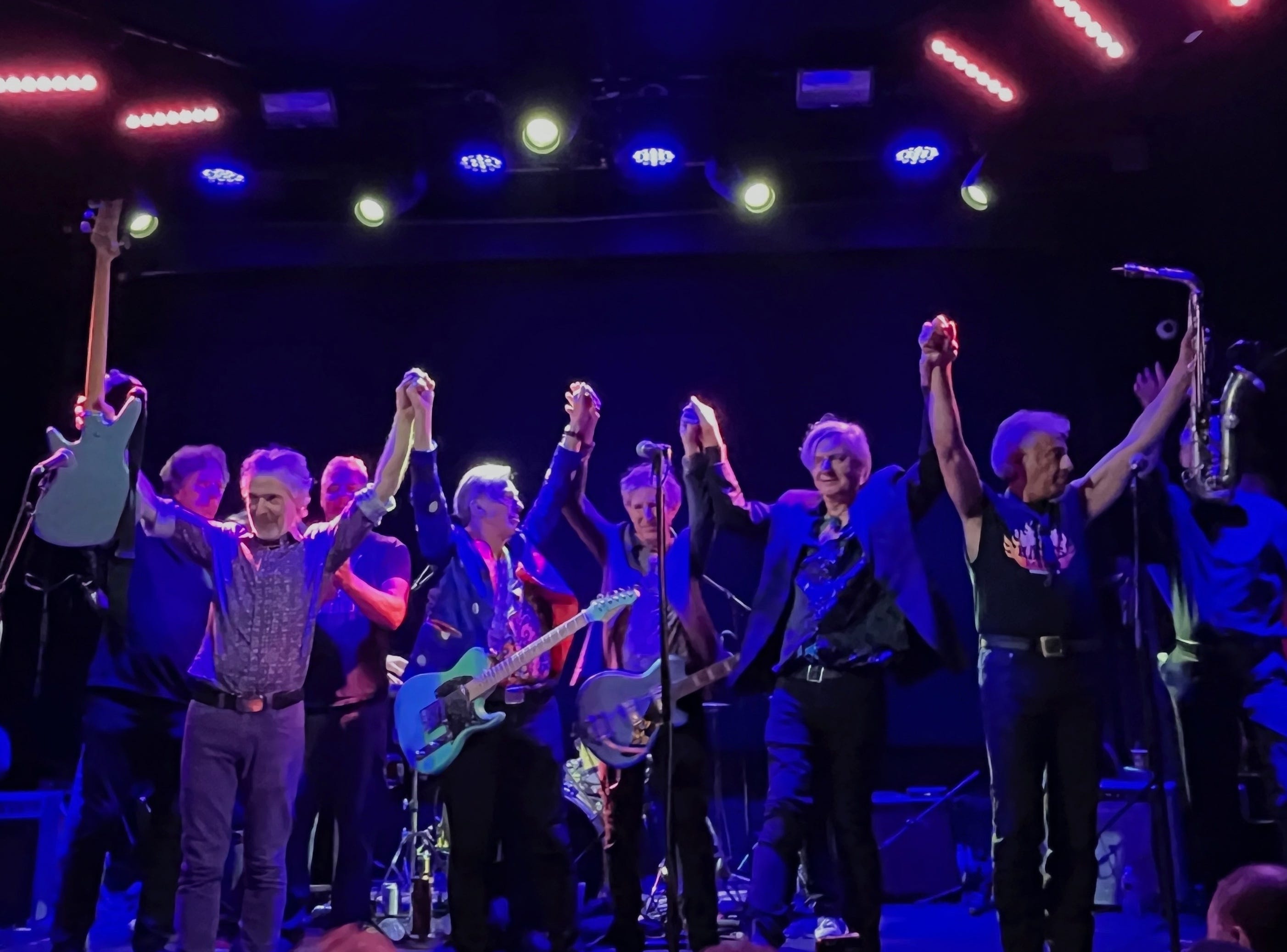
The remainder of the set, for which longtime sax player Steve Greenfield joined the noise, featured a nonstop streak through Bonnie St. Claire’s “I Surrender” (with Vibeke Saugestad on backing vocals), “Remember the Ramones,” the band’s nostalgic, purposeful tribute to the New York City street rock legends, played with particular poignancy and relevance at the Ballroom, the stirring, redemptive “My Kinda Lovin’/The Cross Roads Are Coming” medley, Peggy Scott & Jo Jo Benson’s infectious “Soulshake,” and a joyous rip through the Searchers’s “Alright,” with Fox at the front of the stage both directing and vibing off of the soul-out crowd’s exuberance. The long night ended with two songs that bookended the band’s fifty year career, their latest single, the grooving and stomping “Float Your Showboat,” segueing into their first single, 1979’s “American Beat,” which is in many ways their signature song. A moving what goes around comes around moment, the songs inspired nearly all of the musicians celebrating longevity, perseverance, and the redefining of success with the Fleshtones to head back to the stage, the evening ending with gang singalongs, Broadway-worthy collective bows, and, when it was all over, Peter Zaremba leaping off the stage and wading into the crowd, his happy place.
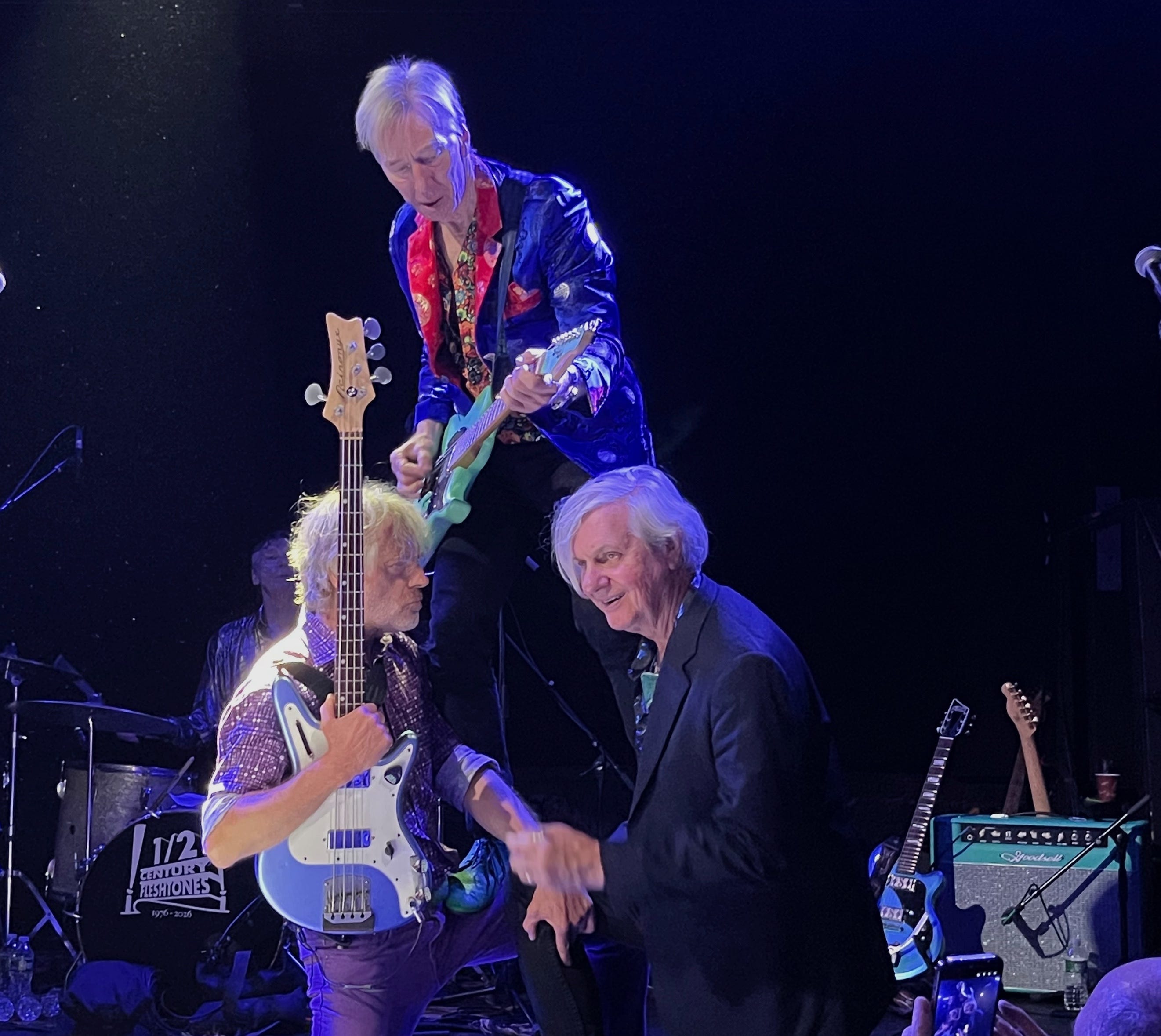
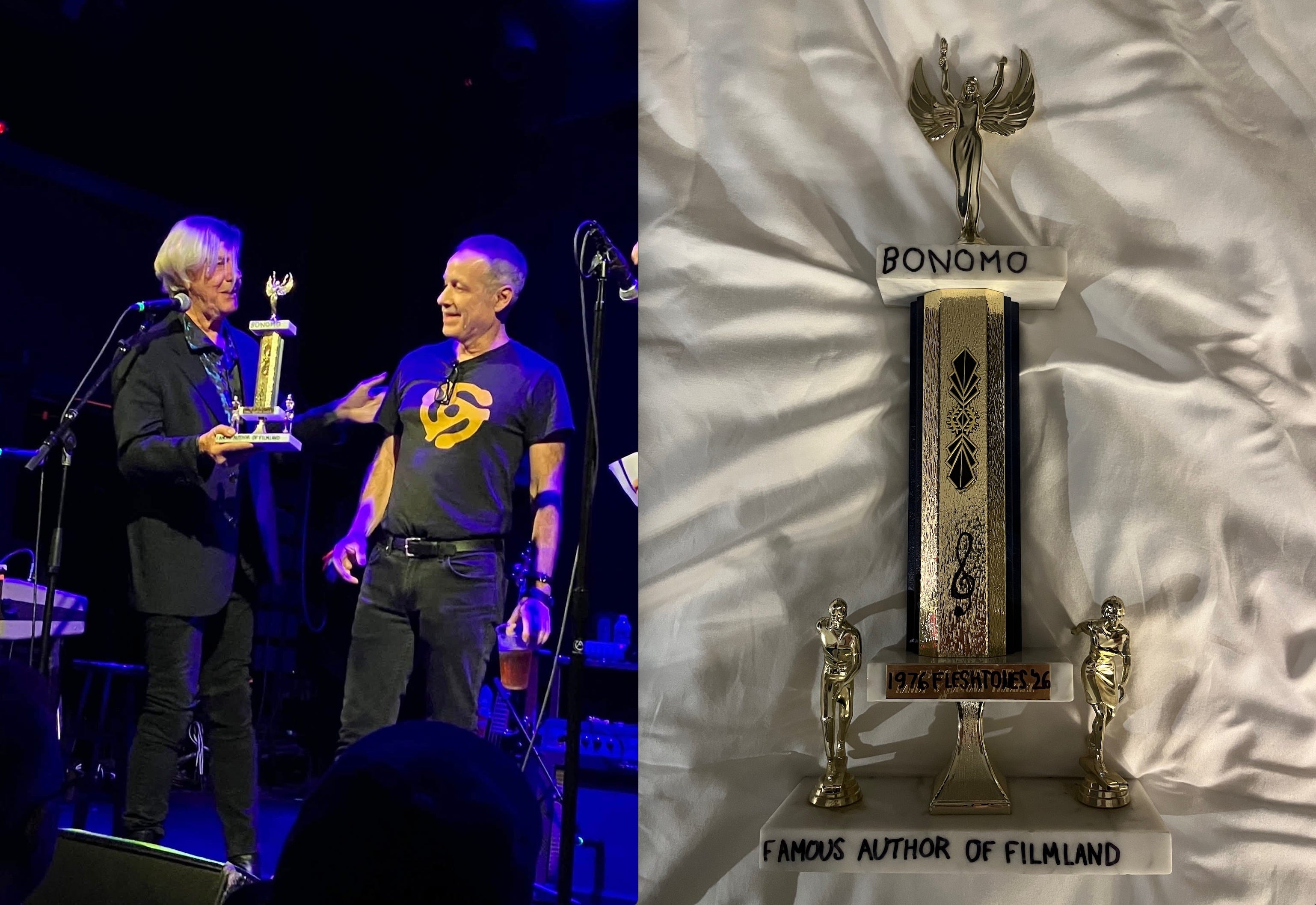
To paraphrase Phillip Lopate, modesty forbids me from assessing my prowess as a writer—though it does not prevent me from including the following moment from the show. Just before the Minus Five played, Zaremba invited me onstage and awarded me a Hall of Fame trophy as “Famous Author of Filmland,” a nod to Zaremba’s beloved science-fiction fan magazine from the 1950s, Famous Monsters of Filmland. Earlier I’d climbed the five flights of rickety wooden stairs to hang with some of the musicians, and was standing in the wings along with the Minus Five when Zaremba approached me with something under wraps, mock threatening me not to wander away. Moments later, to my complete and utter surprise, he called me out onstage to fete me with a repurposed bowling trophy, some nice words about my writing, and an enthusiastic shoutout for my book Jerry Lee Lewis: Lost and Found, to boot. Later, back in the wings, Peter Buck dryly looked at the trophy and remarked, “Yeah, that’s gonna fit in your luggage.” But it did, barely, and now it’s home. A chuckling Zaremba had said to me, “You earned it.”
As for the opening bands, Goons made their presence known before they even hit the stage, outfitted in their costumes of white pants, black “Goons” sweatshirts, skullcaps, and eye masks, giving 1960s Batman villains as they prowled the bar areas and the floor with mock menace. They continued the bit onstage, detonating a set of greasy rock and roll and surf instrumentals, flipping off the genially booing crowd while hurling curse-laden insults back at them. All in good fun. My favorite bit was when the singer wandered down into the crowd near the stage while carrying a phony, comedy-sized black bomb-and-fuse and a red gas tank. The threats to blow up the joint were idle, however—the gas tank was filled with water. (Or was it booze?). Comic book fun turned up loud, near and dear to the Fleshtones hearts.
Fantastically, this was the first time that I caught the Minus Five, though I’ve dug their songs and shifting lineups down the years. McCaughey, Buck, Mills, Wynn, and Pitmon were truly dynamite, rocking a lean, twelve song set. Highlights were the stomping “My Generation” and driving “Aw Shit Man,” McCaughey’s laid back amiability blending nicely with his guitarists’ sly grins and workmanlike playing, Pitmon’s muscular, propulsive drumming keeping all of the songs hopping. They covered the Possibilities, the Modern Lovers, Neil Young, and Wynn’s own Dream Syndicate, but the big crowd-pleasing moment came when Mills stepped to the mic to sing “(Don’t Go Back to) Rockville,” the sight and sounds of the easygoing Mills on bass and Buck and his trademark Sunburst Rickenbacker ringing out behind him a warm and welcome reminder of that song’s, and of R.E.M.’s, eternal appeal.
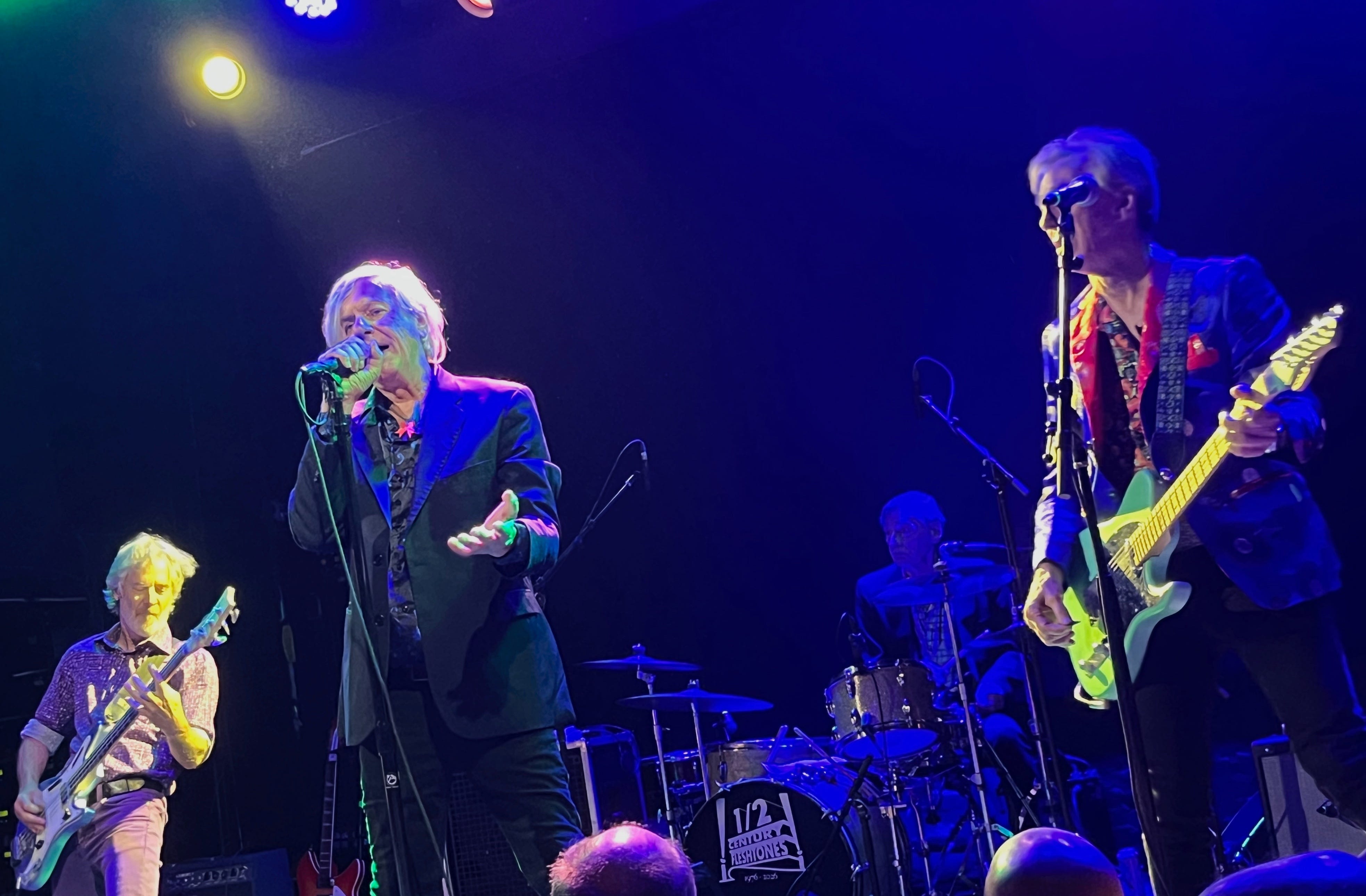
The lively evening wasn’t without intimations of loss. CBGB closed two decades ago; the Lower East Side itself is in many ways unrecognizable from its scruffy, dodgy 1970s self; countless musicians from that era are gone. The most poignant moment came late in the show when the Fleshtones, with Mills on organ, covered Lyres’ “Do You Know,” their debut single that was released the same year the Fleshtones released their debut 45. Jeff Conolly died two weeks ago; he and the Fleshtones were more than contemporaries, they were like-spirited lifers and rock and roll disciples. From the first time Zaremba visited The Rat in Kenmore Square with Miriam Linna in 1978, Conolly’s hometown of Boston was ground zero. From Sweat: “a full-scale battle of the bands between The Real Kids and their arch-rivals [Conolly’s pre-Lyres band] DMZ was under way. I had never seen anything like it. Not only were the bands battling, but kids were dancing all over the place in between waves of knockdown fist fights that erupted and subsided for no reason. The bands, aware that the battle was being broadcast over WBCN, were out for blood. This was the Rock & roll Valhalla I dreamt of as a kid, and had been denied by the hippie-ing out of pop culture in the late-60s.”
The next day, Zaremba and Linna visited Conolly at his apartment on the edge of Beacon Hill, where, “With religious zeal, Jeff whipped out dozens of obscure discs from his collection of zillions of records. I was obviously in need of an education, but despite my overload I meekly managed to play him our basement demo. I was flattered when he commented favorably on the rather bizarre double-tracked drums on one of the songs.” Nearly fifty years later, as Zaremba sang “Do You Know” he seemed to allow fewer grins than normal to slide onto his face, singing with uncharacteristic attention, making sure, it seemed to me, that he got the words right, that this tribute to Conolly was both a celebration and something profound, too. The performance was powerful. At the end, Zaremba gave a kiss and a sky point to his old friend and influence, yet another person to say goodbye to, yet another musician for whom the surviving Fleshtones will carry the torch.
Losses felt too near that night; only a few hours after the show, Chet Mazur was struck and killed by a mail truck while on his way home after performing with his longtime band the Rasslers at Otto’s Shrunken Head, on Fourteenth Street. Mazur was a beloved East Village music and arts legend who lived his life on the margins for decades with an unwavering dedication to the avant-garde and outré performances. His death is unfathomable to his many fans, friends, and loved ones. The convergence of survival and loss, of endurance being rewarded or interrupted cruelly, the randomness of it all, remains a difficult and unhappy irony to process.
Long ago, in the basement of a house in Queens, New York, new tenants Streng and Pakulski tripped over guitars that the previous owner had a left behind in the basement. Fuck it, let’s start a band, they said. And they did. The Fleshtones have spent the next half century writing songs, making records, traveling the world, playing shows, converting the skeptical, ignoring the critics, making lifelong friends, and testifying to Super Rock. But it all started at home, as everything does. It was truly poetic that the band would celebrate their hard won legacy—their unwavering devotion to rock and roll and to sharing good vibes and even better times, from sound checks to last calls, for a dozen in a joint or to hundreds—at a storied venue a half mile from where they played their first show. Look for them in your town sometime.
You might also dig:
Let's take a walk on Avenue A

The Fleshtones have been banging around for nearly half a century now. A longtime New York-based band, these days only one member, frontman Peter Zaremba, lives in New York City (Brooklyn). Drummer Bill Milhizer and bass player Ken Fox decamped for upstate New York in the mid-2000s, and co-founder and guitarist
Here today, gone tomorrow

“I’m sick to death of people saying we’ve made eleven albums that sound exactly the same. In fact, we’ve made twelve albums that sound exactly the same.”
A "rockstah" with a cul-de-sac future

Early in The Tompo of the Ringing, Tracy Santa describes his eighth-grade band’s first gig, in the rec center at St. Paul’s in Bridgeport, Connecticut where he grew up. Emboldened with a hotshot seventh grader on lead vocals (whose bonafides included an advanced
Photo of “Famous Author of Filmland” by Larry Higgs
All other photos at the Bowery Ballroom, New York City, August 7, 2026 ©Joe Bonomo
Quite a night. And quite a memento to take home with you 🏆
I wasn't able to make the show, but I was there in that Whitestone basement when the boys first gave it a shot a half century ago. It has been quite a ride.