
No more walls
Some thoughts on the Animals' remarkable "Inside-Looking Out"

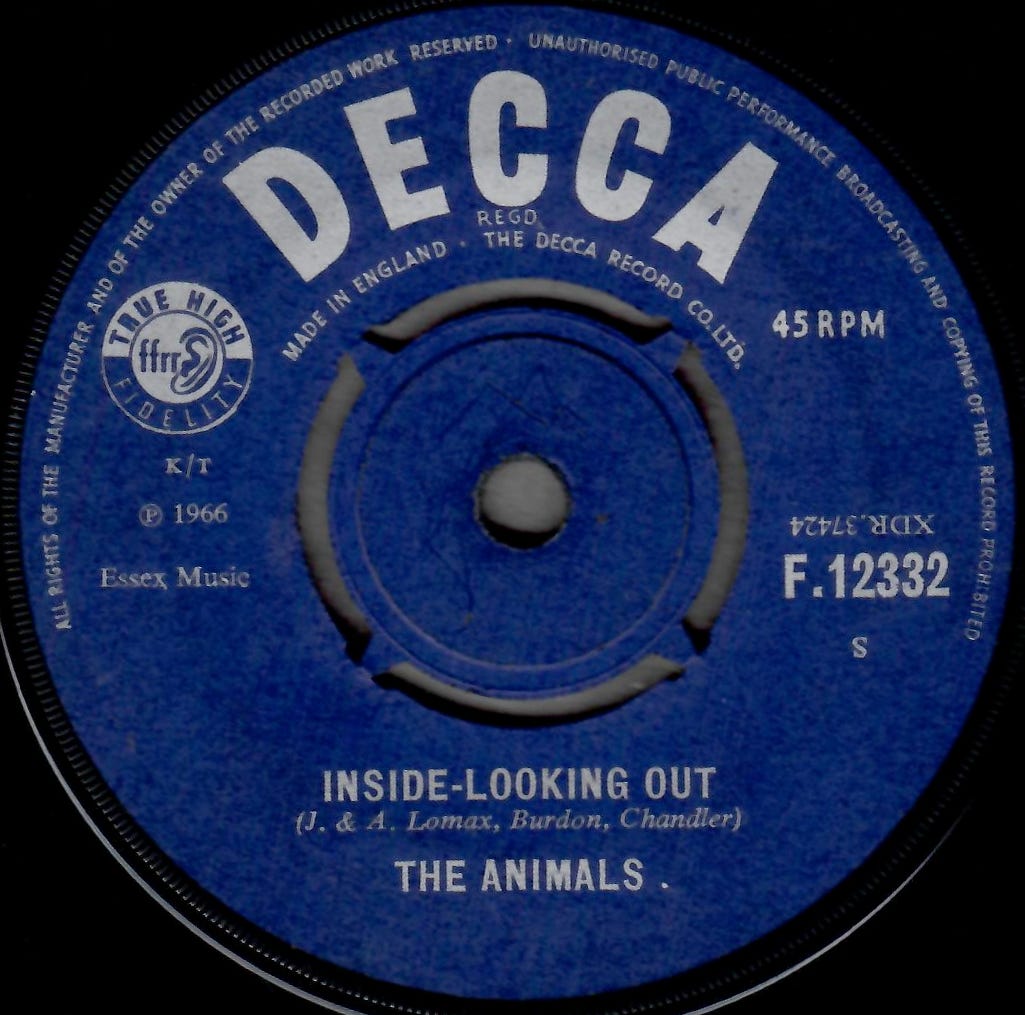
When I find myself marveling in the abstract at how a band can create a storm front of noise and urgency, I often return to the Animals’ single “Inside-Looking Out,” released in the U.K. on February 11, 1966. A rousing complaint, the song’s dangerously alive with every listen, a firestorm, still, sixty years later.
The track was cut on January 9, 1966, during recording sessions for Animalisms, the Animals’ third U.K.album, released in May (not to be confused with Animalism, sans the “s,” or with Animilization, albums with competing track listings issued later that year in the U.S.). The band—Eric Burdon on lead vocals, Hilton Valentine on guitar, Dave Rowberry on keyboards, Chas Chandler on bass, and John Steel on drums—recorded with American producer Tom Wilson, who at that point had worked with Sun Ra, Donald Byrd, Simon and Garfunkel, and Dylan, among others. (Rowberry had replaced original keyboard player Alan Price; meanwhile, Steel was soon to split, replaced by Barrie Jenkins.) The brooding “Outcast,” a lament goaded by Valentine’s fuzz guitar, graced the flip side.
How the studio remained standing after the Animals cut “Inside-Looking Out” remains one of the great mysteries of the era. They’d recorded the driving, demanding “It’s My Life” four months earlier, and that only hinted at the dark energy waiting to burst here. “Inside-Looking Out” (the hyphen’s a curio) begins with Valentine, Rowberry, and Steel slamming shut a heavy door; something closes as the song opens. The singer gasps between the noises:
I’m sitting here lonely like a broken man
I serve my time doin’ the best I can
Walls and bars they surround me
But I don’t want your sympathy
Then in the following bars, the band sympathizes, Chandler holding a single note on his bass, its pulse quickening, Steel dropping in angry and emphatic blows on his snare, as the singer cries for “tender lovin’” to keep him “sane in this burnin’ oven.” When his time is up, he promises, she’ll be his rebirth.
(Or, she’ll be his reefer. Depending on what you hear Burdon moaning and what you read at competing “official” lyrics sites, the singer’s either banking on a spiritual awakening or a big fat joint, or both. An audio illusion, anymore. Yet it’s highly unlikely that in 1966 the Animals and Decca Records would’ve tried to sneak a reference to weed past the buttoned-up lords at the BBC. Burdon’s pretty clearly singing “rebirth”; the confusion came a few years later when Mark Farner and those Ambassadors of Cannabis, Grand Funk Railroad, earnestly sang about “reefer” and winked about “nickel bags” instead of “canvas bags” in their cover version on their 1969 debut album, and on subsequent epic/indulgent live performances. One era’s transparency laid on top of another.)
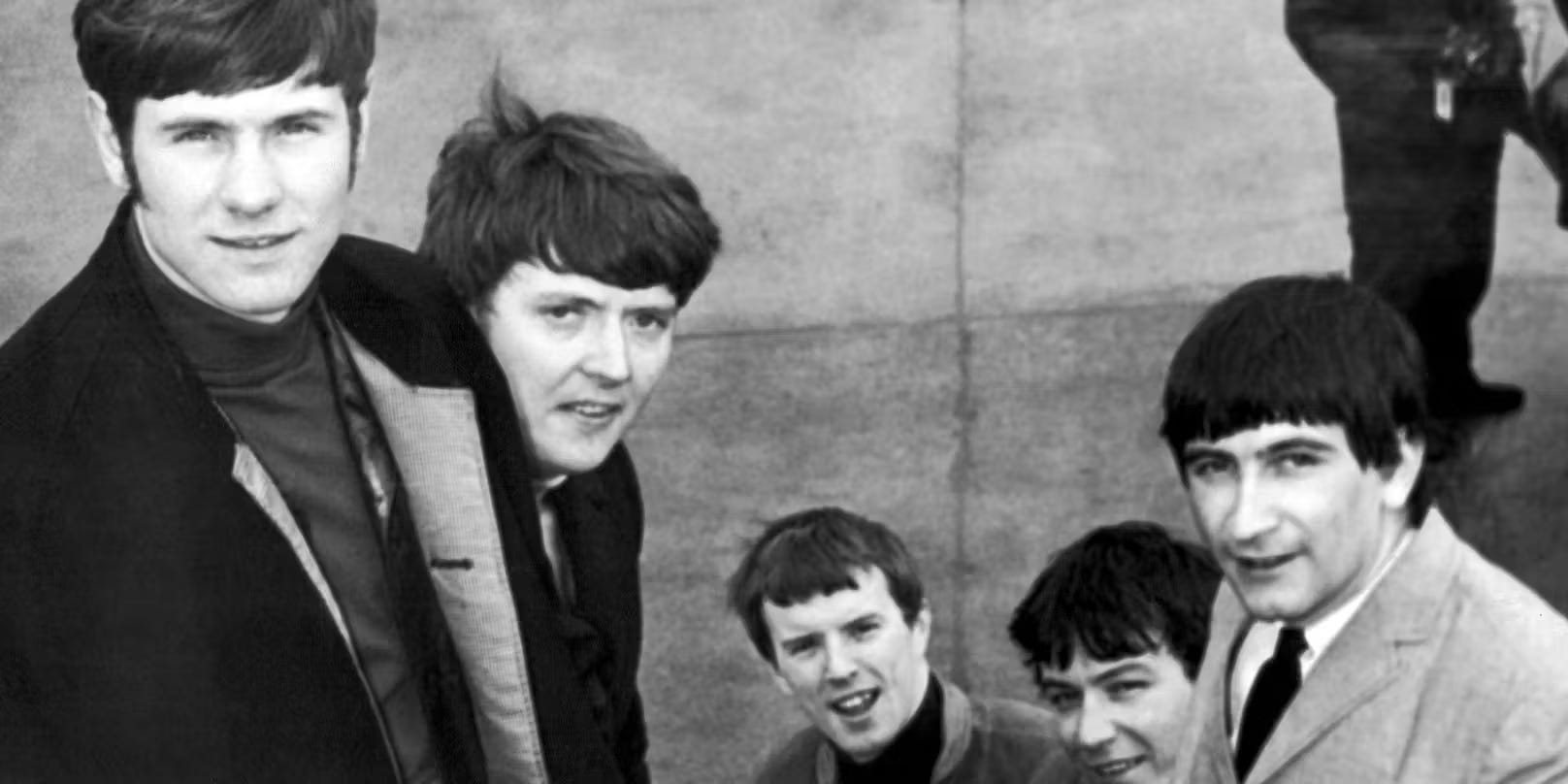
The band ride up close behind the singer now; they’re his mates, and they have his back for the rest of the song as it devolves into pure desire. Before he can get to the second verse, the second litany of agonies, he circles back to the source of his anguish, sinking into wails and cries, the fellas desperately gang-hollering behind him in response. He’s steadied at either end by a supremely cool four-note riff from Valentine, doubled by Rowberry on his organ, and, somewhat composed, turns the lens on his environment—
Ice cold water’s runnin’ in my brain
And they drag me back to work again
Pains and blisters on my minds and my hands
From livin’ daily with those canvas bags
—while we wonder just how literal the prison metaphor might be. The singer’s got “thoughts of freedom” that are driving him insane, dreaming of the day when he’s together with her again, “happy like a newborn child,” “no more walls” to keep her love from him. But in the agonizing push and pull of this song and this performance, the singer, clutching bars, bawls for her, the lousy details of where he’s stuck dissolving into pure need: Can’t you feel my love?, Need you, squeeze you, Baby, baby, baby, baby….
A little over half way through “Inside-Looking Out” and I’m hearing two songs, really, the verses, in which the singer tries to gain control of his miseries by narrating and naming them, and…well, how do you describe the passages when his words nearly fail him? He takes a deep breath, and promises that everything’s gonna be alright, and if she doesn’t believe him, just listen. Then, starting at the 2:30 mark, Burdon unleashes a stirring defense of his love and adoration, Valentine’s furious, agitated tremolo evoking the singer’s anguish: Can’t you feel my love? he demands, And can’t you see my spirit? Can’t you hear, my love? It’s getting louder! But, imprisoned, his words are sung to walls and to the ceiling and to the sliver of light that leans through a tall, narrow window. The Valentine/Rowberry riff returns a last time as a knowing, friendly arm thrown around the singer, to take him back to his corner. But I can’t help it, baby, But I’ll be home soon, I’ll be home soon, he mutters to the wall before a resounding, defenseless, impotent Whoa! brings the song, and his hopes, to a blessed close.
The last ninety seconds or so of “Inside-Looking Out” is among the greatest rock and roll of its era, nearly beyond my ability to describe them. Burdon, moving from the bottom to the top his range, his pleas hard and genuine without a hint of affect, gives the greatest vocal of his career, to my ears, and his band—coiled, compassionate, pissed off—plays with a ferocity that invokes anger and resentment, yet with a precision that feels knowing and grown up. Two hundred and twenty five seconds that describe an eternity of longing
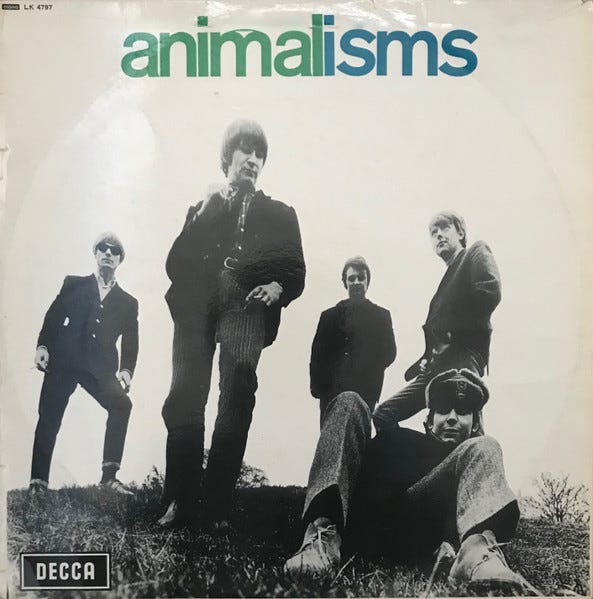
The Animals begin their great, swinging version of “Maudie” on Animalisms with a witty story. “This song was written by John Lee Hooker for his wife,” Burdon deadpans. “Her name is Maudie. Every time he has an argument with her, he has to write a new verse to keep her happy.” It’s a good joke. (Rowberry’s quoted on the album’s back sleeve: “We cut out a lot of verses, They’ve been married a long time!”) The feeling is that Hooker’s there with the band in the studio, snickering in the background. The song winks and throws an affectionate arm around its composer, and names him, too.
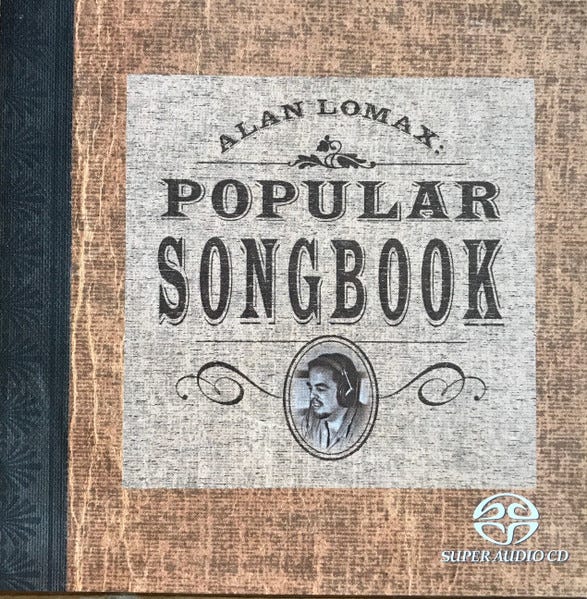
“Inside-Looking Out” has a much more complicated history with its source. The song was modeled loosely on the prison work chant “Rosie” attributed to C. B. and the Axe Gang, among the material that was recorded by the musicologist Alan Lomax in the late 1940s at the Angola Convict Sugar Plantation in Louisiana and the Parchman Farm Penitentiary in Mississippi, and released on Popular Songbook and other albums. “Rosie” and such like prison work recordings are, as John Szwed observed, “as close as twentieth-century people were going to come to the sound of slavery.”
Tragic, and riveting, and an uncomfortable fit as I listen to the Animals run with C. B. and the Axe Gang’s lament two decades, and a world away, later. Editor Azizi Powell at pancocojams, a site devoted to “the music, dances, language practices, & customs of African Americans and of other people of Black descent throughout the world,” fills in the story: Lomax recorded “Rosie” at Parchman Farm, a prison that included “15 labor camps, where inmates were contracted out to chop trees and wood, hoe, lay track, cut cane, plough fields, shovel gravel, and perform other hard labor that benefited both the industries and the State that sold them. [Allan’s father] John and Alan Lomax had gone to Southern prisons in the early 1930s, looking for songs that might not have been touched by the outside world.”
Powell quotes Alan Lomax: “These songs belong to the musical tradition which Africans brought to the New World, but they are also as American as the Mississippi River…. They tell us the story of the slave gang, the sharecropper system, the lawless work camp, the chain gang, the pen.” Lomax visited Parchman in 1947 and ‘48, and there, Powell writes, found “the equivalent of a plantation mind-set, with prisoners enduring harsh beatings and other forms of brutal and violent treatment,” adding, “For this reason, it would be ten years before he released the first volume of prison songs.” Songs like “Rosie,” recorded “onsite at the prison” and “sung by inmates who actually used it in their work gangs,” not only “coordinated the dangerous teamwork of several men chopping trees but also made the workers more productive and helped the time pass. As with slave songs, the work songs also helped prisoners give vent to intense pent-up feelings, whether the words were specifically about that or not. Such singing and chanting can also ease the spirit, bring harmony to the group, and can even bring some pleasure to the moment.”
“Rosie,” Powell adds, was likely “a well-known prison work song, since Lomax found former prisoners who still knew it in the 1970s.” I don’t know to what extent the Animals and producer Wilson were aware of the details of “Rosie”’s history, but they (or their label) knew well enough to co-credit John and Allan Lomax on “Inside-Looking Out.” On the one hand, the co-write is duplicitous and all too familiar, given that the Lomax’s didn’t compose “Rosie,” they only documented it (which didn’t stop them from copyrighting “Rosie” for themselves); on the other hand, it opened the doors onto an unjust and violent history for innocent Animals and Top 100 radio fans, those bothering to scan the 45 label, anyway.
In “Rosie,” the inmates, in call and response fashion, sing about the titular woman who the (collective) singer hopes will remain true to her promise to him—
Be my woman, gal I’ll (Be your man!)
…
Stick to the promise, gal, that (You made me!)
—promising that he’ll marry her, once he’s free. Here, of course, imprisonment is hardly a metaphor; it’s a brutal reality. He’s got a lot on his mind (“Well, Rosie / Oh Lord, gal!”), not the least being that “When she walks she reels and / Rocks behind!” It’s enough enough to worry a convict’s mind. “Rosie” is haunting, and haunted. It also moves and grooves gloriously, the stomps of the literal axes both organizing and rendering more efficient the men’s arduous work and providing release, as do their hoarse and impassioned voices. Days were endless. Songs and chanting gave the men a horizon.
I don’t have the space here to litigate the conscious and unconscious co-opting of Black songs and their writing and publishing by mainstream artists in the 1950s and 1960s. It’s an old, unhappy story. Twenty years down the line, Burdon and the Animals, scruffy as they were, get inside of “Rosie” not as a prison work song, but as a song about being imprisoned. Decide for yourself how galling or how ordinary it is for one person to borrow another’s reality and present that reality as an eternal metaphor, to turn a life into a story. Burdon wasn’t singing from the point of view of a harshly treated southern Black inmate; he was singing about anyone who’s confined. The details—the walls and bars, the pains and blisters, those canvas bags—sell the story, but the story can be about a shitty job, a loveless marriage, a crappy town. Yet those details were someone else’s first, and in this case those imprisoned men chanting as they endured didn’t have the privilege of escaping in metaphor.
Thinking about of all this, I flashed back on the words of the wise philosopher Charlie Watts. As I wrote about at No Such Thing As Was a decade ago, I’d discovered a terrific sit down interview with Watts from the Spring of 1966 (conducted shortly after the Animals released “Inside-Looking Out”). He talked interestingly about the Rolling Stones’ and other U.K. bands’ synthesizing of Black traditions and sounds. Neither he nor the interviewer uttered the word “racism,” yet it was practically visible in the air as they spoke. “It’s very strange,” Charlie offered. “That’s another facet of America that you can’t really understand is the Negro.”
When you get a version of “Long Tall Sally” by the Beatles that sold half a million records and then you’ve got Little Richards’s which is ten times better, selling three hundred copies...that sort of thing. It’s just remodeling a thing and making it acceptable. And it’s only acceptable because the Beatles have done it. And the same thing with us. We probably sold more copies of something like [pauses] “Little Red Rooster” than Howlin’ Wolf ever thought of. But all we did was do our version of Howlin’ Wolf’s “Little Red Rooster.” And yet it sold. It’s a very funny thing. I suppose it’s the wrapping they buy.
When the interviewer suggests that it’s “mass media” that provides the wrapping, Charlie agrees:
Television’s got to have something entertaining, something that’s nice to look at, although it doesn’t have to but that’s what they put on it. And so Howlin’ Wolf singing a song is not very acceptable as far as selling the record goes as some good looking white boy singing the same song, but it’s got a totally different meaning. To them, anyway.
We won’t ever stop seeing and being delighted by metaphors. I don’t think we could if we tried. Destroying the bridge in a simile of “like or as,” so that the two things being compared fuse into something surreal and magic and strange and remarkable, is what we do when we’re moved, when we feel the need to express and to hopefully present the world new again, while also rendering it strangely familiar, in both our suffering and in our joy. Yet the history we drag behind us needs to be witnessed, too.
You might also dig:
As it hits the air....

James Baldwin's story "Sonny Blues" was first published in Partisan Review in 1957, and then eight years later in Going To Meet The Man. The closing paragraphs are among the finest and most moving writing about music I've ever encountered.
Something I would find hard to write

“When I find a cover song that I like, I’ll work away at it until I kind of believe that I wrote it.”
The promised land callin'

“But finally, I suppose, the most difficult (and most rewarding) thing in my life has been the fact that I was born a Negro and was forced, therefore, to effect some kind of truce with this reality.”
The Animals photograph by Victor Boynton/AP via Creative Commons
Animalisms and Popular Songbook cover images via Discogs
Most excellent piece on a most excellent single — in fact, this may be my favorite Animals two-sider, though When I Was Young/A Girl Named Sandoz comes close. Do you know the insane version of "Inside-Looking Out" by Japanese psychsters The Mops? https://www.youtube.com/watch?v=AhB9EeqIuE4
Thank you for the insight into the roots of "Inside Looking Out". The Animals were a fractious lot and Tom Wilson captured that tension before the band imploded in autumn '66. "Rosie" was part of The Animals' set during '65. There are a couple of BBC radio session versions on YouTube. Also on YouTube is the complete broadcast of "Shindig! Goes To London". The programme producers found The Animals performance of the song exciting enough to open the broadcast with it albeit inter-cut with opening credits and Jimmy O'Neill's introduction. What we hear is close to "Inside Looking Out" albeit with the original lyric modified. A work in progress.
In 1967 Alexis Korner, father of the blues scene in England, returned the song to its work song roots on a Fontana 45rpm. Korner's guitar playing is workmanlike in the sense that he makes his instrument sound like a manual tool. Some might call it Freakbeat.
Finally, "Animalism", the MGM album released after the original Animals split-up, is unique to the USA. Most of the tunes have never received an official release in the UK. The version of "Outcast" is different to the UK version. Looser, with a different final verse, and instead of Hilton Valentine (guitar) taking the solo he trades phrases with Dave Rowberry (organ). In '66 The Animals were at the top of their angry game and a big inspiration for many a US garage band. Great article, Joe.
Shindig! Goes To London
https://www.youtube.com/watch?v=kdF2euAcbD4
Alexis Korner - Rosie
https://www.youtube.com/watch?v=_1ZwA7NwAJo