
Oh so high
Ty Segall's propulsive "Feel" and what a song can do


I’ve been obsessed lately with Ty Segall’s “Feel,” from Segall’s 2014 album Manipulator. The lyrics are trippily obscure, feverish in their hazy, having-touched-something-meaningful-and-returned vibe, and tantalizing, as is the journey from private to personal to public that any musician travels. Problematically, there’s a nebulous “them” that is somehow both seeping and high at the start of the song, “existing in the mind” so, of course, both seeping and high. The singer can “feel the creeps in the sky,” and he opts (as if he has the power to) or anyway decrees, “let them live in each other’s eyes.” That’s about it, though that’s a lot, too, in that any door opened onto the lyrics only allows in more darkness, little light, and so the mysteries pile up. Who are those creeps, anyway?
I used to waggishly refer to R.E.M. in their early days as “a great instrumental band,” the joke being that Michael Stipe’s singing, of words that he admitted were often gibberish, was simply another musical instrument added to the gear of guitar, bass, and drums. (I was hardly alone in this genius observation.) R.E.M. became a subtly different band when Stipe began singing more “clearly,” became a band more tethered to conventional meaning, or conventional meaning-making, and we turned from their albums back to each other a touch less mystified than we used to be, began discussing issues like acid rain and the Cuyahoga River instead of puzzling over just what a “moral kiosk” might be (let alone look like) or trying to translate the foreign language lesson that was “Sitting Still.” Some indefinable magic was lost as Stipe’s lyrics moved closer to poeticized statement and away from the mumblingly poetic.
Anyway, here’s what a song can do: make obscure lyrics meaningful on a level other than language. When Ty Segall sings the line “let them live in each other’s eyes,” soaring up an octave on the phrase “other’s eyes” I feel as if I understand “Feel” a bit better than I did two seconds earlier. How? I don’t know. How do you know when it’s raining? From a meteorological understanding of water droplets condensing from atmospheric water vapor and then falling under gravity? Or because you’re soaking wet and pissed that you forgot your umbrella and your car’s parked further away than you thought? Segall’s singing and the churning song itself translate something of the words’ beauty and magic, though it’s hard to pin down what that is, exactly. To paraphrase Edward Hoagland from another context, a great song doesn’t boil down to a summary.
The lyrics in “Feel” start at a disadvantage, catching up as they must to the strutting riff that begins and underpins the whole song. Segall, as he does, plays everything here—save for some excitable percussion by Chris Woodhouse (Manipulator’s co-producer who also runs the studio in Sacramento, California where the album was recorded) and backing vocals by Brit Lauren Manor—rolling “Feel” down a hill with a brisk snare drum passage before a riff played via a distorted bass line, answered on the twos and fours by an acoustic, steers the song between the lines. Segall’s voice is a marvel: he can move from sneering to angelic in a moment, a screech can give way to a lullaby, and he lives in that evocative space between major and minor. Here he sings the hallucinatory opening lines in his sweet, spooky falsetto, gently dancing atop the dreamy and bouncy riff in syncopation with the drums.
Then the creeps show up. Needing more muscle, Segall calls in his electric guitar. The great blues guitarist Buddy Guy in his autobiography When I Left Home (co-written with David Ritz) remarked, “When I heard the buzzin’ and the fuzz tones [of an electric guitar] distorting the amps, that didn’t bother me none,” adding,
I figured fuzz tones and distortion added to the excitement of the sound. Didn’t mind jammin’ notes together in a way that wasn’t proper. Notes crashing into each other was another way to get attention. I learned how to ride high on electricity.
Hell yeah. “Feel” changes, gets meaner, bolder, when Segall rides his electric guitar, another way to get attention. And another way for Segall’s voice, giving him the amped-up courage to hit that phrasing an octave higher, turning from a dreamer to a preacher, the song from a distracted haze to a fist-in-the-air anthem.
After a quasi-warning that the these creeps exist in the mind as well as in the night, the song’s brief bridge arrives,
Watching you
Watching me
Watching what we do
where I hear Segall channeling ‘68-era Lennon in a perverse sing-song melody that belies the chill in the words. A bad trip. As a possible way out of that trip, Segall offers two paths: his guitar solo is determined and obsessive, angry almost, fighting its way out of the song and the mood that the words have cast; exhausted, he stops, and an impulsive and hypnotic drum/percussion breakdown follows. The song ends with Segall singing, then screeching, the word “feel” fourteen times.
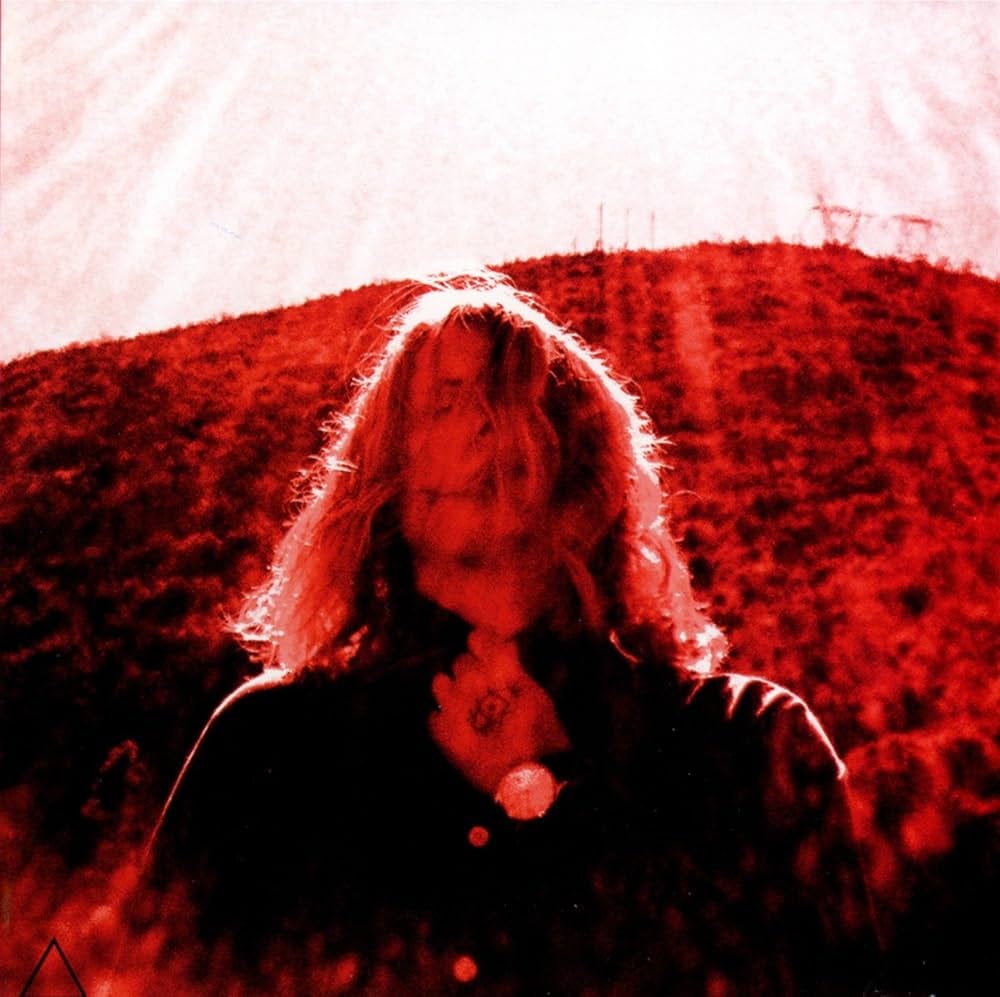
Asked by the Nerdist website if there were any songs on Manipulator for which the lyrics came first instead of the music, Segall replied, “honestly, it’s always music first, and then I’ll mumble when I’m writing, I’ll mumble the words along with it, and record that as a little demo, then actually go back and listen and decipher something out of the mumbling.”
That’s kind of how I do it. When I sit down and try to write lyrics first—I’ve definitely done that in the past—but most of the time, they come off as a put-on, or less genuine than you would think. I’m the kind of guy that if I overthink a sentiment, or I overthink a statement, it’s weird. It has to be more of a flowing thing, for sure, for me, so doing it that way is really natural.
Had Segall overthought the sentiment, or worse, the statement in “Feel,” he might’ve reduced the song to something conventionally understandable, where those creeps in each other’s eyes are contemporary villains with names straight from the news. Luckily, Segall understands that mumbling—a useless currency in a world of clear transactions, a world of “I’ll make this easy so you’ll understand”—has great value in translating sensations, that stuff we can’t rub off that’s as powerful as any statement. Deciphering “something out of the mumbling,” Segall sees words materialize on his notebook page, creeps, eyes, mind, night, watching.
It’s a song that prizes groove and vibes over clarity. I’m not sure I know what Ty Segall knows when he sings “Feel,” but I know what I feel.
I’ve been fortunate to have caught Segall, solo-acoustic and with his great, various, loud bands, many times over the years. (He always delivers. I wrote about some recent shows here, here, and here.) Under lights and in in front of amps, with his shaggy blonde hair, beatific smile, and enigmatic silence between songs, Segall gives the impression of an ecstatic in front of blissed-out followers. And he’s funny and modest, too.
Plugged in, Segall plugs in to something grooving and fierce. Onstage, “Feel” is a train barreling down the tracks; a great version was caught on Live In San Fransisco, recorded at the Rickshaw Stop in late February 2014. Segall’s in front of a full house, backed by Mikal Cronin (bass), Charlie Moothart (guitar), and Emily Rose Epstein (drums). Alive in the players’ hands, the riff in “Feel” becomes the slouchy, hood-eyed younger brother of Led Zeppelin’s “Immigrant Song” on low-rent speed. The song’s scarier than the version on Manipulator, which had the studio in which to lay low, hours idling by letting the riff bounce nimbly on clouds rather than charge noisily into the near dark of a packed, sweaty crowd. You can virtually see “Feel” elevate as you listen to the Rickshaw Stop performance, tension building as the two guitar solos slash at the song, trying to rend its surface from the inside out. The album’s mastered very loudly, and sounds fantastic, as live rock and roll albums should.
Ringing ears is a kind of language, too.
There are several videos online of Segall and his band(s) playing “Feel” down the years. I love the intense performance on Conan from August 13, 2014, a week before Manipulator’s release. The song’s scratching to be let out. The band swings opens the cage’s gate.