
Some mutts can't be muzzled
Amyl and the Sniffers rocked the Salt Shed in Chicago as ugliness prevailed elsewhere

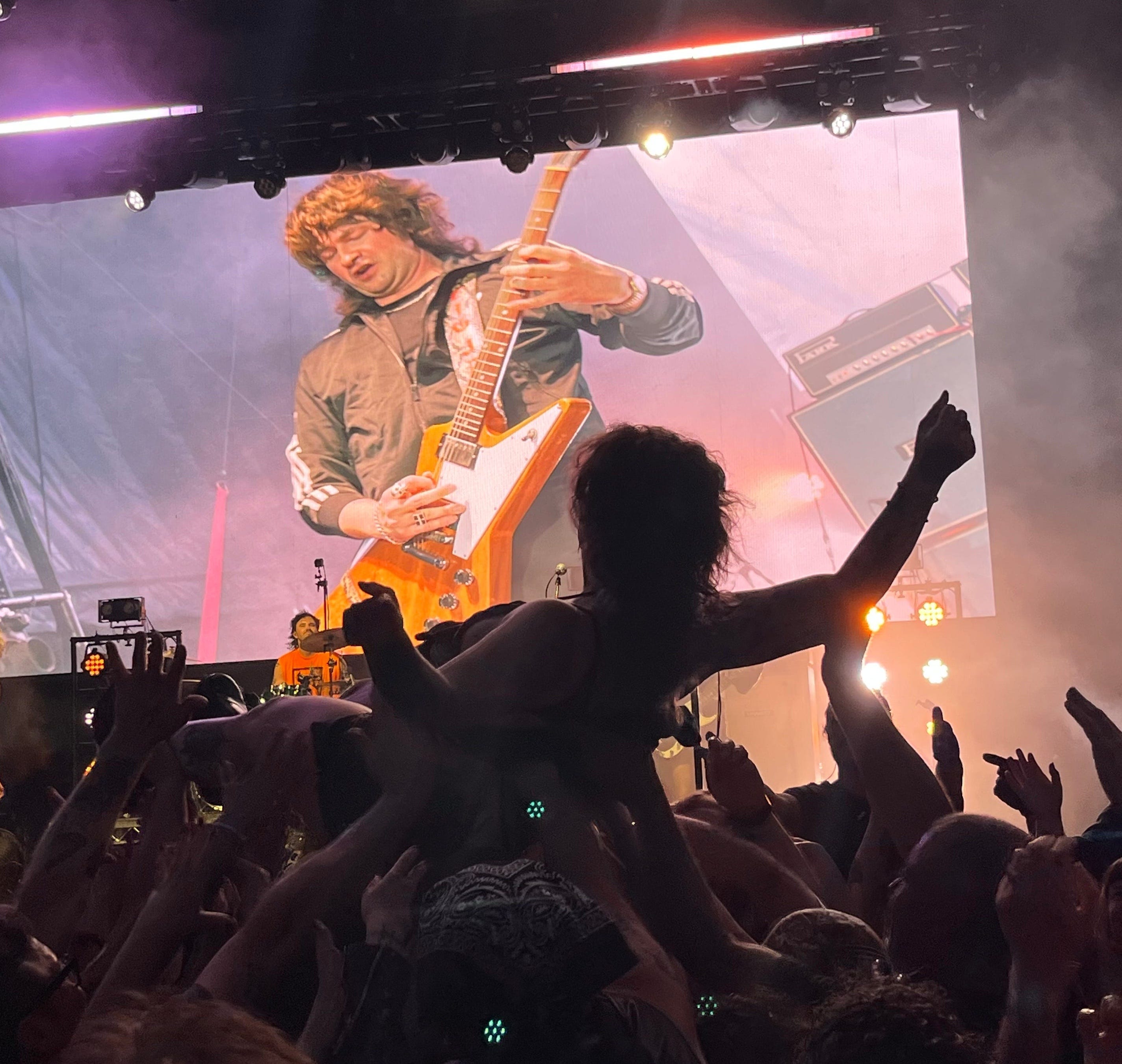
DOWN AT THE ROCK AND ROLL CLUB—I’ve seen Melbourne, Australia’s mighty Amyl and the Sniffers several times in the past few years. They’ve become as dependable a great night out as the Ramones were decades ago.
Sunday night’s show at the Salt Shed in Chicago was my first time catching a band at the Fairgrounds, the outdoor space situated just along the Chicago River. I usually don’t love seeing bands en plein air; in my book, rock and roll is best heard indoors, beneath (preferably low) ceilings that have absorbed the decibels and heat and energy—and, in Biblical times, the smoke—of hundreds of bands and crowds. A sky is so…vast. The sound of outdoor shows, fighting against the elements, can often feel muddy, dominated by the roar of the mid-range. But I’m happy to report that at the Fairgrounds Amyl and the Sniffers were mixed terrifically, bright, punchy, and clear. And loud!
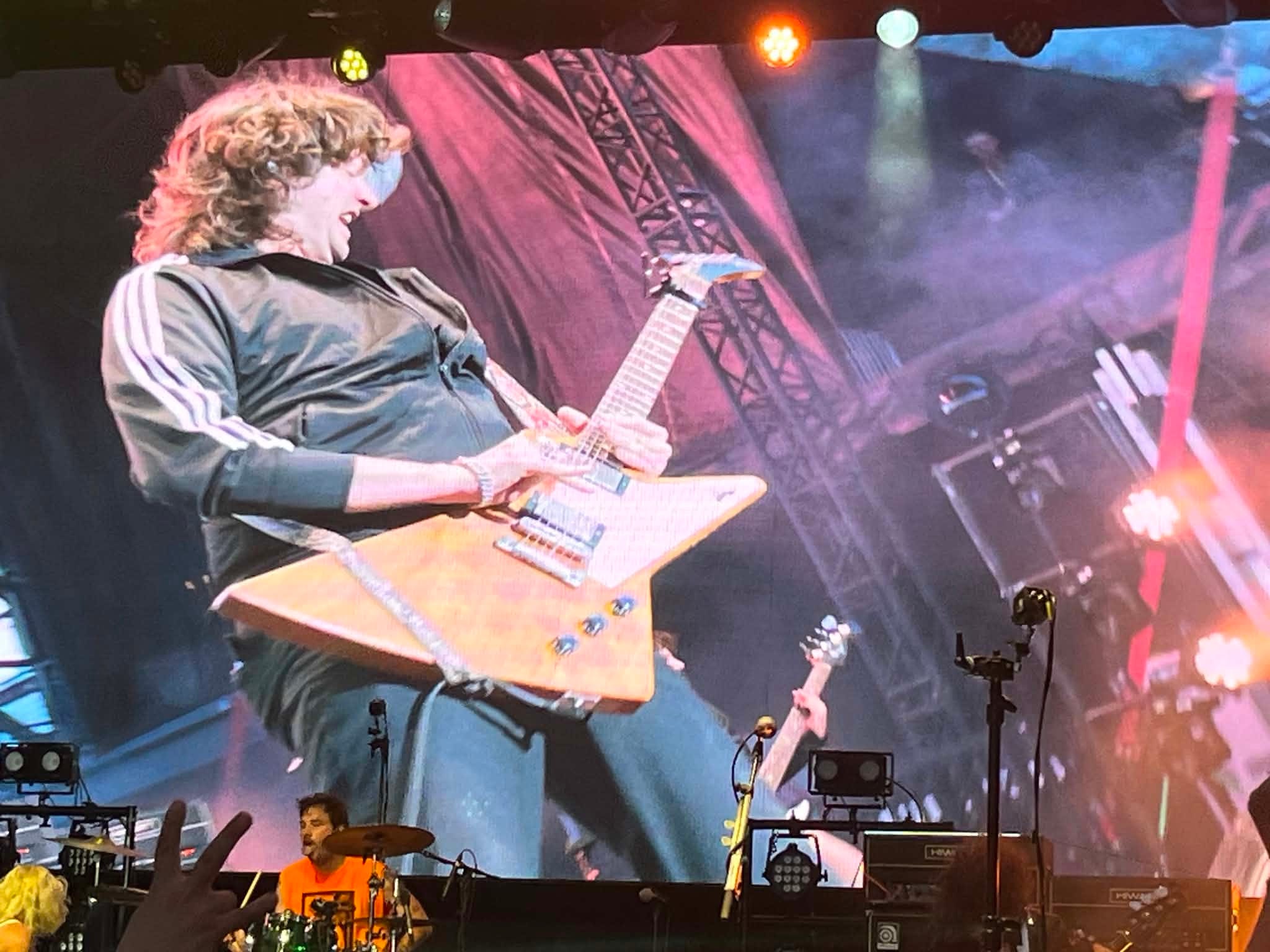
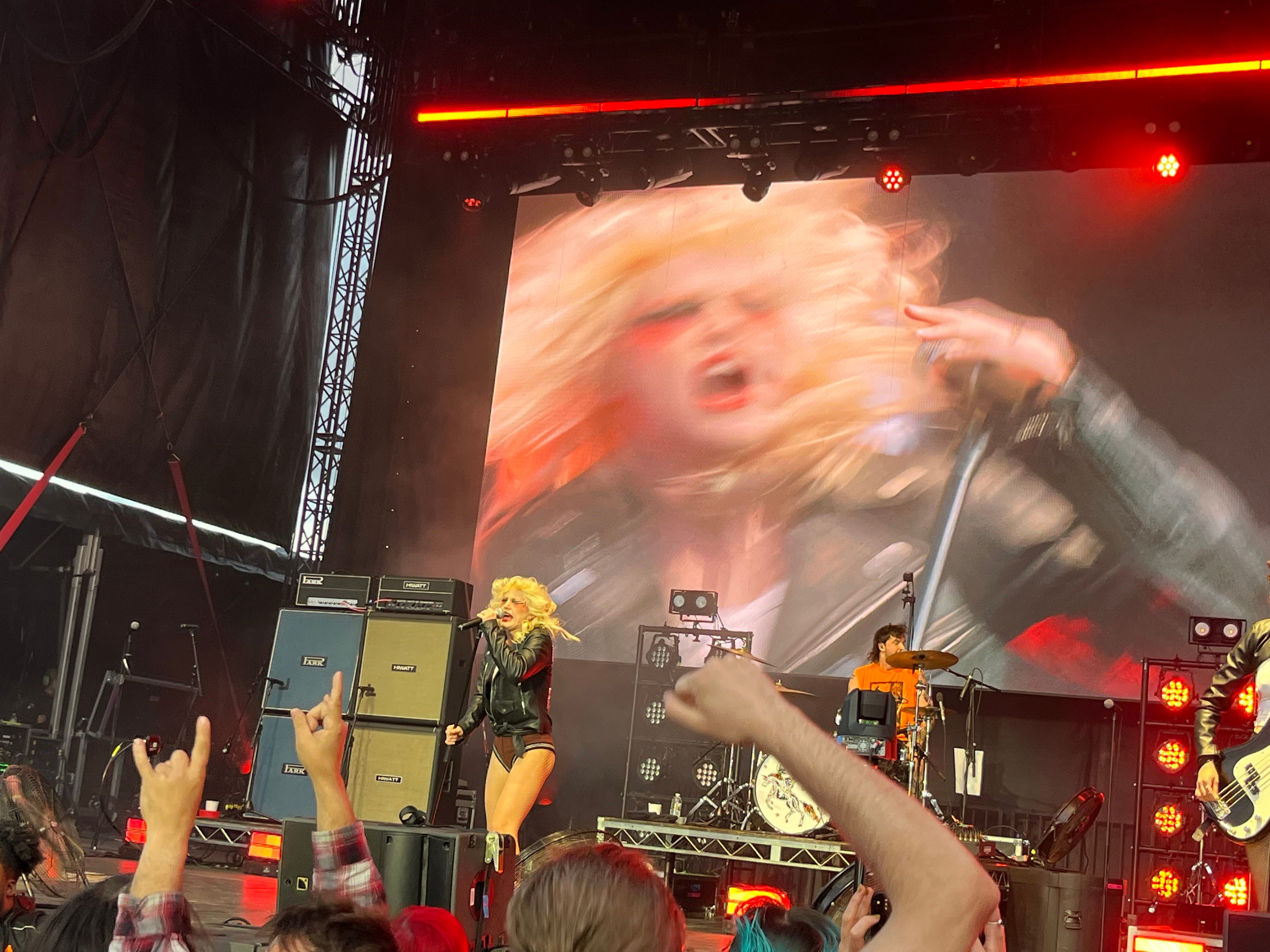
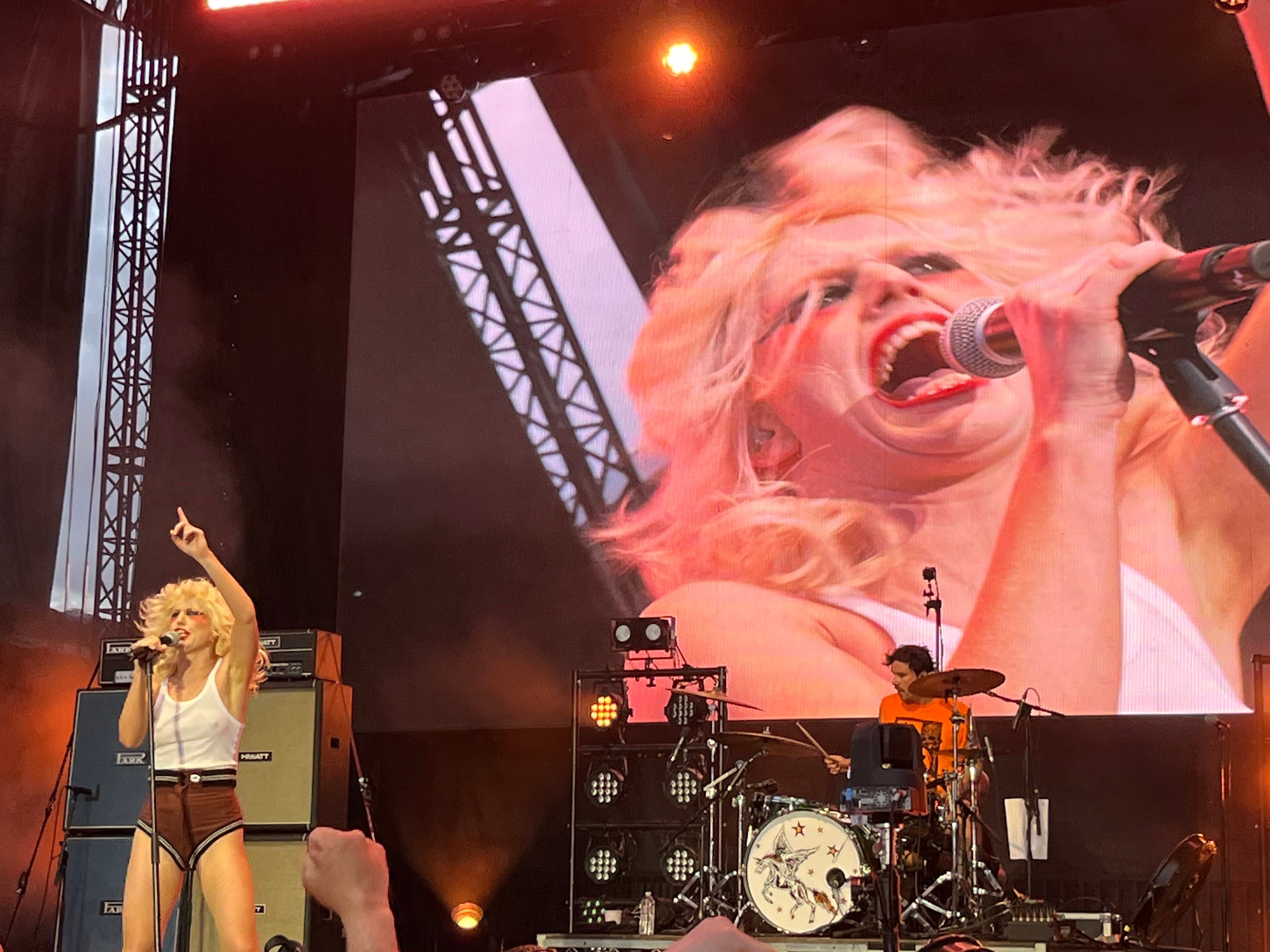
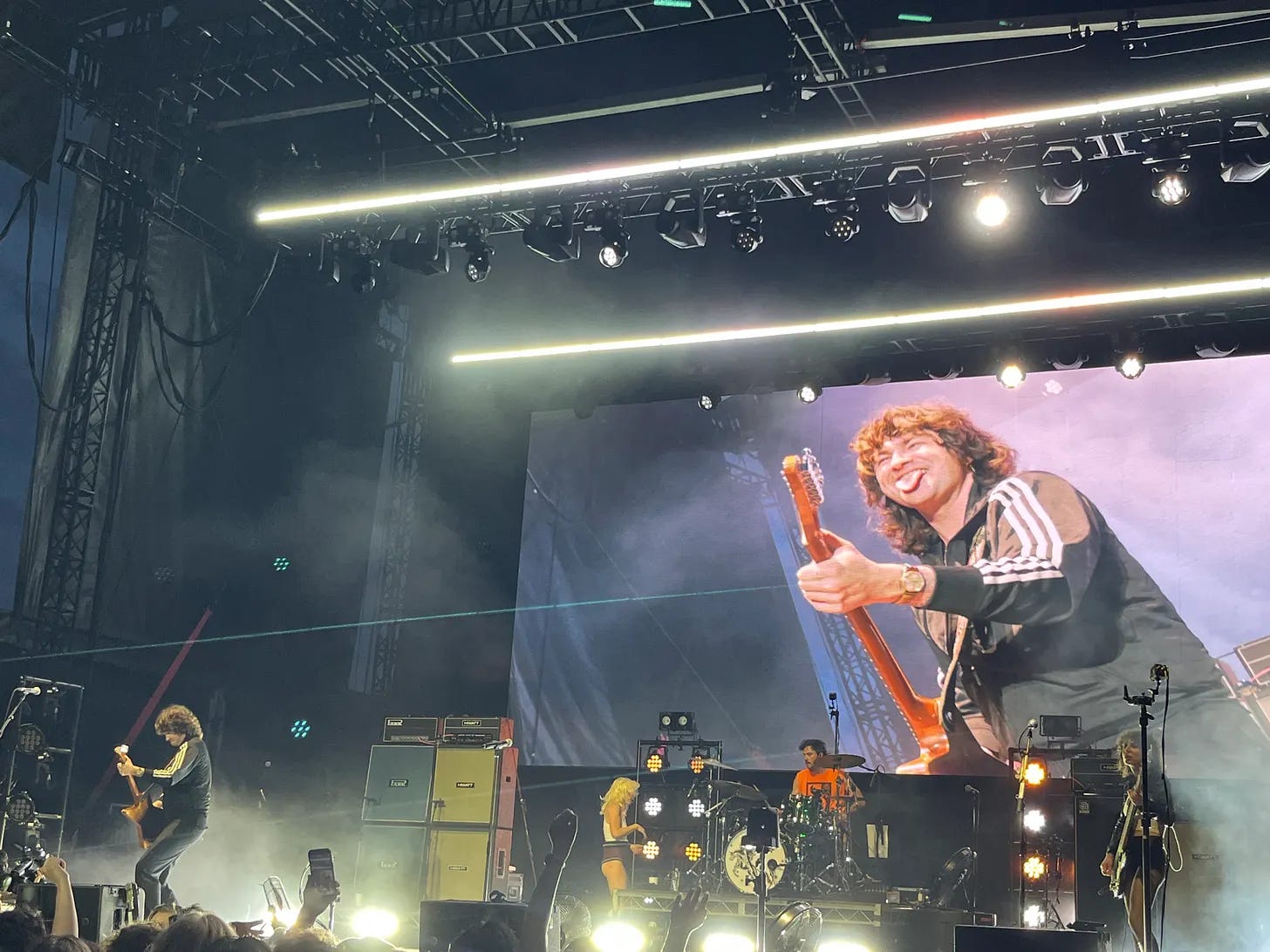
Unfortunately missing from the stage was bass player Gus Romer, who’s taking the rest of the year off from touring—his replacement, Lakota Vella from the Melbourne punk band Public Figures, played superbly, and looked the part. Beyond Romer’s absence, things were reassuringly familiar for the sold out crowd. Shaggy-maned guitarist Declan Mehrtens was decked out in a black track suit, and grinned, mugged, and delivered fiery riffs and solos from his oversized Gibson Explorer, while drummer Bryce Wilson gave the impression, somehow, of strutting behind his kit while also nailing down his band’s rhythm section so it wouldn’t bounce away into the Chicago River. Amy Taylor, meanwhile, was her usually exuberant self, stripping off a leather jacket halfway through the set to reveal a patented white muscle t-shirt above high cut short shorts, leaping and cavorting, striking poses, testifying brassily to her band’s righteous sense of purpose.
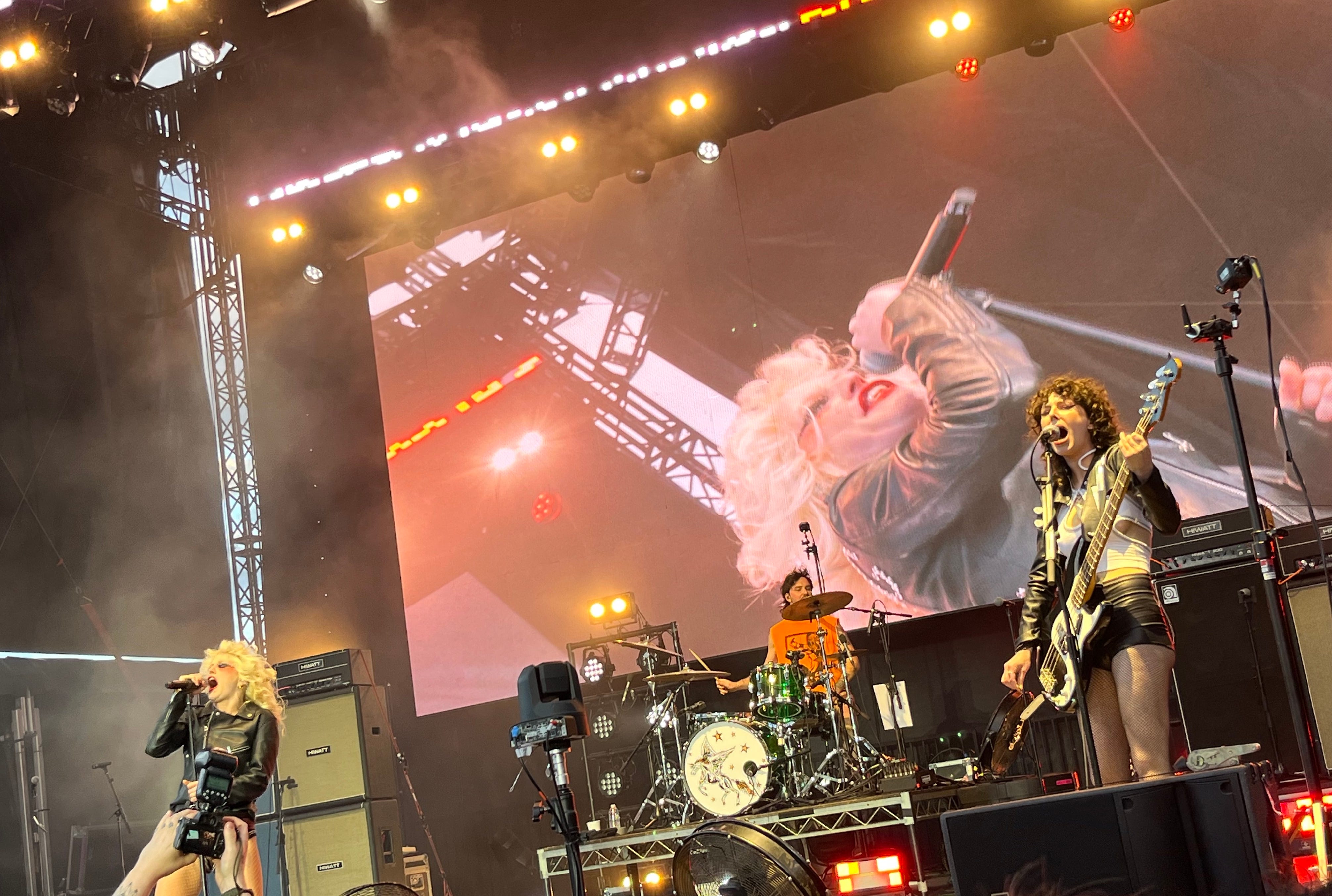
In the minutes prior to the band hitting the stage, a rear-screen projected message read: “AMYL AND THE SNIFFERS WANT EVERYONE TO BE ABLE TO ENJOY THE SHOW. THEY HAVE A ZERO TOLERANCE POLICY TOWARD SEXUAL ASSAULT OR DISCRIMINATION OF ANY KIND INCLUDING AGE, GENDER, RACE, SEXUALITY, DISABILITY OR CLASS. TAKE CARE OF EACH OTHER.” Taylor commanded the crowd to “pick someone up if they fall down, don’t touch anyone who doesn’t want to be touched, and watch out for each other!” before the band launched into the riveting “Control,” from their 2019 debut album, as rousing a kick off as there is, Taylor shouting “I like control, I’m in control” during the breakdown, outlining her desires and demands for the evening. The remainder of the set featured tracks from that album, Comfort to Me (2021), and Cartoon Darkness (2024), drawing heavily from the latter. One surprise was a new arrangement of the melancholy, mid-paced “Big Dreams,” which flew into a double-time gallop in the chorus, changing a sad song about low ceilings and inertia into an anthem for possibility and big dreams. “Sing along if you know the words,” she’d invited the crowd. Many obliged.
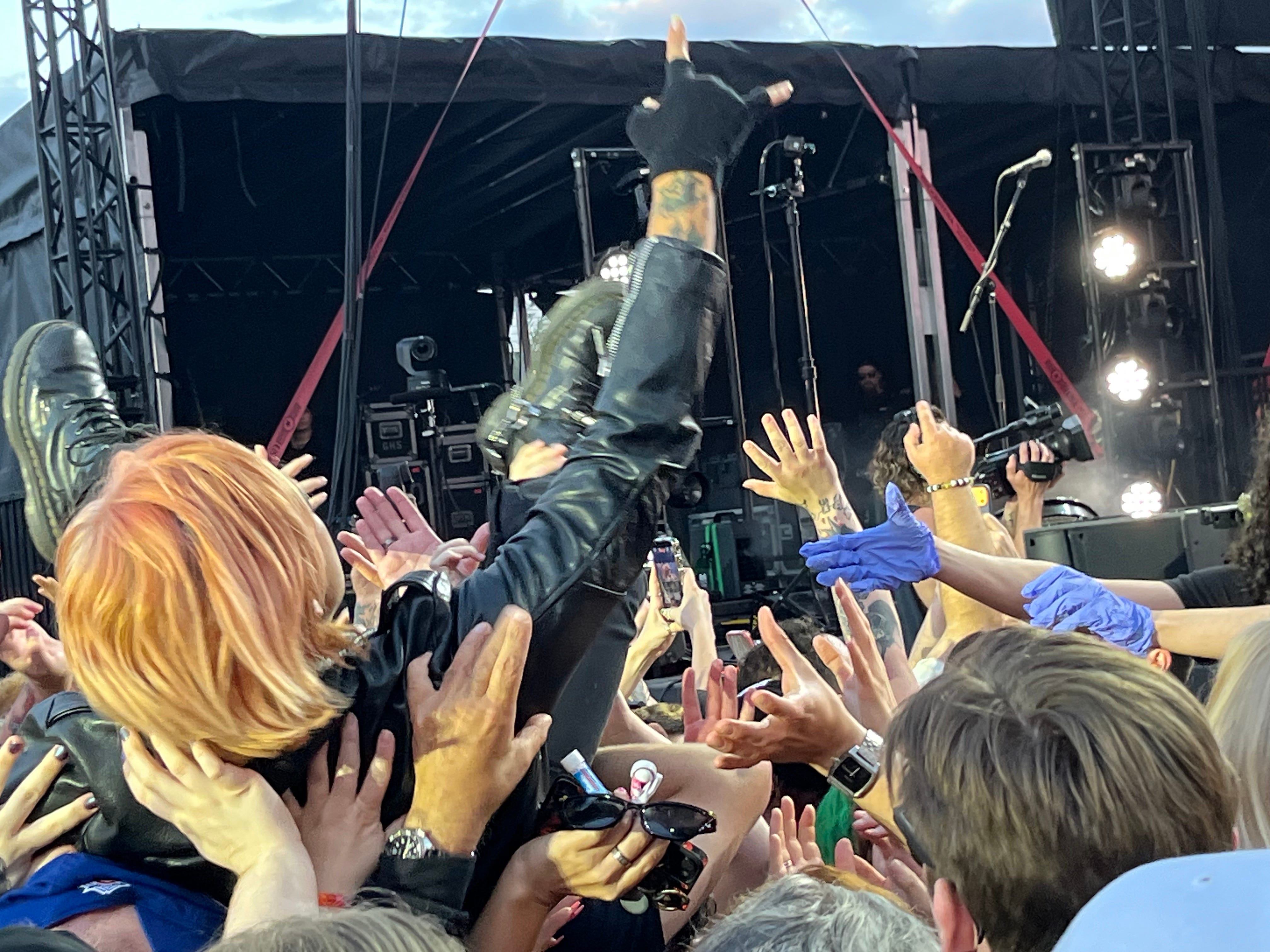
I was roughly five-people deep from the stage, where the joint was rocking. I was surrounded by crowd surfers and the energy was exhilarating. Near the front of the stage, I’d estimate that women (and, flanked by their parents, occasional teenage girls) outnumber men two to one at an Amyl and the Sniffers show. The emotional range between the poles of rollicking joy and earnest anger mapped out in songs like “Me and The Girls,” “Tiny Bikini,” “U Should Not Be Doing That,” “Guided by Angels,” “Some Mutts (Can’t Be Muzzled),” “Security,” “Freaks to the Front,” and the joyous celebration of road trips, “Hertz,” soundtracks many female fans’ lives, and watching them sing along to these songs, their fists in the air, or leap about, singly or in gangs of girlfriends, is a joy to watch and to be in the midst of. With a wink and a grin, Taylor announced that the raunchy, hilarious “Jerkin’,” with its mouthy chorus (“Don’t wanna be stuck in that negativity / Keep jerkin’ on your squirter, you will never get with me”) is “probably about someone who know!”
And the always riveting “Knifey,” a staggering track from Comfort to Me in which Taylor bitterly complains about having to act as the violently tough woman she isn’t just to be able to walk alone safely, struck a chord with the crowd, some of whom may have been worrying about the very same thing. “Sometimes you do want to wrap yourself up and be safe, but I feel like I’ve just always tried to put safety secondary, or experience first to try and make a point” Taylor remarked two years ago in New Noise. “I think because [the music industry] is so male dominated, a lot of what I do is like a pushback against that to make room for the parts of myself that are feminine that I express myself through, that I don’t want to suffocate and die in spaces where it’s kind of seen as bad to be feminine.”
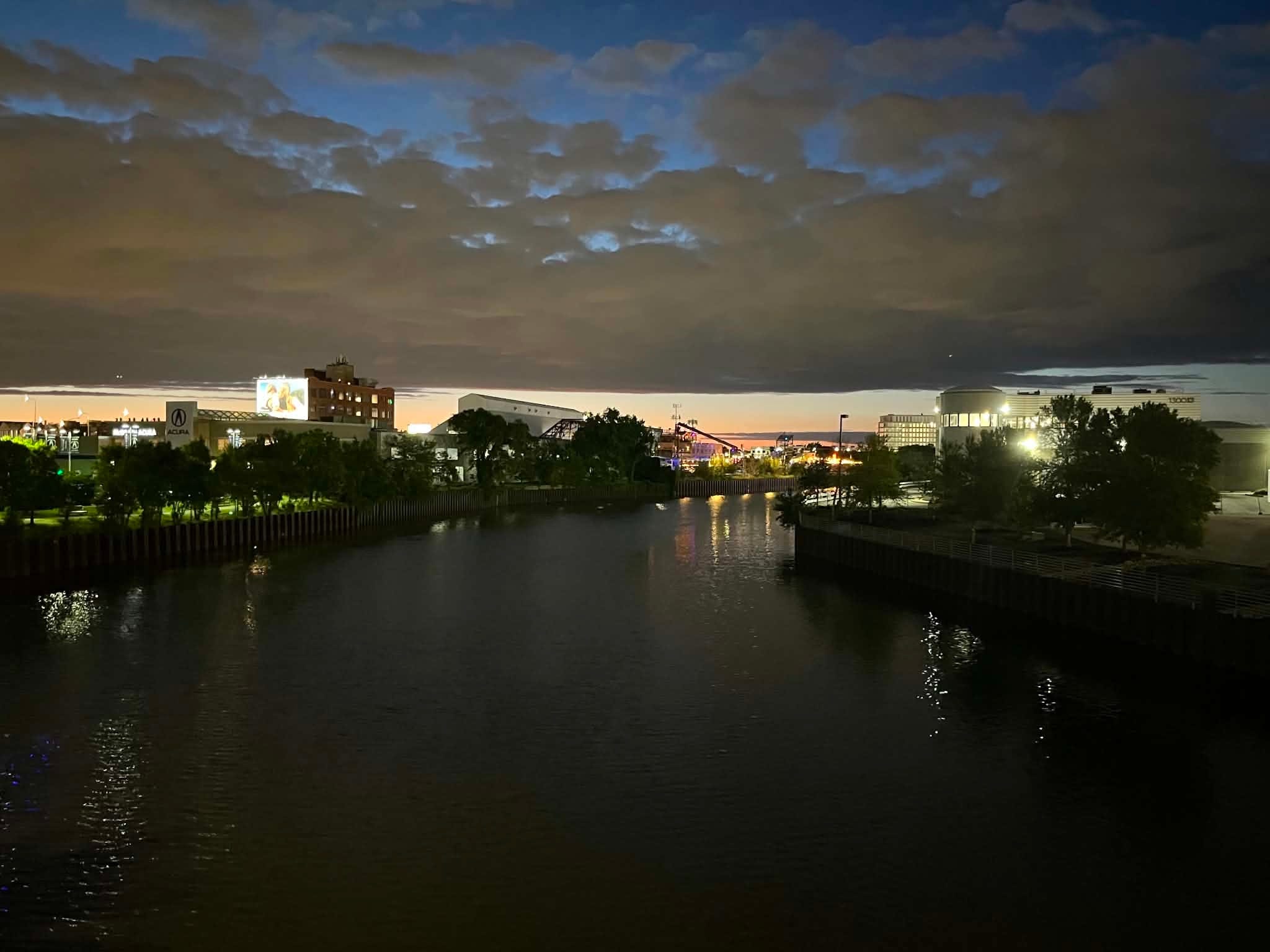
“Knifey”’s chorus—“All I ever wanted was to walk by the river, see the stars / Please stop fucking me up”—is directed to a would-be attacker, and as Taylor and the women around me sang the lines I couldn’t help but imagine the shadows lurking along the river just steps away from us, its charms and beauty menaced by occasions of violence against women. At that the moment, being outside at an Amyl and the Sniffers show felt both liberating and sobering.
Seven hundred miles away, a very different kind of display was unfolding. That evening, as reported by Reuters, “President Donald Trump hosted mixed martial arts fights on the White House lawn…an unprecedented spectacle highlighting his willingness to blend the pageantry of his office with his brutal brand of politics and his family’s business interests.” The event “began hours after Trump and Iranian officials announced they have a peace agreement to end the four-month-old war between their countries, which has pushed consumer prices to a three-year high, unnerving voters.” Trump had an eight-sided chain-link cage erected at the Ellipse on the White House lawn, and before the show “raved about [the] temporary venue—nicknamed ‘The Claw’ for its supports rising higher than the White House roof—and suggested he could leave it there permanently.”
I’ll spare you further imagery and the grosser details of the event, many of which have been widely reported; I’ll only add that, a few months ago, Trump announced “the purchase of up to $50,000 in shares of TKO Group Holdings, the UFC’s publicly traded parent company,” that “closed captioning of the event, streamed on Paramount+, was sponsored by Trump Coin,” and that “World Liberty Financial, a cryptocurrency firm backed by two of the president’s sons and the son of his chief diplomatic negotiator, contributed to the pool of bonus money doled out to competitors who impressed UFC officials during Sunday’s fights.” You get the picture. According to Reuters, an online poll of nearly five thousand U.S. adults found that only 16% felt that “it was appropriate for Trump to hold the event.” Merely a fifth of Americans call themselves MMA fans,” Reuters reported, before concluding dryly, “According to the findings of the Reuters/Ipsos poll, fight fans do not have a particularly high opinion overall of Trump’s job performance.”
In an opinion piece in The New York Times the day after the event, Will Leitch described the “cognitive dissonance of seeing the foundational symbols of our country, where presidents traditionally greet foreign heads of state and host the annual Easter Egg Roll, used as the backdrop for a series of cage matches—and, of course, to celebrate the president’s 80th birthday.” He added, “In many ways, the sight of blood-spattered U.F.C. fighters kicking and punching each other was less jarring than seeing them do it while members of the military stood by and saluted the fighters.” Trump, Leith wrote, “looked legitimately delighted to greet each fighter. It may, in fact, have been all a birthday boy could have possibly wanted: to see all his favorite toys punch each other in his honor.”
The difference in spirit between the White House and the Salt Shed was striking. Midway through the set, Taylor made reference to what was occurring at the Ellipse, acknowledging that she’s not a U.S. citizen, and yet she feels compelled to urge anyone listening to her to avoid the spectacle of meanness and intolerance on display in in Trump’s ideology and policies. “Just trying to be the good you want to see in the world is the way to do it,” she said. “And the way to be that is just to be accepting of other people no matter where they’re from, what they look like, who they fuck, who they don’t fuck, what their age is, all of that shit.” To growing cheers, she added, “And fuck ICE and the way that they’re treating people. We’ve traveled around this country lots of times, playing all different shows, and everybody that comes out is supportive of everything that I say, and think that that says that this country is full of people like minded, like me, like you guys. It’s fucking strong, and this opinion is strong, too, no matter what is going on fucking at the White House. So that’s what I think.” Freaks to the front, indeed. (Thanks to zaneta_o at Instagram for posting the video.)
“I only just started learning basic politics,” Taylor sang honestly, and appealingly, on the song “Capital,” five years ago. (The next line: “Meanwhile, they sexualise my body and get mad when I exploit it.”) She’s taken more bold steps of late, in press interviews, particularly, to face and denounce bigotry, racism, and misogyny where she sees it. Her righteous point of view is celebrated not with songs that traffic in explicit political statements, let alone in arguments, but with songs that honor being alive, living in and for the moment, songs that assert autonomy, individuality, and tolerance while reveling in the joyous release of rock and roll and pub/punk rock.
On a June night last year, I caught New Jersey’s Wyldlife at Liars Club in Chicago on the same day that Trump called in the National Guard to Los Angeles to counter what he called “insurrectionists,” in reality citizens lawfully protesting the administration’s vile ICE policies and behavior.
“To call a band such as Wyldlife a tonic for our ugly times feels toothless and privileged, yet also, as my ears continue to ring, accurate,” I wrote the next day. “Does rock and roll matter much against unrest and dissent? After the show, I caught up with the unfolding situation in L.A. on my phone, and the show that I’d just enjoyed with a packed room full of sweaty strangers felt trivial, misguided, even. Certainly not important. Eventually, I pulled wide, and recognized that nights like the one Wyldife gave us—where a singer prowled the stage while his band detonated sonic bursts behind him—are useful, vital even. Trump and his cruel, cowardly cohort want to rob the country of many things, but they can’t steal all of our joys where we find them. A loud, boozy rock and roll show in a tiny venue, where people push to the front of the stage only to leap off of it into the arms of people whom they don’t know, who will hold then aloft (for a while), can be cathartic. And that’s valuable.”
Those comments ring even truer one year later. I imagine that they’ll feel meaningful to me a year from now, as well, and beyond. Meanwhile, we’ve got Amyl and the Sniffers and any number of great artists reminding us of what we can still celebrate in the moment: communal joy and release in the spirit of unity, not division.
You might also dig:
Wasted

Keith Richards once said—or he didn’t, who knows—that rock and roll is music for the neck downwards. Dave Feldman of Wyldlife said—just last week—“We are morons. Maybe the sharpest morons in the room, but morons nevertheless.”
Melting like an ice cream bar

Searching for "perfection" in rock and roll is a fool's errand, a contradiction in terms. Among the qualities of the greatest rock and roll is its threat to collapse in the next measure, the half-real fear that the instruments might leap from the players' hands and run amok, finally held together by a band or an artist by some combination of nerve, skil…
Gimme gimme revolution

On July 11, 2009, Green Day played Target Center in Minneapolis, Minnesota, one gig of many on their lengthy tour promoting 21st Century Breakdown. Before playing “Know Your Enemy,” the album’s lead single, Billie Joe Armstrong announced to the crowd
Photos of Amyl and The Sniffers at the Fairgrounds at the Salt Shed, Chicago, June 14, 2006 ©Joe Bonomo
Excellent piece, Joe! I first learned of Amyl and the Sniffers through you here, many months ago. And we must hold on to — assert! — our joys where and however we can. Music is an antidote.
Great story.