
What time is it?
Joe McPhee's free jazz anthem "Nation Time" feels as relevant now as it it sounded far-out then

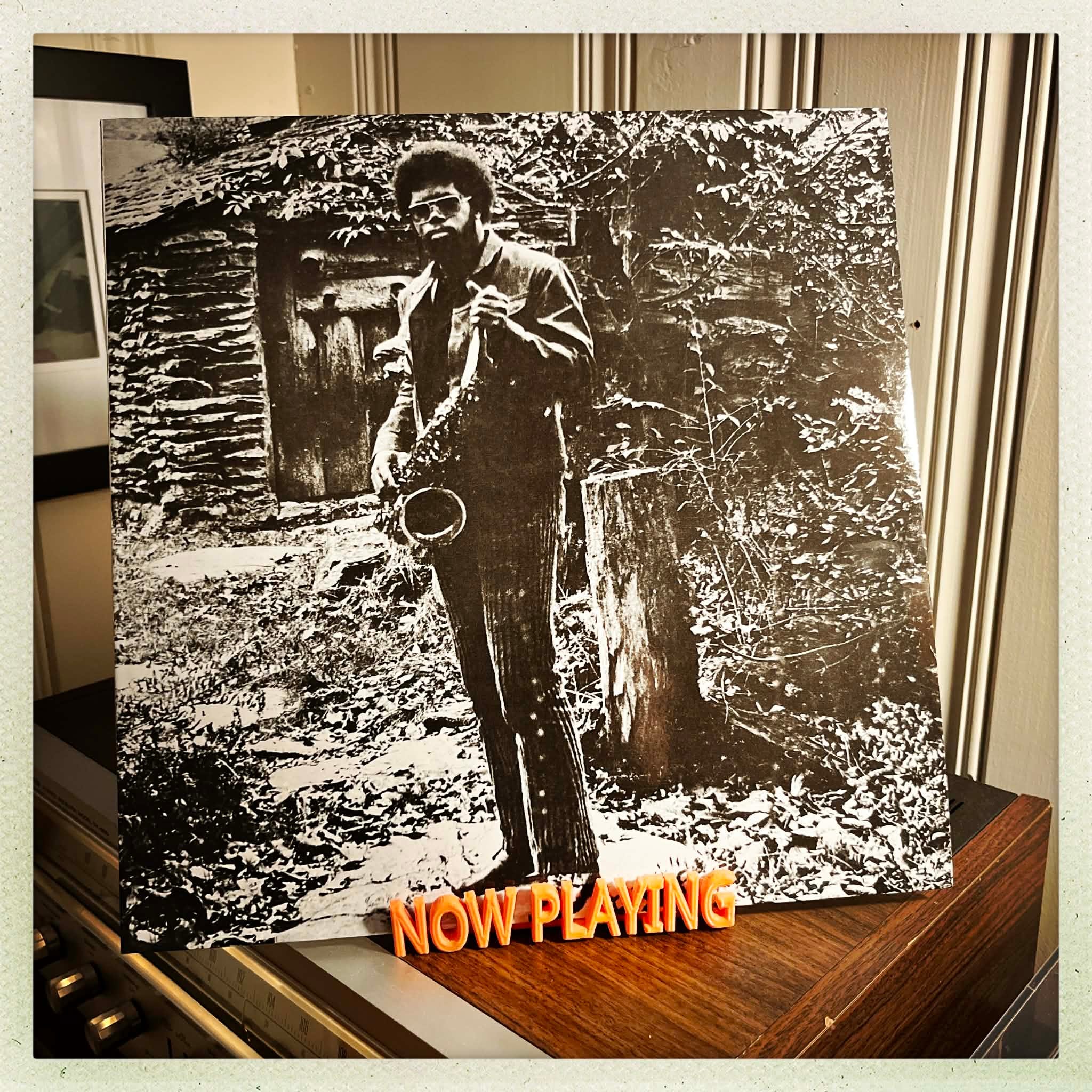
I was introduced to Joe McPhee’s Nation Time through Mike Faloon, founder and co-editor (with Mike Fournier) of the righteously lo-fi baseball ‘zine Fisk, which I’ve been reading for years. Nation Time was originally released in 1971, with a distribution of a thousand or so copies, and has been reissued on several occasions since, most recently in 2019 by Superior Viaduct.
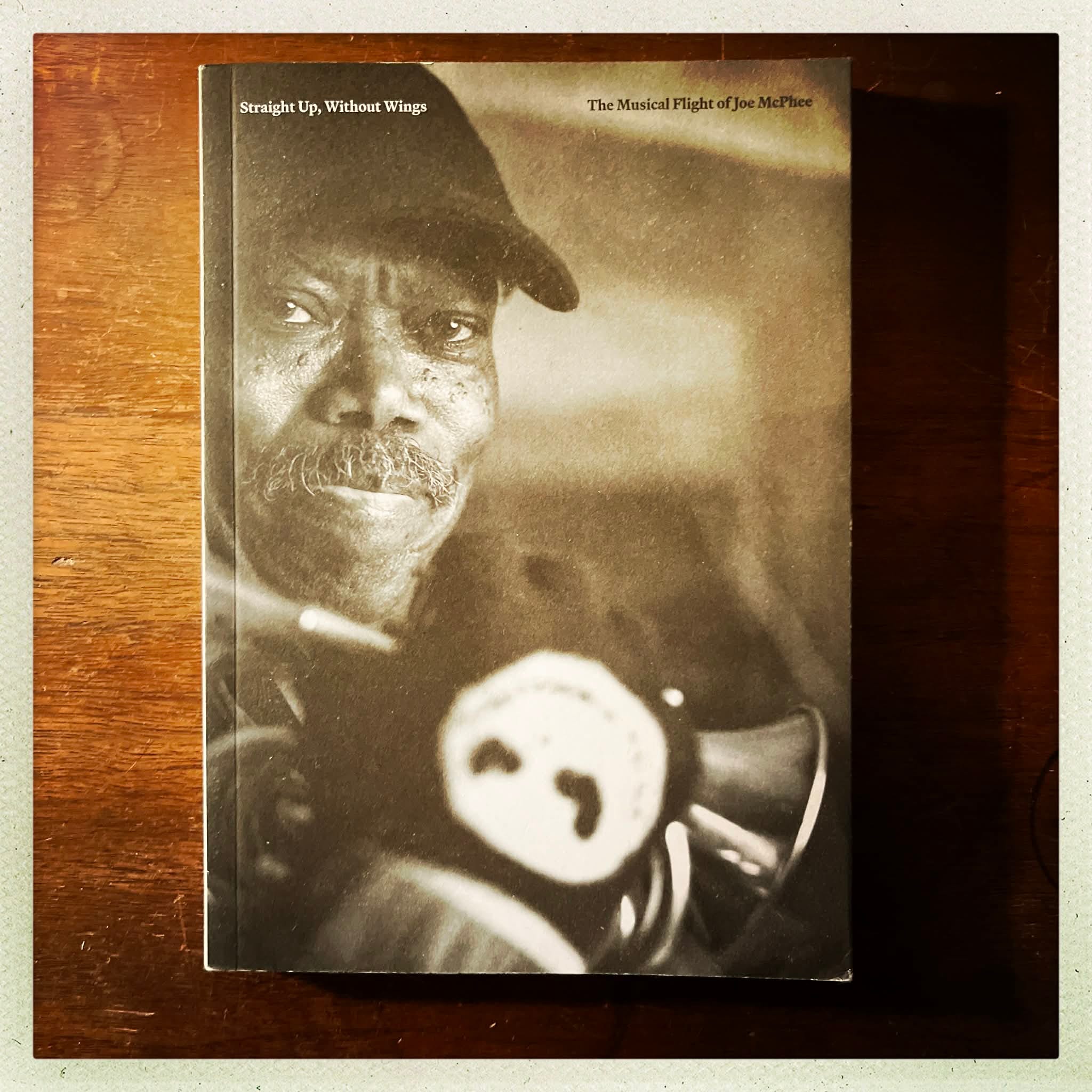
In 2024, McPhee published Straight Up, Without Wings: The Musical Flight of Joe McPhee, an entertaining and illuminating memoir, told to Faloon, that’s a wonderful account of the musician’s driven, modestly celebrated six-decade career in jazz as a fearless multi-instrumentalist. McPhee recounts his childhood and adolescence, years in the army, early playing, and the many decades spent living and working in Poughkeepsie, New York, a two-hour drive to the Greenwich Villages jazz scene and yet a continent away culturally. The memoir, told in McPhee’s dry, generous voice, is shot through with run-ins with major names in jazz (Ornette, Coltrane, Ayler, Pharoah, and Sun Ra among them), countless regional and international collabs with like-spirited musicians, clashes with racists and the narrow-minded, and an overarching commitment to see just how far music can take someone, literally and figuratively. McPhee remains active, a vital and influential presence in free jazz. His discography is impressive.
McPhee taught music at Vassar College, in Poughkeepsie, in the late 1960s and early 1970s, during his so-called hippie phase. He received support for his course “Revolution in Sound” from the school eager to branch out into what would become known as African-American Studies, yet as a faculty member he was treated as a second-class citizen. “For the most part, my class was like this thing over in the corner,” he acknowledged in his memoir. “Jazz means so many different things to different people, from various periods and so forth. I wanted to jump in the deep end,” adding, “But I also introduced music that I thought was very radical, the blues. Everybody was into the Beatles and other rock music. Where does it come from? And why aren’t the people who originated this music being given the proper respect that they deserved? And it can go anywhere—what was the difference between Bessie Smith and Ornette Coleman, you know? I brought all of that into it as well. Don’t be afraid of it, it’s not going to bite you—it’s not so different. You like the Beatles, you like the Rolling Stones, and all of that? It’s all coming from the same place.”
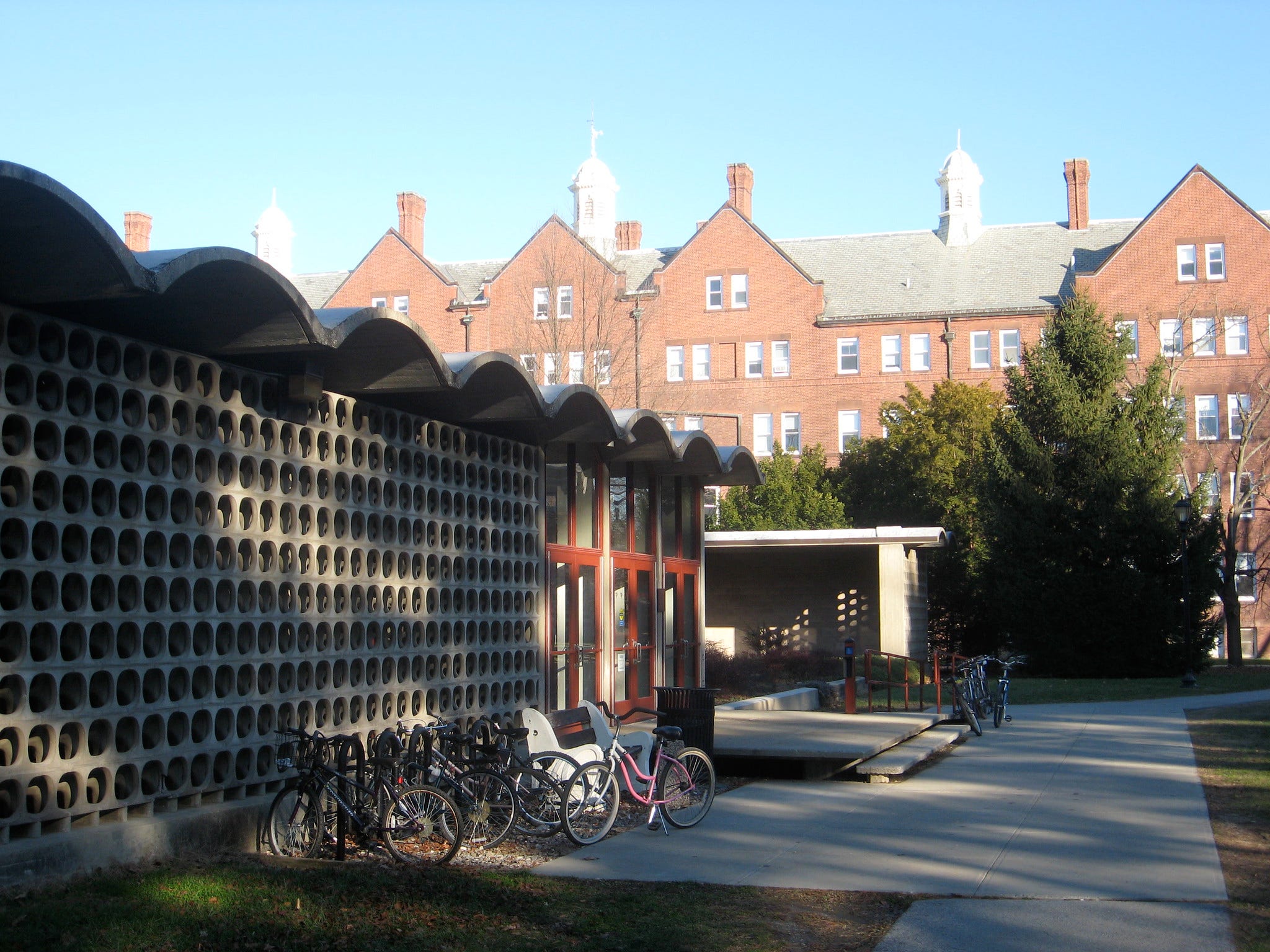
On December 12, 1971, McPhee, unintimidated by a major snowstorm, gathered a group of his students in Chicago Hall for a concert for the Vassar College Urban Center for Black Studies. There, McPhee on tenor sax and trumpet, Mike Kull on piano and electric piano, Ty Crabb on bass, electric bass, and trumpet, and Bruce Thompson and Ernest Bostic on drums and percussion gave an electrifying performance; three tracks, the title cut, “Scorpio’s Dance,” and “Shakey Jake” (recorded the following day) were issued on Nation Time. Nothing less than an enormous, psychic weather front, “Nation Time” is a thrilling, confounding work, at once controlled and agitated. In his notes on the album’s back sleeve, McPhee remarked that “Nation Time” was inspired by, and conceived as a tribute to, “author, playwright, poet and music critic Amiri Baraka (LeRoi Jones). Baraka, a man firmly committed to the building of a black nation, suggests the time will come when a brother or sister is asked ‘What time is it?’ And the reply will be an overwhelming and resounding ‘Nation Time!’”
Given a wide view, McPhee’s endorsement of Baraka is both of the era and unfortunate, as Baraka said and argued some pretty vile things during the course of his long career. It’s an influence that we might call, from a cultural perspective, “complicated.” (And vexed: “I think [Baraka] thought I was trying to steal his title. He didn’t care very much for me, although he never knew me personally,” McPhee remarked in the memoir.) Determined to compartmentalize all of this for now, and on the search for inspiration on McPhee’s inspiration, I headed over to Founders Library on my campus where on the third floor I found, on the bottom of a shelf stuffed with relics of a different era, Baraka’s slim booklet of poems It’s Nation Time, published in 1970 by Third World, a Chicago press. The press’s statement of purpose read, in part: “The third world is a liberating concept for people of color, non-europeans—for Black people. That world has an ethos—a black aesthetic if u will—and it is the intent of Third World Press to capture that ethos, that black energy.” McPhee heard Baraka recite “It’s Nation Time” on the radio in 1969, and he vibed off its anger, power, and energy—here’s page one—
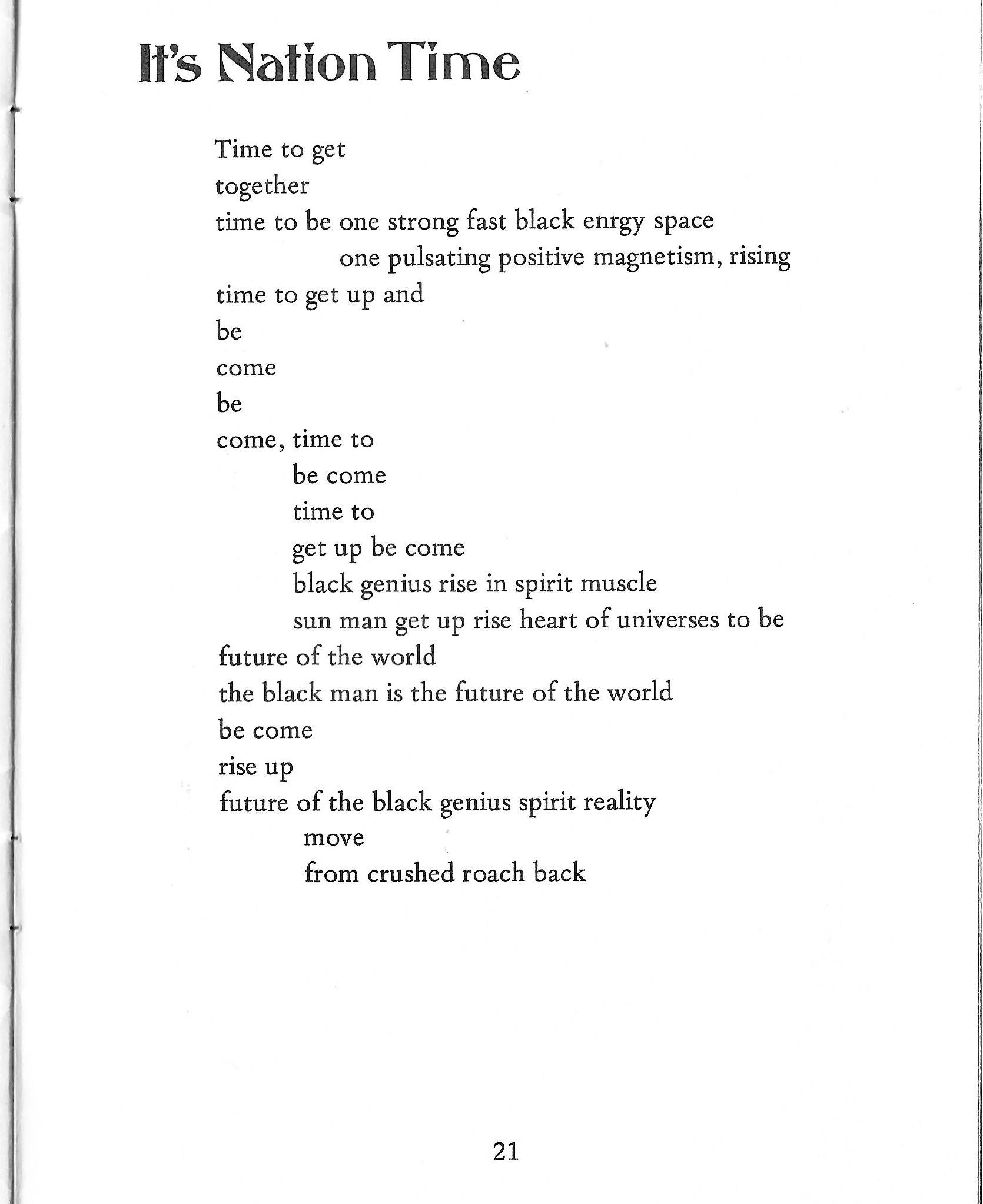
and in Chicago Hall he vowed, with his fellow musicians, to transfer that righteous dynamism, to channel it an alternate voice, to speak it in another langue. The future of the black genius spirit made manifest in sound.
My history with and knowledge of free or avant-garde jazz is fairly limited. I’ve listened to the trailblazers, the Big Names, but I haven’t immersed myself in their work over time as I have, since my adolescence, with rock and roll, pop, R&B, and blues artists. I’ve admired and been blown away by great abstract visual artists since my twenties, diving in out of observations like painter Arshile Gorky’s, that “Abstraction allows man to see with his mind what he cannot physically see with his eyes,” is “the emancipation of the mind. It is an explosion into unknown areas.” Of course I’ve lingered at the intersection of form and formlessness where many rock and pop bands I love have occasionally visited, if not lingered. And psychedelic music has always taken me places. All of which is to say that I think that this makes me an ideal listener of “Nation Time.” I can enter the soundscape that McPhee and the musicians create and, unaware of precisely what to listen for, and lacking an encyclopedic knowledge of the tradition that the quintet’s mining, I can experience the sonic terrain purely, without clutching after certainties, and with my expectations in check, as if I’m being taken on a late-night joy ride with someone whom I trust yet who refuses tell me where we’re going.
Fuller knowledge will come for me; I’m living in sensations now. “With my music, as is the case with some of my friends who are painters, I often have people come to me and say, ‘I like it but I don’t understand it’.” That’s Ornette Coleman, in notes he penned for his radical 1960 album Change of the Century. “Many people apparently don’t trust their reactions to art or to music unless there is a verbal explanation for it,” he continued. “In music, the only thing that matters is whether you feel it or not. You can’t intellectualize music; to reduce it analytically often is to reduce it to nothing very important. It is only in terms of emotional response that I can judge whether what we are doing is successful or not. If you are touched in some way, then you are in with me. I love to play for people, and how they react affects my playing.” “To my mind, Coleman was quite possibly jazz’s greatest humanist,” Nate Chinen reflected in a 2024 JazzTimes piece.

Inspired by Coleman, I dropped the needle and entered the weather that is “Nation Time.” The performance begins with an excitable McPhee at the mic: What time is it?! he demands of the sparse gathering in front of him. “I was trying to get my students to give me a response to my call,” McPhee remarked to Faloon. “Their response was to be, ‘Nation Time,’ and they weren’t giving it. That’s why I said it again. That’s why I’m screaming. When I hear that I shudder. Dear God, what is wrong with this man? I just wanted to get that response out of them.” I picture McPhee with his head in his hands, smiling at his youthful naiveté.
But he eventually gets back a rousing cry from the crowd, and launches a honking four-note riff on his sax, one or two variations of which he’ll play throughout the remainder of the piece, a precariously perched road sign glimpsed by the band as they barrel ahead through the storm winds they create. The melody to “Nation Time” originated in an earlier afternoon performance, McPhee said. “We start off with this free jazz thing, whatever was going on in 1969, ‘70, and it goes into a funky, dance thing. That’s what it came out of…. People were dancing and having fun. It was all of that. Going back to beginnings historically. It was music to get involved in. Get up off your ass and move. That’s what it’s about. Without preaching.” He emphasized to Faloon, “Nation Time was a concert, not a studio session.”
At eighteen and a half minutes, “Nation Time” carries the heft of something monumental, dimensional, and that’s surprising because the thing sounds, in some passages, as if it’s going to fall apart at any moment. “The piece is actually a 24 bar composition based on a simple four note phrase and its melodic variations,” he wrote in the album’s liner notes. A free jazz disciple, he continues, “However, the 24 bar construction is abandoned here in favor of a more free, spontaneous interpretation, to allow for audience participation. Each player is free to choose the musical route he prefers. There is no set chordal sequence upon which to base the improvisations, and only the time and rhythm patterns were predetermined. The second section, built on another riff figure and shuffle rhythm pattern, is a spontaneous group improvisation.” At the other end of the tumultuous decade when free jazz was theorized, McPhee isn’t breaking new ground in Chicago Hall, he’s following the lead of Coleman and other pioneers—and yet the ground still shifts and moves beneath him as he and his band play.
Either Thompson or Bostic mimics McPhee’s opening hook, joined swiftly by Kull on electric piano and, hesitantly, Crabb on bass; the other drummer joins in with his hi-hat—the impression is of McPhee, the bus driver, glancing in his rear view mirror to make sure that everyone’s buckled in. But as the performance kicks in and evolves within the following minutes—each player is free to choose the musical route he prefers—you can sense some of the players pull at their buckles, aching for release. Kull solos first, his playing held a loft by Thompson and Bostic’s light-as-air percussion. (After a few bars, Kull moves to the center of the mix.) McPhee stands down, and lets his players chart the terrain, Kull’s nimble movements up and down his keyboard feeling like currents in the air, Crabb’s bass walking then jogging, then jogging in place high up on his fretboard.
A few minutes in, McPhee returns on his tenor, soloing against Kull’s stabbing chords and runs, moving toward and away from the performance’s central four-note hook, a hook that occasionally stops the band cold. McPhee’s solos are feral. Six minutes in, the players drop our entirely so that McPhee can honk and wail with abandon; this crucial passage seems to dislodge the musicians from where they were standing and playing, and the performance feels gently, if alarmingly, airborne, the players watching McPhee carefully from inside of the mothership so as to lasso him back in if he strays too far away. (Forget the bus, we’re in space now.) After about a minute, the band returns, and the borderless, rudderless noise continues, and grows for several minutes before quieting again, an amoeba of sound that somehow centers itself around that central hook—before taking off again, moving in ebbs and flows. Thompson and Bostic create a virtual storm on their kits.
To my untutored ears something fascinating occurs around the 10:15 mark—that is, well, nothing happens, the band dies out, temporarily timid in the face of what they’re creating. As the bandleader, McPhee notices this, and he becomes alarmed. He described to Faloon what happens next: “The music began to lag at one point, and I thought, Uh oh, everybody is going to stop. I didn’t want them to stop and I couldn’t tell them not to stop, so I had to play something. I played something that went Boom boom, da- da-da da-da-da da-da-da Boom boom. Something like that. I forced them to go on, and it became this very danceable rhythm where it changed. I never told them what to do, I just played it. If you listen to it, you can hear the shift. Everybody had to be on board with it. I just played it and they had to hear it. The drummers picked it up, Bruce Thompson and Ernie Bostic. They were perfect.’’ This is, I presume, the piece’s second section that McPhee described in his liners notes as the “shuffle rhythm pattern.”
So, in response to McPhee’s urgent playing. the band starts to swing—conservatively, traditionally, you can sure as hell dance to it!—and they keep it up, really rocking, for the rest of the performance. The impression is that the piece, so far out in space with McPhee behind the wheel, had to return to earth, to ground itself in the past before feeling bold enough to reach again for the blind future. I don’t hear the musicians ever quite reaching those heights again in the rest of the performance, which concludes with McPhee again exhorting his students, his raw hollering a piece of percussion itself, now. “Nation Time” was recorded a year and a half after the Apollo 11 moon landing, and I can’t help but sense, from that small stage in Chicago Hall at Vassar College, a like-spirited journey, into the unknown, where the place we reach will remind us that we’ll eventually have to return home, yet also tantalize us with the humbling knowledge that there’s an infinite amount left to explore.
In his companion liner notes to Nation Time, New York City-based journalist and record producer Chris Albertson wrote, carefully, that McPhee’s music “will undoubtedly sound radical (even subversive) to ‘Middle America,’ but not to ears weaned on Coltrane, Miles or Hendrix. Tag it however you will, it is music of the present with a reverent bow to the past.” I love that reference to Jimi, who died a few months before the “Nation Time”performance, whose own sonic voyages were steered by a Fender Stratocaster, not a tenor sax, but who shared the desire to keep pushing forward.
And of course I hear strains of the MC5 in “Nation Time,” not least because McPhee’s hoarse incitements echo those of J. C. Crawford’s at Detroit’s Grande Theater two years earlier. (“Brothers and sisters, the time has come for each and every one of you to decide…!”) But also because the MC5’s rockin’, futuristic mission shared goals with the likes of McPhee: “The free-jazz movement, the music of Pharoah Sanders, Archie Shepp, John Coltrane and Sun Ra—that’s what originally inspired me and the MC5,” Wayne Kramer remarked in 2014. “What the most advanced jazz musicians were doing was pushing the music forward, and that was my goal as a rock player in the MC5. I needed a source of inspiration that was unorthodox and provocative on every level. I had reached a point where I could play the guitar okay. I could play Chuck Berry solos and Rolling Stones songs. Sun Ra showed me where to go from there.”
So, what time is it? “I don’t know what it is about ‘Nation Time’ but it seems to inspire people,” McPhee said in Straight Up, Without Wings. “It’s not about the ‘60s. A lot of people think we got past that. ‘It’s post-civil rights.’ ‘It’s post-racism.’ That’s bullshit. Every time the lights come on at a traffic light, Am I going to get home? Okay, the cops are going to stop you. How do I know I’m not going to get shot? What kind of life is that? I put my keys on the dashboard. It’s sobering. Things are getting better? ‘Nation Time’ is about much more than that. It has to inspire and it does, but I don’t know how or why.”
The beat, wherever and however it’s chased, goes on.
You might also dig:
As it hits the air....

James Baldwin's story "Sonny Blues" was first published in Partisan Review in 1957, and then eight years later in Going To Meet The Man. The closing paragraphs are among the finest and most moving writing about music I've ever encountered.
As though I have wings

The other day I picked up a few books at the music library on campus, then ducked into the Jack Arends Art Building and walked the hallways. It was late in the afternoon so classes weren’t in session, but handfuls of students were working in studios, painting or working with wood or metal. I stopped into an empty auditorium hall and was sent back my day…
Kaleidoscopes in sound

There are a lot of ways to tell a story. Loudly in a bar, quietly on a pillow. In a TikTok, a letter, a stand up act. A novel, short story, a narrative essay. Sign language. A concept album. A graphic comic, cave art, miming. On his new album Love Rudiments
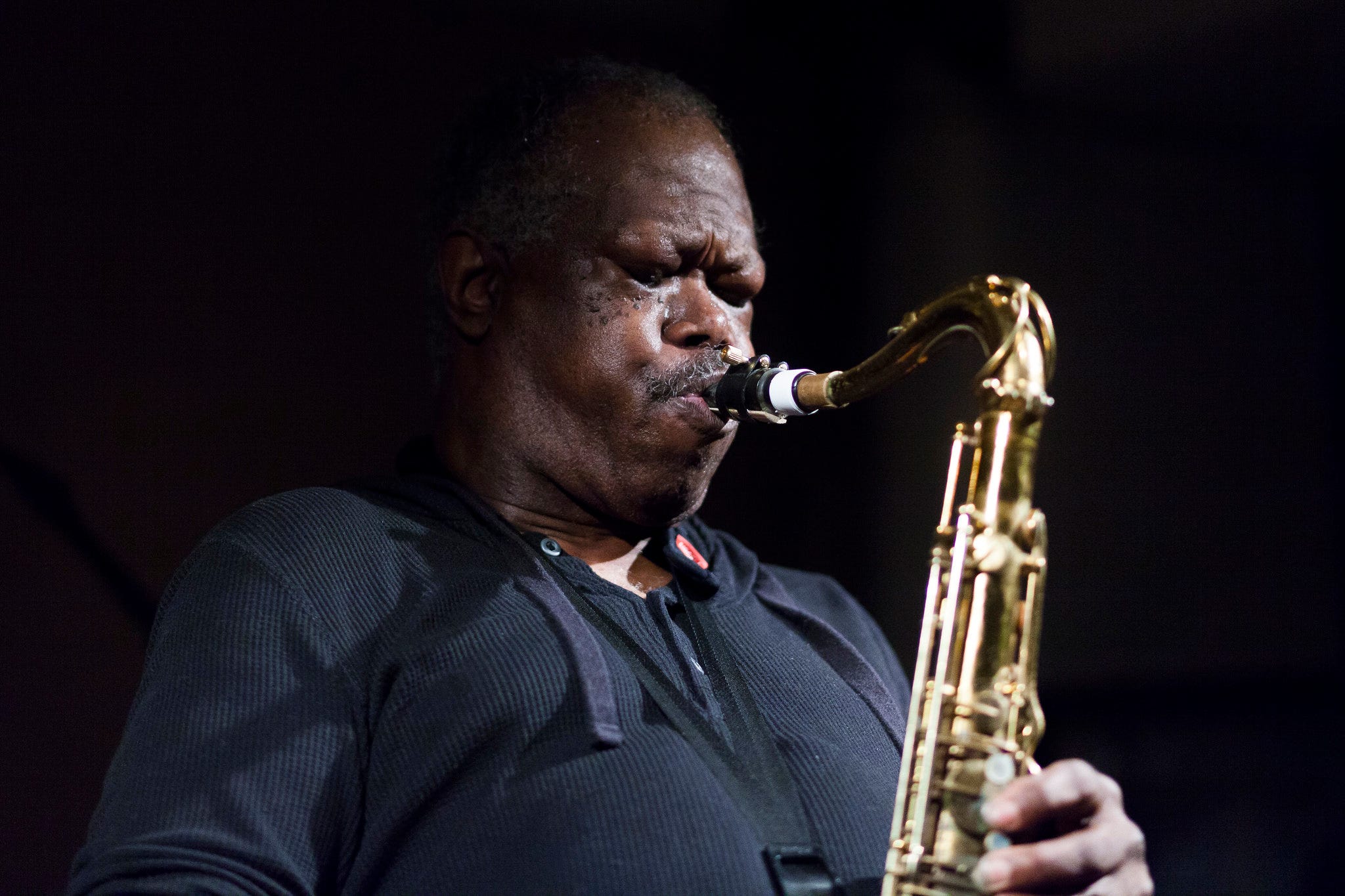
“Chicago Hall, Vassar College, Poughkeepsie, New York,” by Joseph via Creative Commons
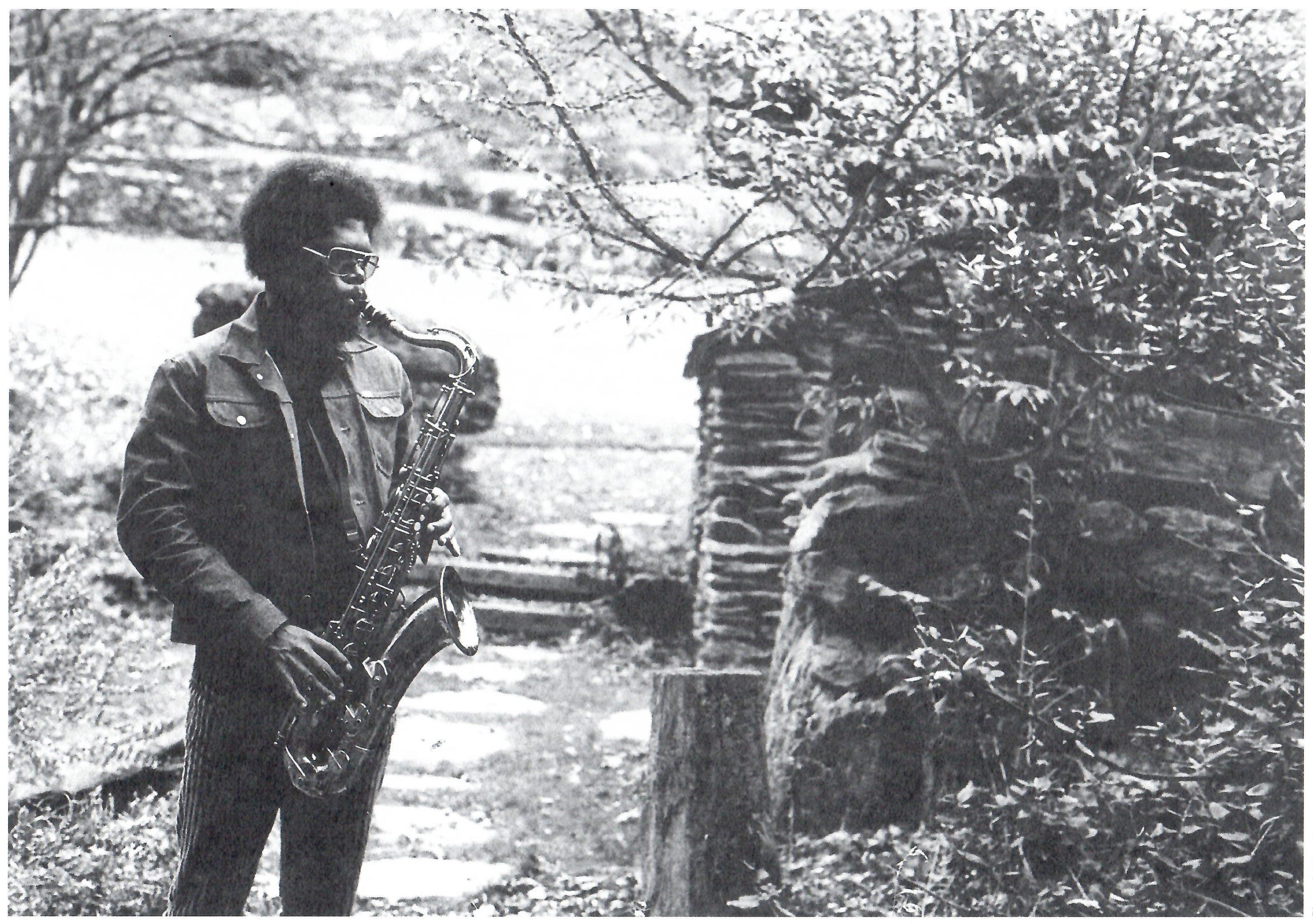
“Joe McPhee / Joe McPhee & Decoy at Cafe Oto” by andrej via Creative Commons