
Here comes Mr. Misery, again
With "Poor Fractured Atlas," Elvis Costello and the Attractions delivered their graceful swan song

“I didn’t want to pretend that I was still twenty-two.” So remarked Elvis Costello in his late forties. He made this observation in his liner notes to the 2001 reissue of All This Useless Beauty, the album that he’d recorded with the Attractions five years earlier.
Barring an alignment of the planets, it will also be the last album that Costello will record with the Attractions. (Since 2002, he’s employed keyboardist Steve Nieve and drummer Pete Thomas as 2/3 of the Imposters, along with bassist Davey Faragher.) The mid-1990s witnessed a curious reunion of Costello and the band that had so charged his landmark albums of the late-1970s through to the mid-‘80s. After 1986’s Blood & Chocolate, Costello had split acrimoniously with his backing band, whereupon he grew an unruly beard, wrote some songs with Sir Paul McCartney, moved from Columbia Records to Warner Brothers, gathered sundry musicians, and released the over-stuffed, hard-to-love albums Spike in 1989 and Mighty Like a Rose in 1991 (both of which featured cameos from Nieve and Pete Thomas), as well as a classical collaboration with the Brodsky Quartet, The Juliet Letters, in 1993. A year later, ever restless, Costello surprised everyone—well, me, anyway—by inviting the Attractions back into the studio for the uneven Brutal Youth. (In the event, bassist Bruce Thomas played on only five of the album’s fourteen tracks. Ol’ drinking mate and musical co-conspirator Nick Lowe produced and played bass on the rest, making Brutal Youth a reunion down the pub after all.)
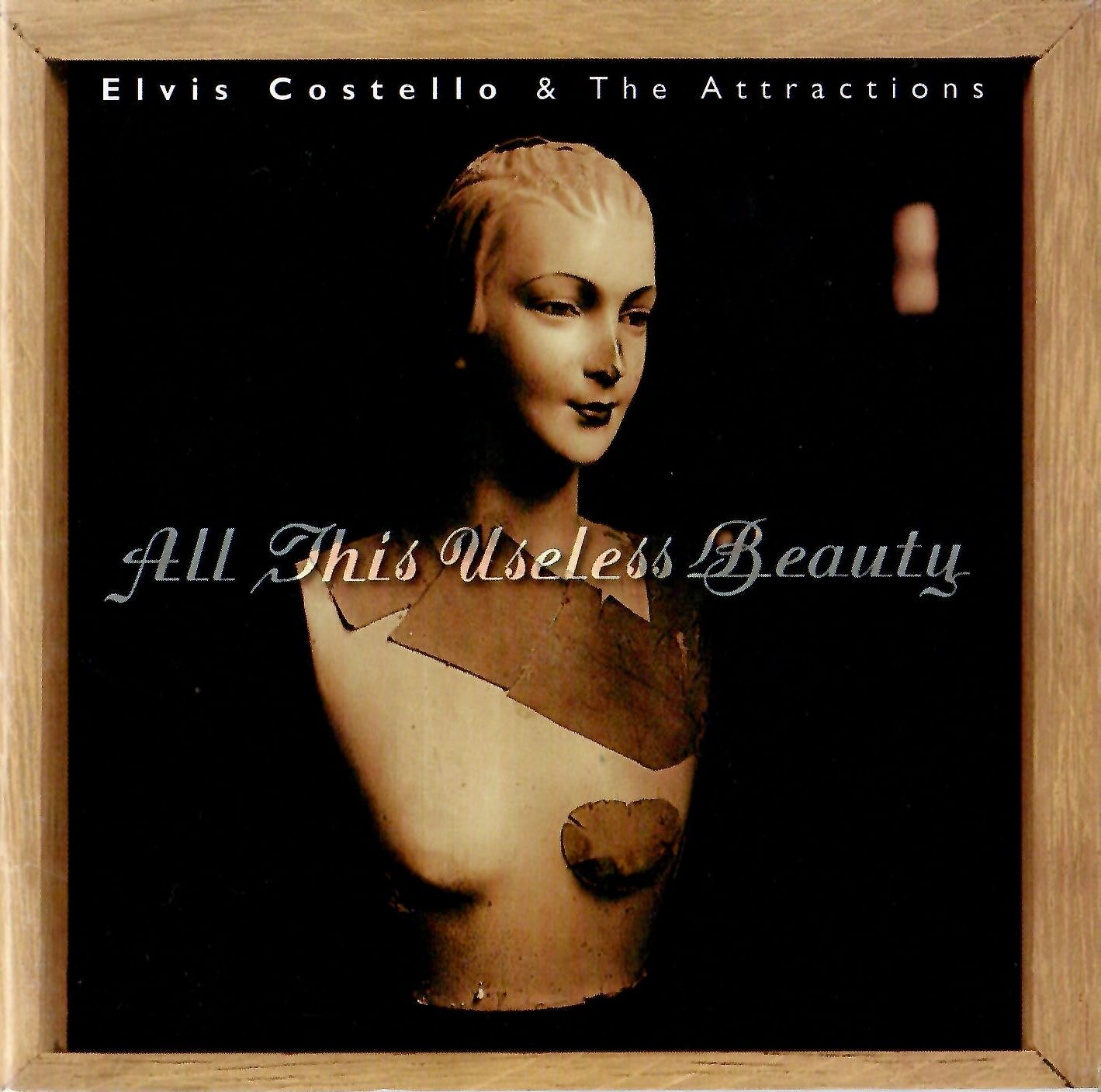
All This Useless Beauty began life as a gathering of songs that Costello had written for artists he admired, a double-album project he pitched to Warner Brothers with the title “A Case for Song,” feeling that the name had “the ring of an old Noel Coward revue about it.” He’d been excited and inspired by the diverse musicians he worked with as the curator for the 1995 Meltdown Festival, and he originally wanted to employ a vast range of backing musicians and styles for the new record. That plan fell to the side, a tough-luck victim of logistics and the indifferent calendar, so later in the year he invited the Attractions back into the fold to preview many of the songs at a residency at the Beacon Theater, in New York City. Over time, Costello pruned back the number of songs that he wanted on the album—some just weren’t working, others were played, as he put it, “through gritted teeth by at least one member of the band”—and eventually he and the Attractions gathered at Windmill Lane Recording, in Dublin, and Westside Studios, in London, to record. The twelve-song All This Useless Beauty was released in May of 1996. He and the band followed it with a 45-date world tour.
As Costello remarked above, in his forties he was no longer the lean, hungry, bitter man of two decades earlier, whose corrosive, kinetic songs threw off dangerous and thrilling sparks, even the ballads. Costello was writing songs now that were more expansive and baroque, and he was insatiably curious about the sophistications of form, and as interested in the vibe and possibilities of ballad, jazz, chamber, and classical music as of pop. Committed to a wider vista, he was taking far greater care of his voice, and had long ago traded raw energy and sour harshness for a more considered, less amped-up take on the frailties of the human condition. In the mid-‘90s his songs demanded, to his ears anyway, more ornate arrangements and a sound closer to the spirit of Imperial Bedroom (1982) than of This Year’s Model (1978). Blood & Chocolate will likely be Costello’s last rock and roll record. And that album was released four decades ago.
Costello might have expanded musically, but he was still helplessly captivated by the weaknesses and obsessions of his fellow humans, topics that he’d been skewering in songs since he began composing them as a skinny teenager in Liverpool. The lyrics that he was writing in the mid-‘90s might have “had a different point of view than those I’d written in the late 70’s,” he acknowledged,” yet still—yet always—“there were songs about vanity and the deluded manners of men.” Despite the through-line of subject matter, the diverse All This Useless Beauty doesn’t really cohere as an album, though it does sound terrific, warm and rich, because it’s wonderfully recorded. Costello co-produced the record with the great Geoff Emerick, and he gives credit to Emerick and engineer Jon Jacobs, “who focused the sound on all the strengths and flattered the weaknesses in the playing,” adding, “They mixed the record splendidly.” A few of the songs labor under the considerable weight of their Costellovian conceits—but “Complicated Shadows,” “Why Can’t A Man Stand Alone?”, “You Bowed Down,” “It’s Time,” and “I Want To Vanish” are strong tracks, balanced well at that crucial spot between conception and performance (even if a couple overstay their welcome, or feel as if they do).
The standout track is “Poor Fractured Atlas,” a melancholy waltz that’s one of Costello’s most incisive and devastating songs. “The heart of [All This Useless Beauty] was certainly in the ballads,” Costello remarked. “We played each of them at the slowest, most expressive tempo possible,” noting that the arrangements “were stripped down and more a more emphasis placed on the voice and the piano.” (“This didn’t exactly help the feeling of group unity,” he added dryly.) Costello and Nieve were hardly awkward alone in a studio or on a stage—from the riveting live version of “Accidents Will Happen” recorded at Hollywood High School in 1978 (issued the following year on a free EP with Armed Forces) and “Just a Memory” (the “New Amsterdam” EP, 1980) to “Shot With His Own Gun” (Trust, 1981) and “Almost Blue” (Imperial Bedroom), the two had long been comfortable playing off of each other in intimate sessions. By ‘96, Costello had collaborated with Burt Bacharach—they were two years away from releasing the well-received Painted from Memory album—not only familiar with but confident about writing and singing lush, painterly songs.
“Poor Fractured Atlas” begins with a joke, although you’re not aware that you’ve heard the punchline until the song’s over. Nieve opens with a pretty, three note passage that within a bar or two graphically evokes Beethoven’s Piano Sonata No. 14. Costello sets a sorry tale of a sorry man against everything we hear—everything we cannot not hear—in the ubiquitous, Romantic, famous “Moonlight Sonata,” the delicate prettiness and grace made sour by the tableau of someone who’s self-obsessed and impotent. In on the aural joke, the lyrics are among Costello’s greatest from this era. I’ve long suffered an incurable allergy to the Lyrics as Literature movement, yet the words to “Poor Fractured Atlas” can stand alone as flash fiction (or micro memoir, if the shoe fits). The opening lines—
He’s out in the woods with his squirrel gun
To try to recapture his anger
He’s screaming some words at the top of his lungs
Until he begins to feel younger
—are vintage Costello: a boy-man; a toy gun; repressed rage. We learn that the payoff of such hysterical gestures is small: back in the city, at his desk at the office or his writing desk at home, the man’s nothing but a “trembling punch-drunken fighter / Who can’t find the strength now to punish the length / Of the ribbon in his little typewriter.”
I’ve written in the past about how Costello has too often composed songs that remain private rather than personal. That is, his more fatally obscure lyrics may make sense to him (one hopes), but they allow little room for a listener to find their way in, to recognize something essentially similar about the singer and about themselves. Often, in this way, Costello’s abundant literary intelligence betrays his songs, and he’ll trade arcane references or clever punning for clarity (or for what Bruce Springsteen has called the “emotional autobiography” of his best songs, where the details may differ from the listeners’, but where the feeling’s eternal). But in “Poor Fractured Atlas,” the assured melody and wit are in service to some rather spectacular philosophizing, especially in the second verse. On the trail toward some universal insight, Costello sings,
Yes, man made the waterfall over the dam
To temper his tantrum with magic
Now you can’t be sure of that tent of azure
Since he punched a hole in the fabric
A dam as a human-made brake on a river’s ferocious, headlong rush. (I’m reminded of Joan Didion’s discovery at the end of her essay “At the Dam”, that what we build will outlast us all.) Can humans provide a similar damming or detour of their raw emotions? Through art? Music? Through denial or self-deception, or meanness? (Should we?) Is that gorgeous tent of the blue sky over our heads a fragile illusion that we can undo with our own violent tendencies?
These are the questions that Costello raises in “Poor Fractured Atlas” without raising them. As for our poor hero, well, things look pretty lousy—
Poor fractured Atlas threw himself across the mattress
Waving his withering pencil as if it were a pirate’s cutlass
I’m almost certain he’s trying to increase his burden
—and by this point, the Atlas reference is clear—the self-imposed hardship, the histrionics, the self-mythologizing—while the phallic stuff’s obvious, too, but no less damning. (The “squirrel gun” is his dick, “the length / Of the ribbon” is his dick, the “withering pencil” and “pirate’s cutlass”: his dick.) Our character’s impotent in all senses of the word, a classic Costello figure in his blend of vanity, inadequacy, and hairshirt. Yet Costello sings so prettily about him; the melody’s gorgeous, the arrangement’s exquisite, the care and attention paid to the man in song a measure of compassion, I think, at this stage of Costello’s career (and onward). But the despair and jeering irony are still there, too. (In his liner notes, Costello observed that he was arguing with himself in a “quietly demented fashion” while working on the album. “I was also drinking very large quantities of alcohol,” he added. “That’ll work for you every time if you really want to remain miserable.”)
Costello composed many of the songs on All This Useless Beauty with other artists in mind—Sam Moore (“Why Can’t a Man Stand Alone?”), Roger McGuinn (“You Bowed Down”), and Johnny Cash (“Hidden Shame” and “Complicated Shadows”), among others. Allegedly, he had Aimee Mann in mind to sing “Poor Fractured Atlas.” Interesting, as the song’s most powerful lines arrive at the end of the chorus—
He said, “That’s how the child in me planned it
A woman wouldn’t understand it”
Such veiled (?) sexism and misogyny take down many a Costello character, men who bathe in self-pity and blame women for their own shortcomings and misgivings. Recognizing the power of the couplet, Costello repeats “A woman wouldn’t understand it” several times as the song fades, as a kind of middle-age version of the “Give you anything but time” refrain in the intense fade out of “Party Girl,” from Armed Forces. When I reconsider “Poor Fractured Atlas” as sung from a woman’s point of view, Costello’s satire and pity really sharpen, his subject all the more skewered as laid out through the eyes of a pitying woman. It’s a shame that Mann never covered the song.
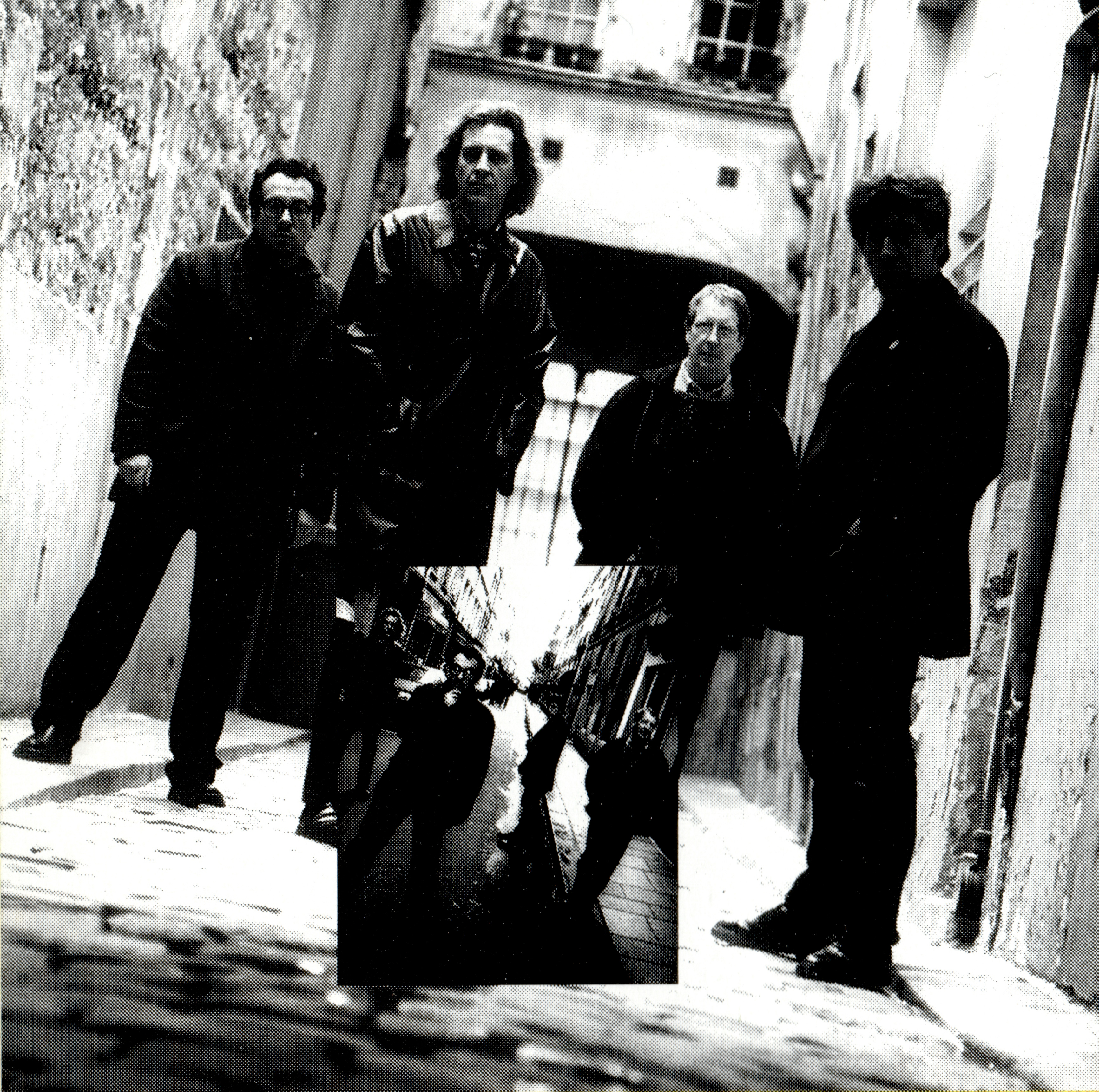
Costello has remarked that he feels “the elegant and restrained band performance of ‘Poor Fractured Atlas’ is one of the very best Attractions recordings.” This struck me. The band that detonated “Lipstick Vogue,” “Big Tears,” “Goon Squad,” “Clubland,” “Beyond Belief,” and the rest? The fiery band that lit up stages around the globe? I partially wonder if this might be revisionist thinking on Costello’s part, or a conciliatory gesture given the rancorous climate in the studio during recording and the band’s subsequent implosion during the supporting world tour. But that doesn’t feel very generous of me; I’d rather take Costello at his word. The ensemble playing is superb, light as a feather, yet controlled, Pete Thomas and Bruce Thomas playing so softly as to be barely there. Yet if they’d leaned in, if Pete Thomas had played even a bit more aggressively or if Bruce Thomas had contributed his meandering, “commentary” style on bass, the song might’ve suffered, been bludgeoned. The real standout is the august Nieve, whose playing is characteristically tasteful, stately, and appropriate to the level of indifferent sympathy that the song shows the man. In the end, everyone showed up to say their respects to poor fractured Atlas.
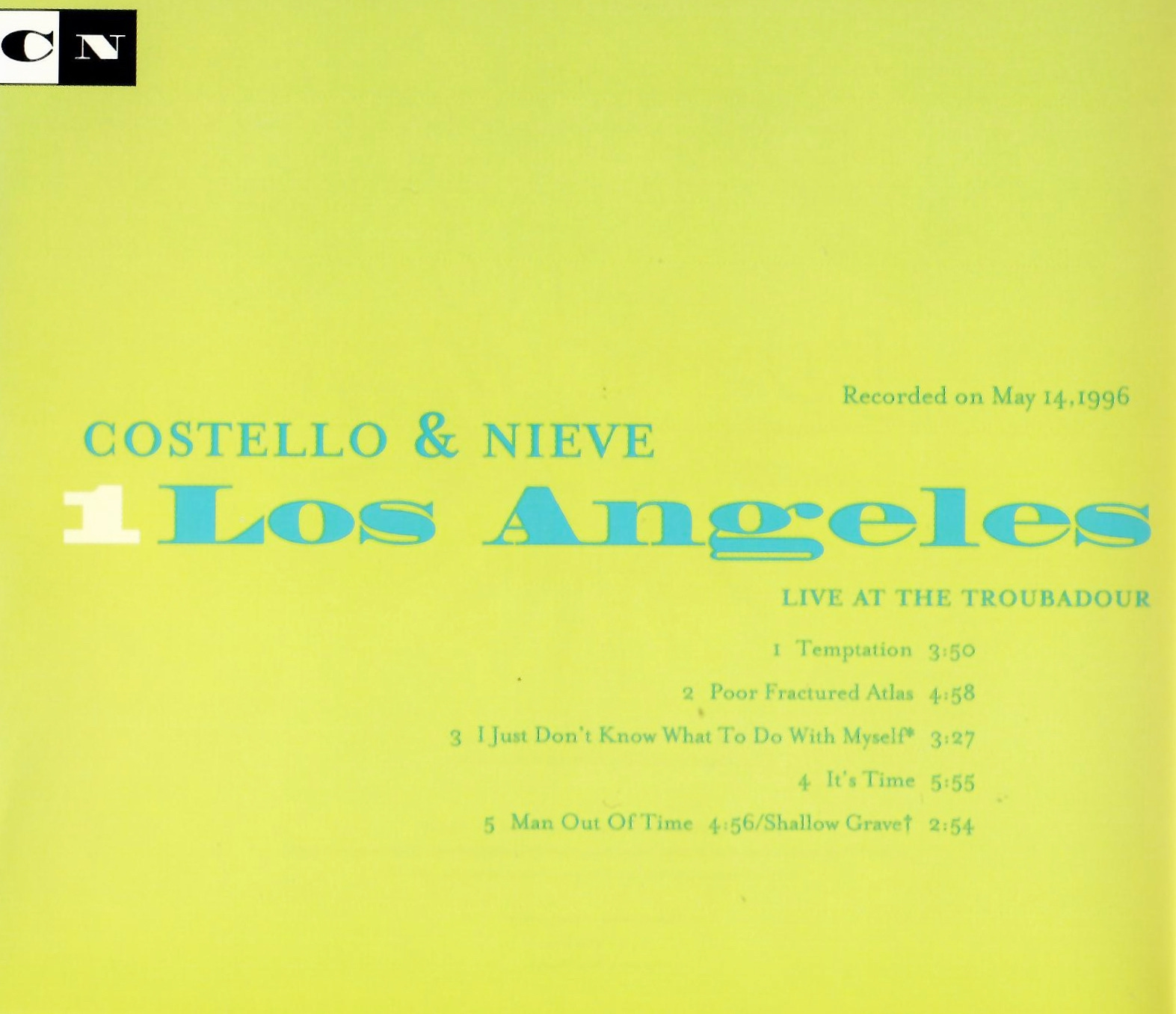
On the day that All This Useless Beauty was released—May 14, 1996—Costello and Nieve were onstage at the Troubadour in Los Angeles on the first date of a five-city tour. (These shows were released as Costello & Nieve, a limited edition five-disc boxset later in the year.) There they performed “Poor Fractured Atlas,” Costello strumming his guitar at the ends of the chorus, Nieve’s piano playing assuming center stage, as it were. During an extended opening, following a (now dated!) Boyz II Men joke, Costello remarked with an audible wink that he believed that he’d lifted the piano passage from the opening of the Shangri-Las’ classic teen melodrama “Past, Present & Future,” which also, as it happened, five-fingered Beethoven.
It’s a good bit, and goes a long way toward softening the blows landed upon our anti hero. Perhaps because Costello’s onstage telling jokes, and because, since the late-‘80s or so it’s been difficult to edit out the “Spinning Wheel of Songs” emcee persona that he’s often adopted, his vocal at the Troubadour approaches a lighter tone relative to what he recorded with the Attractions. Nieve’s playing, too, feels more jocular in places. It’s a terrific performance, though I don’t know that it approaches the high drama of “Accidents Will Happen” at Hollywood High School from two decades earlier—that’s a tall order, anyway, and then I’m not sure our self-absorbed subject here would even notice, or care.
You might also like:
Here comes Mr. Misery

Blood & Chocolate is a difficult album to listen to, let alone love. Released in the same calendar year as Elvis Costello’s breakthrough King of America, it features stormy songs swiftly banged together on Costello’s self-described “clanky” 1930’s Gibson Century acoustic guitar, tunes that were uncomfortable, irksome, and in a spiteful mood. Costello ha…
Please be upstanding

For more than thirty years, Andy Partridge wrote off-kilter pop songs about ordinary folk floored by the beauty and strangeness of the universe, witty and angular tunes that moved between sweetness and nerve. They were salvos against suaveness, worldliness, and pretension, rock and roll for ironists who curated alternative Top 100 charts.
Life is timeless, days are long

The Jam released their eighth single, “When You’re Young,” in August of 1979. Written and recorded a couple of months after Paul Weller turned twenty-one, the blistering song offered a complaint, if you could catch up to it, that the massive energy with which the young are dosed wears off far too soon, colorful wildness tamed into gray dreariness.
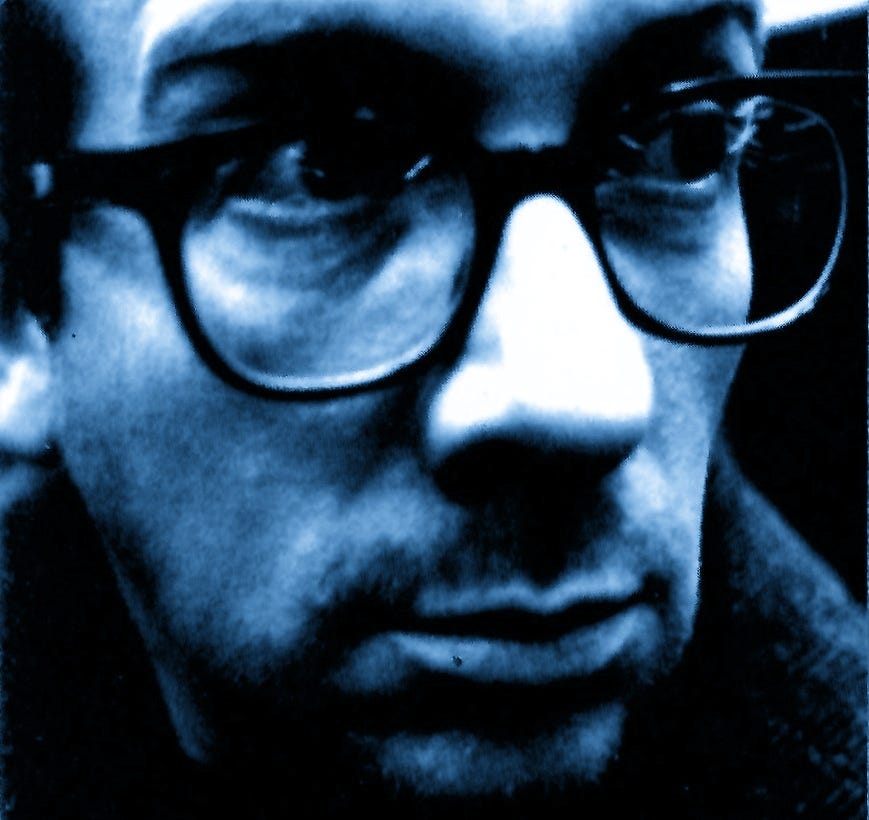
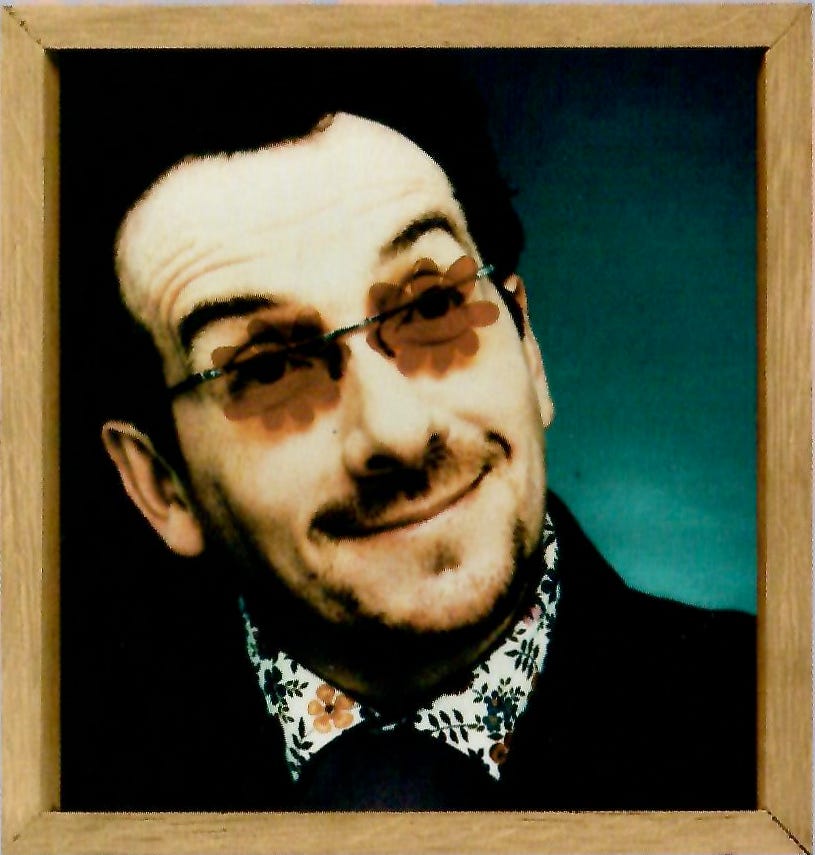
Images from booklet to All This Useless Beauty (Rhino, 2001); first and third image filtered
Cudos to you, Joe. You are writing the kind of insightful musical essay that I hoped would be found all around Substack, but alas, is unfortunately rare.