
It's 1979, okay?
Revisiting a couple end-of-decade statements of purpose—and a Twenty-first century one

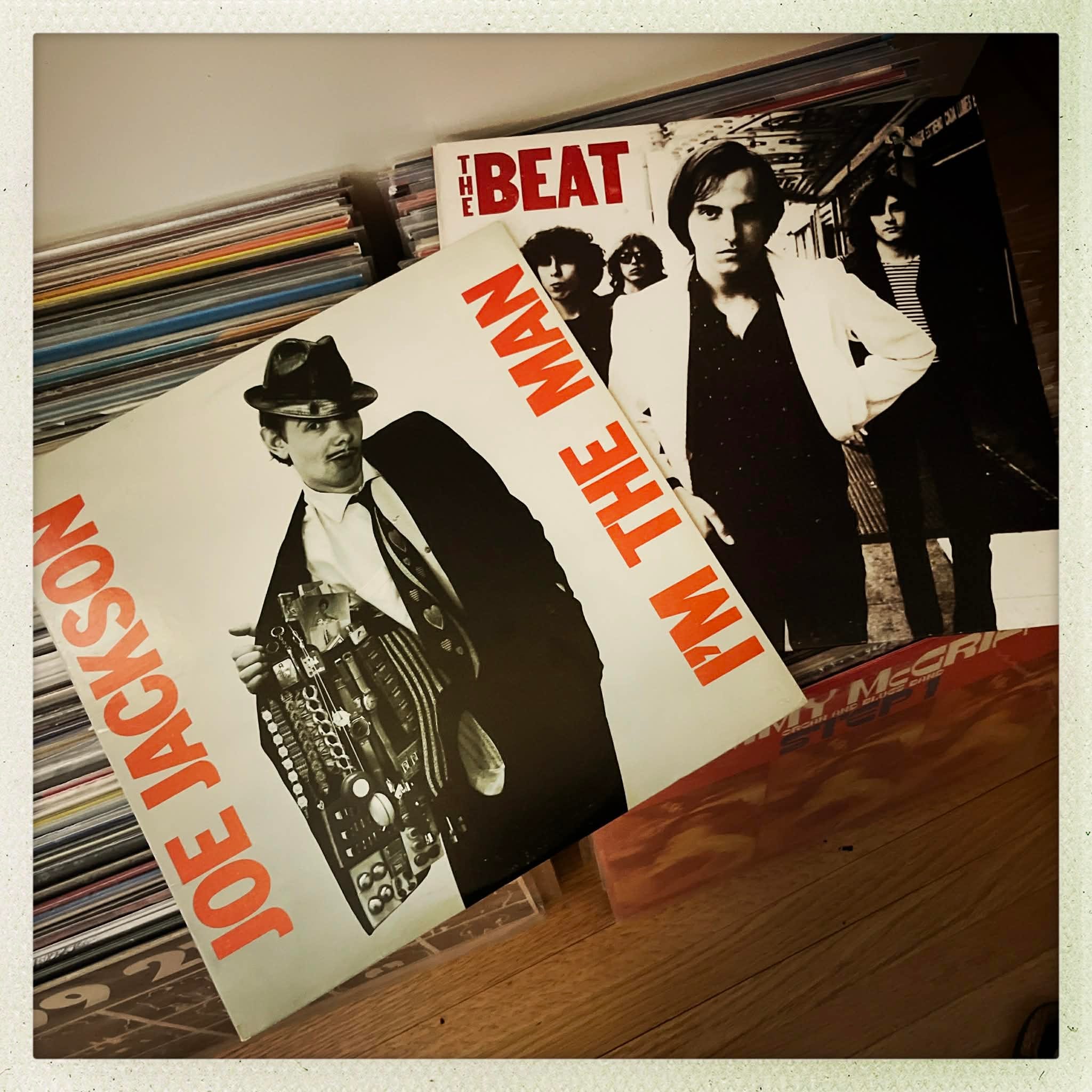
“OK, let me tell you about some of the things I’m going through,” Joe Jackson sings at the start of “Don’t Wanna Be Like That,” from his 1979 album I’m The Man, offering less an invitation than a demand. It helped me that I was saying those same words to myself on a daily basis. The brave guitar/bass/drums intro does its best to stabilize things, but fifteen seconds in the song feels as if it’s headed down a steep hill. The excitable, noisy blend of Gary Sanford’s guitar, Dave Houghton’s drums, and Graham Maby’s bass scores Jackson’s frustrations and anger, building the humming foundation that he threatens to abandon before the song’s even over.
“To me, if you can find a way to talk about it that’s not specific, that’s the best kind of music,” songwriter Greg Cartwright observed in Aquarium Drunkard a few years back. “Because then the listener can project themselves into that framework, and it’s a much more cathartic experience to think about how the song reflects what you’re going through.” “Don’t Wanna Be Like That,” for me, is the sound being in my mid teens. (You have yours.) Jackson’s lyrics articulated just about everything my friends and I felt but couldn’t name, what we knew as a racing pulse, a knotted stomach, and a speeding brain but what we couldn’t yet hang labels on to. Jackson had a knack for nailing the stuff that I, and the kid next door, cared about.
I attended Our Lady of Good Counsel, a Catholic, all-boys high school (it went co-ed a few years after I graduated); the girls spoke a foreign language across town at the all-girls Holy Cross school. When I listened to the gentle “It’s Different For Girls,” Jackson translated some things for me, and he seemed like a generous grownup in doing so. (Jackson has a dozen years on me, a chasm that seemed continent-sized when I was a teenager, it’s the width of, say, a small county now, and narrowing rapidly.) The spirited “On the Radio” described the kind of mind-blowing set lists I was hearing daily on WHFS, the phenomenal progressive radio station that stood five or so miles from my house (’HFS was, at that time, located on Cordell Avenue, in Bethesda, Maryland, “Beneath the Twin Towers at Radio Park”). The righteous title track skewered consumerist culture in time with my own growing sense of irony (and sniffing superiority), and it rocked like hell: the last line in the chorus may be my favorite hook in any song released in 1979, which is saying something. It is this week, anyway.
Jackson’s litany of complaints in “Don’t Wanna Be Like That” was part social criticism, part personal: mean girls, drug abuse, phonies, the shallowness of pop culture that I both abhorred and felt pressured by to consume and fit inside of. “Well, maybe it’s time for getting out of line,” he sings, and, man, did that cool, casually tossed-off sentiment feel as graphically urgent as anything in my life during high school, when my friend Marty and I discovered this album, a couple of years after it was issued.
The rousing chorus—“Take me away, I said, take me away, I don’t wanna be like that”—is as thrilling and moving now to hear as it was when I was a teenager. Though my demands are considerably less urgent now, the urgent expression of them is still palpable, as was the adventure I felt when cranking this song in my bedroom or in the car. There were so many people I didn’t want to be like, so many gestures that I didn’t want to make, that the horizon Jackson’s words drew was nearly limitless to me, exhilaratingly so. Intimidating, too, as there was always the fear that I wouldn’t have the guts to “get out,” the way the singer does (or wants to, anyway.) At seventeen, eighteen, I didn’t feel the need to get out town, out of my family’s home (yet), or out of school, but I sure as hell wanted to bolt from the worst aspects of myself, enacting helplessly what Cartwright means about projection.
The gripping, eight-bar bridge, heralded by Sanford’s acute guitar line that sounds like nothing less than a air-raid siren,
Some people get crazy
Some people get lazy
Some people get hazy
Some people get out
pays off with discovery that’s intensified in the breakdown near the song’s end as Jackson howls and Sanford’s siren cuts through the fraught air. As my heart pounded, I did the math in the back of my head: craziness, laziness, and haziness weren’t the beautifully decadent options that they appeared to be. Get out, instead, and find your true self in the things you’re going through. Alas, epiphanies, even loud ones, need re-learning the next day.
There are really two stories here: Jackson’s desperation and his band’s playing. On some days, I feel that Jackson’s arguments would’ve come through loud and clear even if the song had been an instrumental, so expressive and coiled is the group’s performance, moving from excitement to nerviness to release to tension and back again. Here’s the white-hot band tearing through the song on March 14, 1980 in Cologne, Germany, broadcast on the Rockpalast television show:
The Beat’s “Don’t Wait Up For Me” from their 1979 self-titled debut begins with the singer’s heart already racing, the band’s stops and half-time passages doing their best to calm things down. But he’s gone, and soon he’ll disappear. “I tried to save,” he says to her over his shoulder, “but you would never listen anyway.” An honest or a defensive pose? The difference is obliterated by the band’s assault—see above—as the song’s more interested in racing to the horizon than in bothering to understand why the urge to do so is so strong. “You got to make it on your own, anyway,” he says, in a final parting shot, giving himself all the excuse he needs to get far, far away.
So: turn off the porch light. The problem to be be faced (maybe) after the eighth notes settle to quarter notes when the sun rises, is that on the road “there’s no place like home” for him. That old problem, to be temporarily celebrated if not erased with three minutes of blissful rock and roll. Before the issue returns. The song’s rousing bridge, and Larry Whitman’s galloping guitar solo, Michael Ruiz’s assertive cymbal crashes, bassist Steven Huff’s firm grasp on the whole shaking thing, and the overall amped-up energy, are characteristic of this terrific album’s sound and spirit, producer Bruce Botnick and engineer Rik Pekkonen getting it all down on tape without sacrificing an ounce of energy.
Early in his 2020 memoir I Don’t Fit In: My Wild Ride through the Punk & Power Pop Trenches with The Nerves and The Beat, Paul Collins regards his parents’ early, happy love affair, and reflects, “I wish I could say I’ve known that kind of love, but I haven’t—at least not yet,” adding, “I’ve been insanely in love, but it’s always been with the wrong girl, for the wrong reasons, or both.” A bit later, describing an early ambivalent sexual experience, he acknowledges something a little bit darker:
This paradox of wanting something so bad, getting it, and becoming repulsed has stumped me for a long time. I know it’s some kind of character defect. I do not know why or where it comes from.
Forthright stuff, an admission that colors not only “Don’t Wait For Me” but many of Collins’s rousing yet vexed love songs. Such later-in-life admissions do a lot to forgive the adolescent, On The Road sentimentalizing in songs such as“Don’t Wait Up For Me,” songs that I still love. I also love the added dimension that comes from a maturing songwriter, sighing decades later in the face of the human condition. Collins is still out there, on the road, and I think that he always will be.
The urge to roam resurfaces in Cincinnati, Ohio’s Tweens’ “Don’t Wait Up” from their 2014 self-titled debut, a track that rides a melancholy, mid-paced groove into the dark night and its city lights. What’s in a tempo? Both the Beat and Tweens’ songs head out the door with similar intentions, but at different speeds.
In “Don’t Wait Up,” guitarist/singer Bridget Battle’s vocal, yearning yet defiant, pushes against a Velvets-like arrangement until the track nearly bursts. Like the singer in the Beat’s song, she, too, is poised at the threshold, and is also young, and the road calls to her no less alluringly than it calls to him. But she’s addressing her mama, not a soon-to-be ex; if the stakes aren’t necessarily higher here, they sure are different. “It’s getting so late, and your coffee’s dirty, so can’t we just leave the porch light on?” she asks her. Are they fighting? Are they at the end of something? The bright daytime “is never the right time” for the singer, the dark night outside her home is calling her, and she want’s to know what it feels like to be alive “wired under the city lights.” It would all feel Springsteenian if the beat wasn’t so...ruminative. (The demo’s even slower.)
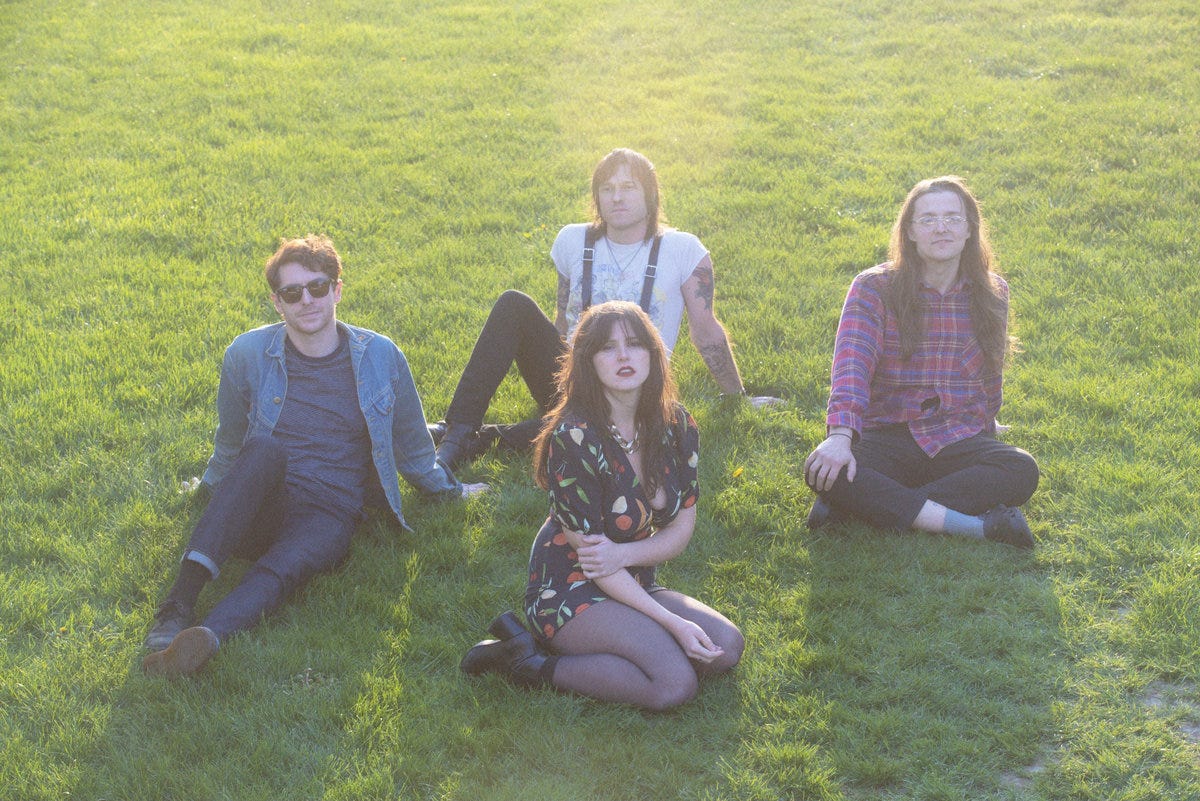
I love the song’s shuffling among minimal chords, tugging the singer between home and what’s out there, Peyton Copes’s gently smiling bass lines suggesting the friends she might find when she gets there. She doesn’t want her mama to wait up for her, because the last thing she needs is to be distracted by duty and petty responsibilities, diverting her from her quest to feel alive, away from the suffocating kitchen, alone and independent. Both Colins and Battle, each defiant yet at different temperatures, exist in the eternal present tense of lighting out—we’re not given the morning- or week-after sequel. I bet each of those songs would sound quite different then. Come to think of it, maybe the fantastic opening cut on Tweens’ album does give a hint as to the singer’s fate after she gets to where she’s going. This town is eating me alive....
In the summer of 2020, stuck in place in COVID lockdown, Battle surfaced on Bandcamp with a cover version of Bob Seger’s “Still The Same,” a choice I thought surprising as the song began, fearing an overly-ironic take. But Tweens’ version was subtle, haunted, and utterly right for those times, and for these, a million years later.
With 1979 on my mind, here’s some footage of a handful of musicians, ranging from Paul McCartney, David Bowie, and John Lydon to Leif Garret, Meat Loaf, and Kate Bush, holding forth on “Punk Rock” in an episode of the U.K. show Countdown that aired in December of 1979. Good, of-the-era stuff, equal parts earnest and reactive, inspired and defensive.
I’m partial to what Steve Harley, late of the glam band Cockney Rebel, has to say on the issue. Squarely facing a trend and movement, he reacts honestly and wisely, reminding us what it was all about. “I like the principal behind it all,” he said. “I never really pretended to understand what was going on. I can’t pretend that I understand. I’m 28. I can’t pretend that I understand 18-year olds. Writing songs about being on the dole, and living in high-rise council blocks of flats, and being underprivileged and deprived. I can’t pretend to understand that because it’s not part of my lifestyle, so I won’t lie and say, ‘Oh, I’m hip to that!’ Because I’m not. I’m from another world.”
He added, “Well, what the Pistols did, and their ilk, was important in that they made it very obvious that anyone can do it.”
You might also dig:
Are you sure that you're living free?

“People look at me like I am a hooker / But I just wanna be a venue booker.”
Tell it how you like

We’re a dozen or so years away from the release of ¡Uno!, Dos!, and Tré!, Green Day’s impulsive trio of albums that managed to rope in thirty galloping songs. Band members Billie Joe Armstrong, Mike Dirnt, and Tré Cool raved about the albums during promotion, as you do, but consider it cooly these days. Sadly, the era is best remembered for
All the notes seem to ring in my ear

A burst of light can be so powerful that its after glare can momentarily obscure anything nearby. Such was the fate of the Records’ second album, Crashes, released in 1980. The band’s debut, 1979’s Shades in Bed, was a glorious blend of power pop, high harmonies, enduring melodies, durable hooks, and witty lyrics, typified in such killer tracks as “Star…
Photo of Tweens via Bandcamp (photographer uncredited)
Did anyone have a better 1979 than Joe Jackson? I'm The Man was a great album — and like you, I have always been especially partial to "Don't Wanna Be Like That" and the title track — but I'd argue Look Sharp! was even better. And indeed, much of the enduring nature of both is due to that incredible band; Graham Maby was/is my favorite bassist of the New Wave era, even more so than Bruce Thomas, Bruce Foxton or Peter Hook...
Great writing as always. What I find interesting about your love for "Don't Wanna Be Like That" is that it's transatlantic. Joe was not singing from your perspective as an American youth but you could identify with it all the same. That's quite rare. Our British love of the Ramones was not the same, nor our love of more artsy rock. We needed the Clash, Buzzcocks, X-Ray Spex, Jam, Penetration etc. to speak to our own insecurities. And to connect to that and 1979, "When You're Young" was the one that did it for me. Did it make sense to Americans in a similar way? Answers on a postcard please...