
He kicked 'em out
Some thoughts on two songs that Pete Townshend left off of the sprawling Quadrophenia

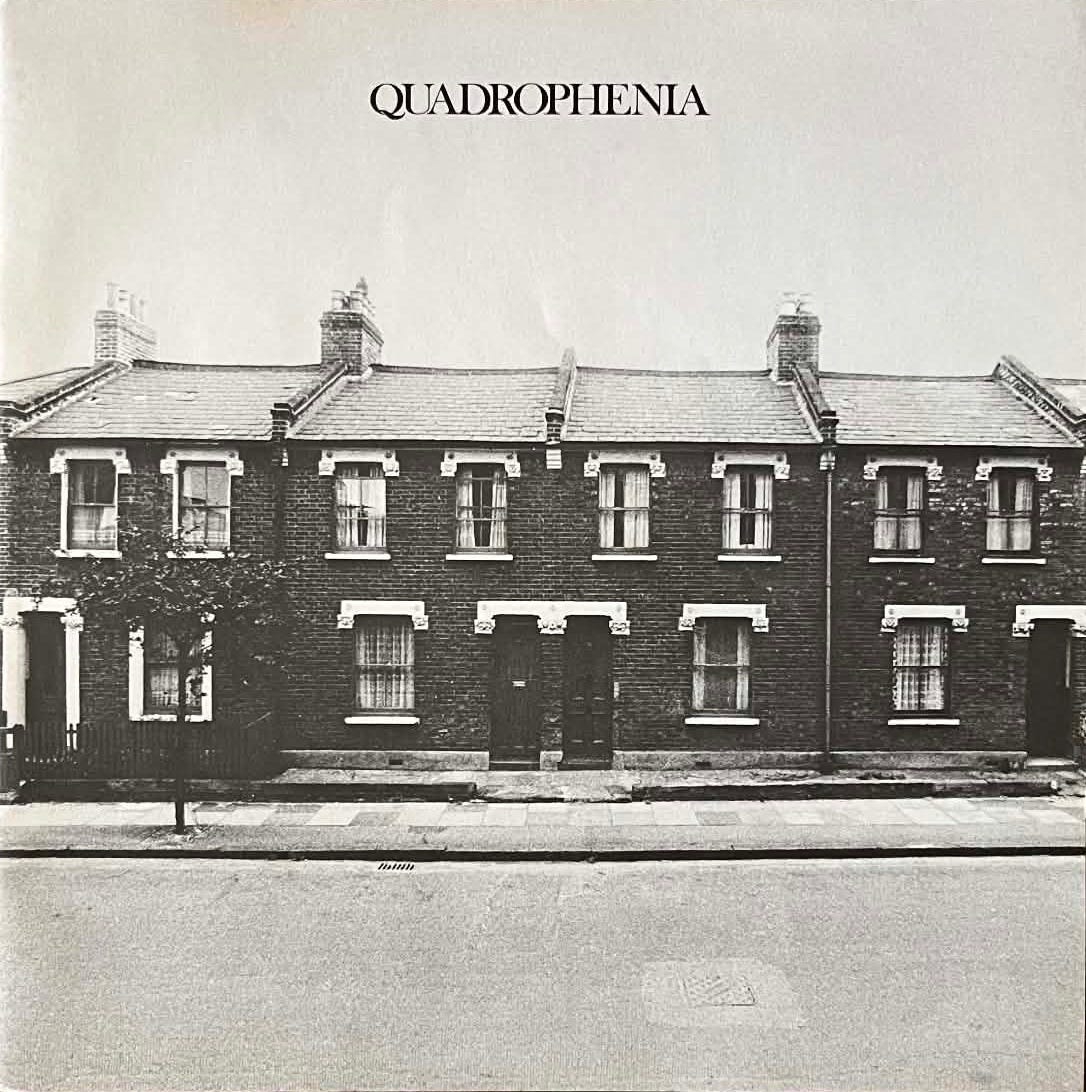
“Humanity’s legacy of stories and storytelling is the most precious we have. All wisdom is in our stories and songs. A story is how we construct our experiences. At the very simplest, it can be: ‘He/she was born, lived, died.’ Probably that is the template of our stories—a beginning, middle, and end. This structure is in our minds.” So remarked Doris Lessing, who knew a thing or two about constructing experiences. As does Pete Townshend.
The Who’s Quadrophenia, released in 1973, is never too far from my mind. (I wrote a long piece about the album in 2019 which is included in my newest book, Play This Book Loud: Noisy Essays, and last year wrote about Townshend’s 1985 album White City, which he’d envisioned as a sequel of sorts to Jimmy’s story in Quadrophenia.) In 2011, Townshend released a massive Quadrophenia “Director’s Cut” box set for which he wrote a lengthy essay and in which he included a clutch of demos. The story of Jimmy that was published on the original album sleeve was expansive enough to allow room for songs that told stories from different angles about different facets of growing up, and Townshend produced a veritable boatload of demos, from moody piano “filler” passages and electronic instrumentals to fleshed-out songs. “Demo recordings often feel and sound like back-of-the-book footnotes or discarded film on the editing room floor,” I wrote here a few years back. “Many fans like demos, as the recordings allow a glimpse into an intimate process begun as a private experience, some ‘I’m in the room with ‘em!’ action. They can range from slivers of song to fully-realized constructions.” Studio wiz Tom Scholz was once heard to remark,” “Fun is when you’re writing a song and you’re trying a rough shot at a demo and... it works. That’s when it’s fun. After that, it’s work.”
Townshend sure liked to work. The demos he created for, and the recordings he ended up cutting from, Quadrophenia were characteristically ambitious. Several full-fledged songs failed to make the cut—for reasons ranging from the shifting narrative scope and feel of Jimmy’s story to time itself: a double album, the format in which Quadrophenia was released, can only contain so many songs; a tour booked for the end of the year required that Townshend and the Who finish the album at deadline. A handful of tracks would appear before the 2011 Quadrophenia box set was released, notably “Four Faces,” “Joker James,” and “Get Out And Stay Out” on the soundtrack to the Quadrophenia film in 1979, “Unused Piano: ‘Quadrophenia’” and “You Came Back” on Townshend’s rarities compilation Scoop in 1983, and “We Close Tonight” on the expanded reissue of the Who’s Odds and Sods released in 1998.
In the box set, Townshend wrote that the songs “that never made it onto the final album were each written in an attempt to bring light and shade, or breathing space, or some gentle humour, affection, character colour or even operatic scope to the few harder-driving songs I had gathered at the time.” To my ears, the ill-fated songs are a mixed lot. “Joker James” is a middling character sketch of a young, mischievous Jimmy, alternately gently sung and hollered in McVicar mode by Roger Daltrey, while the repetitive “Get Out And Stay Out,” a story sliver of father-son dysfunction, overstays its welcome after a minute. But “You Came Back” is lovely, a laid back, lilting, prettily sung ode to youthful idealism and immortality with mighty pleasing changes, a tune where “we see that [Jimmy] has started to believe that he can see himself, and the girl who is the object of his fantasy, as souls who have been together before, in some Past life,” Townshend wrote.
Unheard until the 2011 box set, “Anymore” is a powerful ballad with Townshend at the piano offering voice to a severely dismayed and de-centered person who sounds a lot like Jimmy. Though the song borders on theatrical melodrama in moments, Townshend wonderfully embodies the spare, thoughtful lyrics, stepping aside to create a dramatic middle on his piano (and acoustic guitar) that you can hear the Who attacking had the song made it to the studio. “This was a song that I felt was vitally important,” Townshend admitted. He had banked on Quadrophenia’s “Is It In My Head” illustrating “how defeated and depressed Jimmy had become after his experience out in the real world trying to make a living doing menial labour after being chucked out of his family home,” but he didn’t feel that the song had gone far enough. “I planned to put Jimmy onto the really hard drugs that would see him offering everyone he came across a fight, and the psychedelics that would see him crash his cherished Vespa scooter and make him run off to the sea.” He added, “I may well have included [“Anymore”] on the album had there been vinyl space.”
One passage in “Anymore”—
In my dream
There’s a hero
Is he real anymore
—graphically evokes Jimmy’s disillusionment as the album nears its conclusion. I imagine “Anymore,” as a kind of emotional comedown, slotting in nicely after, say, “Bell Boy,” in which Jimmy faces the grim reality of his stylish idol Ace Face hero being reduced to menial, boot-licking work at a seaside hotel. (Is he real anymore? Is it me for a moment?)
Yet, Townshend was continually working, reshaping his songs as he reshaped Jimmy in his head, reducing Jimmy’s character to a kind of silhouette of adolescent rage and confusion, and something kept nagging at him about his early demos. In addition to shifting attitudes toward Jimmy and the stories Townshend wanted to tell about him, Townshend was a battling cultural forces and trends in the music industry. “Even by 1973, there were many of us serious songwriters in so-called ‘rock’ who aspired only to write the most perfect pop song, whether it was a big seller or not and whether it mattered or not,” he acknowledged. “Writing ‘important’ songs and making ‘inspiring’ or ‘thought provoking’ albums was something I and many of my peers thought about but there was always the caveat (a pervading inference in the rock press) that what was vital was not to be seen to be thinking too much or trying to be too arty.” He added tartly, and not a little resentfully, “Woe it was for anyone who took pop seriously.”
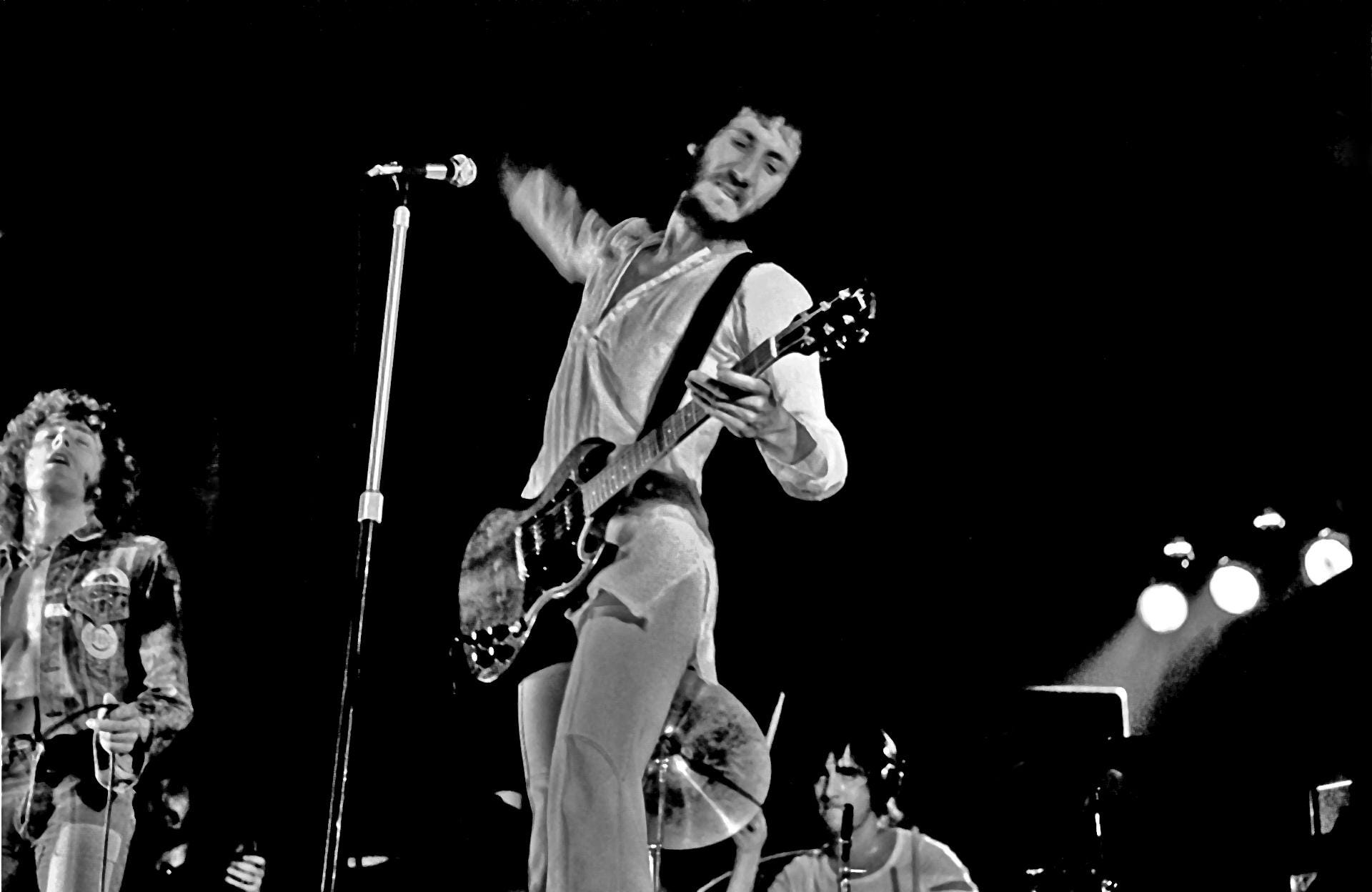
Yet such grandiosity was a burden that Townshend willingly took on, even pursued, with a blend of vigor, enthusiasm. pretentiousness, and misery; he’s been pulled toward that vortex of pop and art since he began writing songs for the Who, laboring into the 1970s under the self-imposed pressure to advocate for High Art and Big Ideas in rock and roll even as he lost himself in his laddish love for destruction, Marshall stacks, and off-color humor. Townshend claims that, among other factors, a self-imposed high-brow intolerance for “light songs” such as “Joker James” and “Four Faces”—each of which he wouldn’t allow himself to see as anything other than a “pop song from a bygone era, evocative of lyrically mischievous throwback songs”—torpedoed those songs’ chances for inclusion in Quadrophenia.
That’s a pity in the case of “Four Faces.” Townshend had conceived of the song as the album’s opener, one of “a number of lighthearted songs to represent Jimmy’s life before the psychiatric fall”—and therein lay the problem for the songwriter. “If I opened with ‘Four Faces’, the song I had written to describe Jimmy’s four-facetted psychological predicament, the tone it set would be almost throwaway pop,” he wrote. With “Four Faces,” Townshend was consciously “harping back” to his earlier, witty, character-sketch style of songwriting (“Pictures of Lily,” “Happy Jack,” “Little Billy,” “Dogs,” “Now I’m A Farmer,” and the rest). “When played alongside the predominantly dark and ironic songs that I collected on the final Quadrophenia album, it’s clear that ‘Four Faces’ would have stuck out awkwardly,” he acknowledged, adding, “In the end, it is just too lightweight to fit in elegantly. Instead, I decided the sea itself would set the scene and provide my ‘overture’.” Townshend dismissed this early version of Jimmy as “almost a pre-psychiatric,” too much “a jolly young man, not yet beset by the rages that would be sparked by drugs and family battles.”
In the event, the Who recorded “Four Faces,” but Townshend ultimately replaced it with the rousing epic “The Real Me.” That was the right call, yet to my ears “Four Faces” remains a delight, a whip-smart ode to teenage disaffection and identity crises. Made lively by sprightly keyboards, John Entwhistle’s fluid bass playing, and Keith Moon’s rolling drum fills, the arrangement bounces along in jaunty mid-period Who style, certainly, yet the imagery in the lyrics fully evokes the growing battle inside of Jimmy. “I got four heads inside my mind,” Townshend sings, in his patented half-grinning, half-unhinged style,
Four rooms I’d like to lie in
Four selves I want to find
And I don’t know which one is meI get four papers in the box each day
Four girls ringing that I want to date
I look in the mirror and see my face
But I don’t know which one is me
Sure sounds to me like the comic opera of teenagedom. And the lyrics are funny: “It’s little things that are hard / Like starting up the car and I’m still underneath”; “But with a four-way split, the pocket money’s hit / And all of me is broke”; “I have to think before I take a drink / I get hungover times sixteen.” The kid wakes up over here, and then he’s over here, and, of course:
There are four records I want to buy
Four highs I’d like to try
Every letter I get I send four replies
And I don’t know which one’s from me
Great stuff.
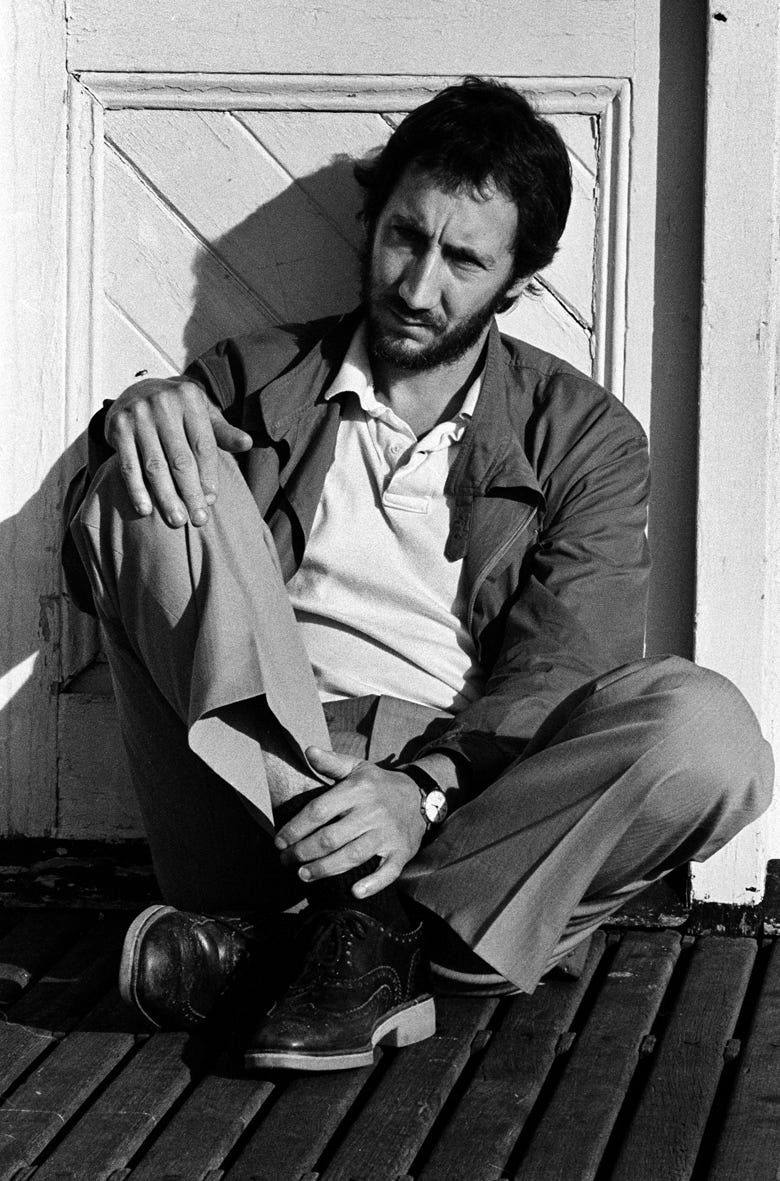
In Won’t Get Fooled Again: The Who from Lifehouse to Quadrophenia, Richie Unterberger describes “Four Faces” as an “innocuous piano-driven ditty...far below the standards of any of the songs included on the original LP.” I disagree with Unterberger on that second assertion, but he was correct in surmising that Townshend might’ve written “Four Faces” “out of pressure to come up with a song that finally spelled out Jimmy’s quadrophenic personality.” In the box set notes, Townshend writes that what “Four Faces” ultimately fell victim to was bad timing: it had simply arrived too soon in the writing process. When compared to later, more mature material, it must’ve felt a bit gauche.
I’m inclined to agree with Townshend that the drollness of “Four Faces” is at odds with the overall vibe of Quadrophenia, a grayly dour, fairly tortured record. But a darker shade does arrive in the very-Who-like bridge (“You think it’s funny, I can tell / Well, you don’t understand too well / I get so lonely and turned around”), and some days I wonder if the tune, though comparatively trifling, might’ve added some adolescent spirit to things, some “pre-psychiatric” innocence and humor. After all, teenagers move between gloom and light-heartedness in a flash, and aren’t exceptionally deep thinkers, even a brooder like Jimmy, who’s often more bewildered throughout the album than he is enlightened.
In the alternate reality in my head—where a vinyl double-album can squeeze in two more songs—I’ll sequence “Anymore” between “Bell Boy” and “Doctor Jimmy,” and “Four Faces” between “Is It In My Head” and “I’ve Had Enough,” cresting at the moment when Jimmy wrecks his scooter. Then he’s off to Brighton on the 5:15....
You might also dig:
My life's a mess

Five years years ago, Pete Townshend published a memoir, Who I Am, which I liked at the time but which hasn’t grown on me well. Though stuffed with some terrific details of 1960s rock star culture—including the best on-the-ground description of the Beatles I've read by a musical contemporary; it was their their
But I have to go back

By the mid 1980s, I had drifted away from Pete Townshend. The Who’s last album, 1982’s It’s Hard, had left me cold, and I’d found Townshend’s recent solo album All the Best Cowboys Have Chinese Eyes dull and impenetrable, and I’d rarely returned to it. Townshend released his next album,

Images taken from the front and back of the Quadrophenia (1973) booklet, except:
“The Who, Ernst-Merck-Halle Hamburg, August 1972” by Heinrich Klaffs via Creative Commons

“Pete Townshend-1979-Quadrophenia” by Il Fatto Quotidiano via Flickr