
This gravity felt different
Some thoughts on the unnerving and trippy songs that flying can inspire

In 2024 and 2025—an annus horribilis during which my parents died within nine months of each other—I flew fifteen times between Illinois and Maryland. From 1989 and 2011, for various reasons, I never boarded a plane. Yet feast or famine I’ve never quite gotten used to flying.
Or to taking and off and landing, anyway. Once airborne, I can usually vibe on the absurdity of being in a (relatively) comfortable sitting position while 30,000 to 40,000 feet in the air, indulging the surreal stillness of the cabin, where listening to music takes on a special air, as it were. (I’ve written about that experience here and here.) But taking off and landing remain unnerving experiences for me, the moments when the conflict between my rational and irrational selves is at it most intense. This is hardly news to any flyer who finds the sensation of being lifting by a force greater than themself odd and disquieting, and scary as hell. The business of becalming frightened passengers will, it seems, run forever parallel to the airline industry itself, the fear of flying as steadfast a part of the jet age’s DNA as elation above clouds. Many websites aim to soothe a nervous first-time flier by appealing to logic and the cold comfort of probability and statistics (a class I nearly flunked in high school, so good luck).
“When the plane makes the turn, you immediately notice the engines become increasingly fast,” observes one guru about the experience of taking off. “A peek through the window and you would realize you are moving at an astonishingly fast pace. During takeoff, there is this feeling you get if it is your first time, you may begin feeling a bit weightless. Not entirely weightless, but like my dad advised me, you would feel like at any point, you could float out of the seat. Then there’s a series of inexplicable feelings your body experiences. It is exhilarating.” Many a first time flier fails to find the sensation of floating out of their seat during takeoff especially exhilarating. One begins feeling the effect of gravity a bit less as the plane ascends, they assure. “I noticed that as we ascended my stomach became a bit rumbling. Turns out, although I was able to maintain my composure during takeoff, being my first time, my body had no idea what was happening. All it knew was that this gravity felt different.” Indeed.
“The century of airplanes has a right to its own music,” Claude Debussy remarked. The French composer died in 1918, yet he was intuitive and visionary enough to imagine a noisy, miraculous future. I’ll be floating out of my seat a couple more times this summer, and so I’ve got flying on the mind, the weirdness of it all and how it’s also inspired some great songs.
Among them is Matthew Sweet’s riff-driven “Flying,” from 2008’s Sunshine Lies, which zoomed across my radar systems recently. Backed by old friends Ric Menck on drums and guitarists Richard Lloyd and Ivan Julian swapping leads, Sweet, on guitar and bass, pilots this buzzing flight through clouds of turmoil. The song begins and ends with the impression of cylindrical white noise, foreboding stuff—Julian’s credited with “Sounds [Feedback]”—before a mean, ascending guitar riff, the track’s starring role, elevates things. Menck’s four-on-the-floor anchor prevents the unruly song from flying off entirely, yet the riff itself seems uncertain of the direction it should take, a perpetual motion machine of angst. Sweet sings “Flying” in a ‘60s garage-band snarl, surprised by the confusion of it all—
Baby, I’ve been flying
I don’t know what’s happening inside
I’m not even trying, I’m flying
I want to be, Christ, I don’t know
—content in his craze to let the song’s tail winds take over. The verses stabilize things a bit—“I get along / Fall apart through the night, then I get back right for the daytime / I’m never wrong / Once I clear my mind and I heed the signs all around me”—and yet the sunrise “just can’t wait to see me cry.” These are choppy winds to fly through, and Lloyd and Julian’s searing lines, whipping around that center funnel riff, maneuver through them ecstatically. “Flying” seems to be a song that’s about an unbidden discovery: the way that one feels can lift one into and through the clouds, but what if it’s an unwelcome revelation? When we don’t know what’s happening inside, do we want to fly even further away?
“Flying” reminds us how some songwriters use being airborne as a ricocheting metaphor for inward-driven journeys. The Attack—a truth-in-advertising band name if there ever was one—formed in London in 1966. A year and a couple of singles later, original guitarist David O’List left to join the Nice; singer Richard Shirman had seen ace session guitarist, London fill-in, and U.S. garage-rock-loving John Du Cann play out around town, and invited him to replace O’List. Du Cann accepted, bringing a heavy, distorted style to the Attack—in the event creating my kind of U.K. mod-psych! But impressively rotten luck in the industry and further band defections inevitably followed. By 1968, the Attack’s regiment consisted of Shirman and Du Cann, and Roger Deane on bass and Keith Hodge on drums.
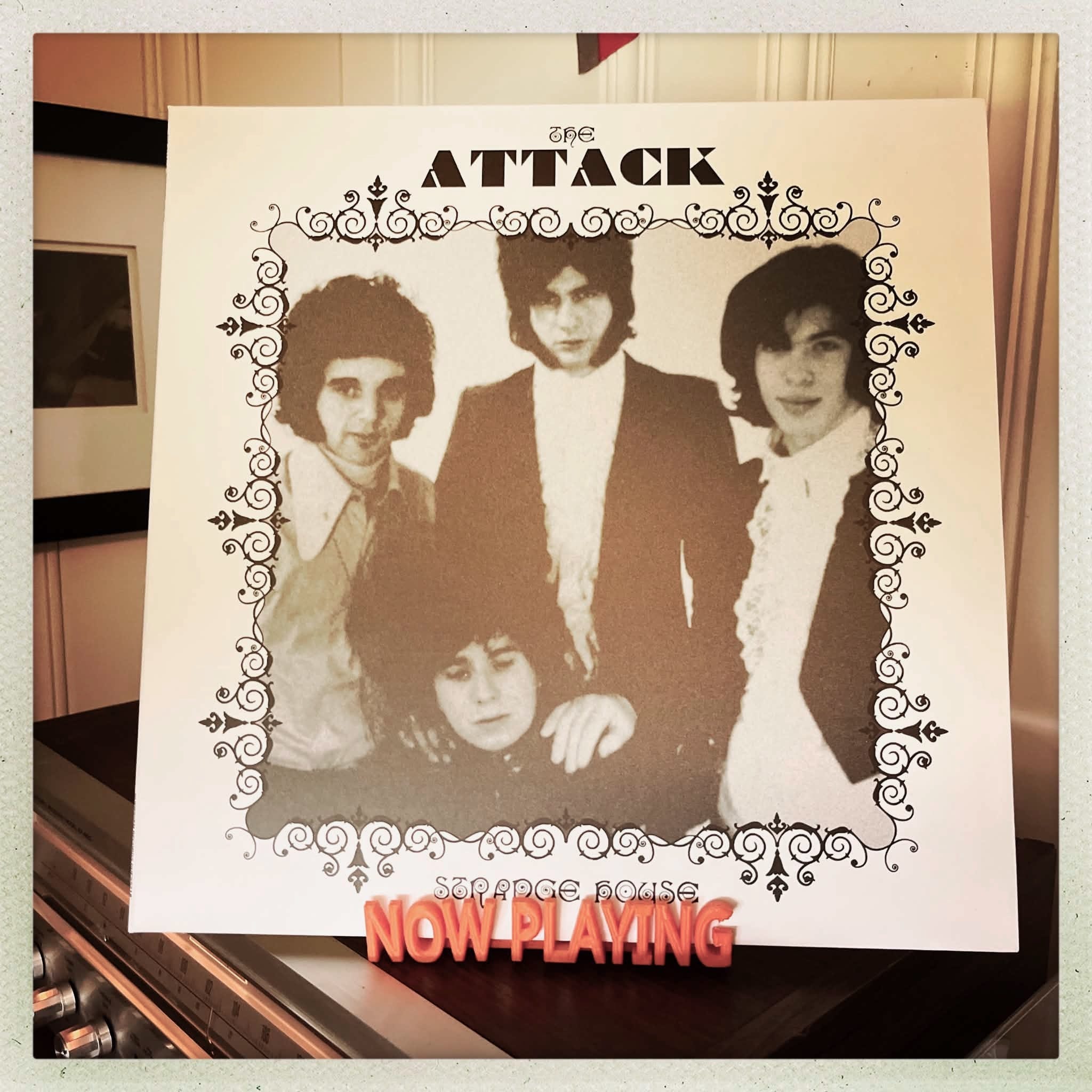
Deane and Hodge would help take the Attack “into their heaviest territory,” Jon “Mojo” Mills observes in his lively notes to Strange House, released in 2023 on the superb Guerssen reissue label, the band “steering clear of blues” while blending “the melodies of pop” with “hard-cutting guitars,” adding that Du Cann’s “vision of loud uncomplicated guitars—something he had always loved in American garage bands that The Attack had so much in common with—was finally emerging.” The Attack were garlanded with psychedelia, Mills argued, “but without any blues influence or whimsy.” Their’s was “an original sound that, both fitted and attacked the gentle ways of the flower children.” The band’s lyrics, “although it sounds clichéd, were about the magic in the air,” Du Cann remarked, “the freaky clothes, long hair, miniskirts and the clubs of the time, which really were magic.”
The Attack would release only four singles on Decca during their brief career. Depending on who you listen to, a full-length album titled Roman Gods Of War was earmarked for a March 1968 release, yet it never materialized. Shirman is quoted at Marmalade Skies: the Home of British Psychedelia recalling that “Roman Gods of War” was “a prospective title of a song that Keith Hodge was alleged to be writing and, if it was used as a working title may have some air of veracity about it. However, I wasn't aware that there were any definite plans to release an album so all talk of titles strikes me as being slightly superfluous!”
Strange House gathers studio recordings from this ‘68 period (the producer and engineers are, lamentably, uncredited). “Magic In The Air,” “Mr. Pinnodmy’s Dilemma,” and “Go Your Way” are urgent, propulsive tracks, darkly shaded and slightly menacing, recorded and mixed for that “wet,” in-your-face sound common to so many U.K. mod and freakbeat groups of the era. (Check out the essential Decca Original compilation series for a motherlode of great-sounding original recordings from the Decca and Deram archives.) Nods to the Who, Syd Barrett-era Pink Floyd, the Creation, and the Move abound, garlanded with Du Cann’s often peculiar or trippy lyrics which, he assures Mills, were “inspired by nothing stronger than a cuppa tea à la [the Troggs’] Reg Presley.” Pulling wide, the commercial indifference endured by the Attack and so many like bands of the era appears all too common. I’m grateful for the dogged folk at labels like Guerssen, committed to turning our ears on to such dynamic music decades down the line. (Before the Guerssen reissue, the Attack’s modest recorded output was reissued in the 1990s and 2000s via compilations on the Reflection, Acme, Get Back, and RPM Records/Bam-Caruso labels.)
Strange House’s title track and “Feel Like Flying” are two of my favorite “flying songs” of the late 1960s. The intense bass/guitar riff in the verses of “Feel Like Flying” was, De Cann claims, “inspired by the sound of a police siren,” and, like the Beatles’ unsettling “I Am the Walrus” from the previous year, the opening bars of which were also created by imitating a passing siren, a mood of anxious dread hangs over the song. The Attack attack their spooked nerves with massive energy, vibing off of the singer’s barely controlled mania:
Running along I feel like flying
Feel I can almost touch the sky
I’m almost there
I don’t know where
I just don’t careI feel like I’m going out of my mind
I’m leaving my troubles way behind…
Happily, Du Cann’s distorted, metallic solo will give the singer all the strength he’ll need to push through—gazing down from his psychic flight, all he has to do is hold on to the flying sparks. The bridge makes it clear that what the singer’s really anxious about is longed-for success (“‘You’ll never get there,’ they like to say / But I‘m gonna hit the top someday”), a subject which predates the Jet Age by about a thousand years. Yet the Attack’s plugged-in and amped-up urgency zooms low and close to the sonic landscape of the late ‘60s.
Meanwhile, “Strange House” charts an altogether different flight. Deane’s rumbling bass and Hodge’s reverb-emboldened drums create an enormous, alarming soundscape through which Du Cann’s biting guitar prowls and slices, teeth bared, and Shirman theatrically declaims upon a most bizarre experience. “I was riding in the sky,” he begins, “and I saw a strange looking land….” When the singer improbably touches down and alights (“I swaggered over there”) he enters the titular home and, inside and out, “Saw such things I'd never seen before.” These include: a table upside down with no legs; a cellar which was on the top floor; an attic which was on the floor before; a bench suspended in mid air with no legs; a mysterious garden. Inside, there were no chairs to be found, so the singer “sat on the edge of a sink…had tea in a book…and ate a piece of green wall.” (I’m guessing that Robyn Hitchcock was listening.)
“Was I just imagining / Or was this really happening to me?” the singers wonders aloud, hard to hear above the din that his band is making. He thinks that it could all be “a funny dream,” and yet “it seems so real / Open feeling in my mind / I’m in a trance, or I must be.” “Strange House” ends with a palpable chill, uncanny darkness made operatic by the Attack’s excitable playing and the colossal noise it kicks up. Having “flown” back to his home, the singer hopes
…that I become awake when I arrive
Hoping that this dream has died
If it don’t, I know that I will have no peace until I die
I know, I know: it’s quite easy to mock all of this in 2026, when earnest explorations of psychic journeys borne from benevolent, or dire, acid trips, time- and date-stamped “Woodstock Era,” can come across as naïve and unsophisticated. Especially if the lyrics are, as Du Cann suggests, performative. Yet to my ears, the progressive, proto-metal assault of “Strange House” hums with legitimate, dark urgency, still, Du Cann’s ear-splitting riffs, Deane and Hodge’s cantankerous rhythm section, the crabbed, obsessive arrangement giving weight and dimension to the singer’s strange, strange journey, literal or otherwise.
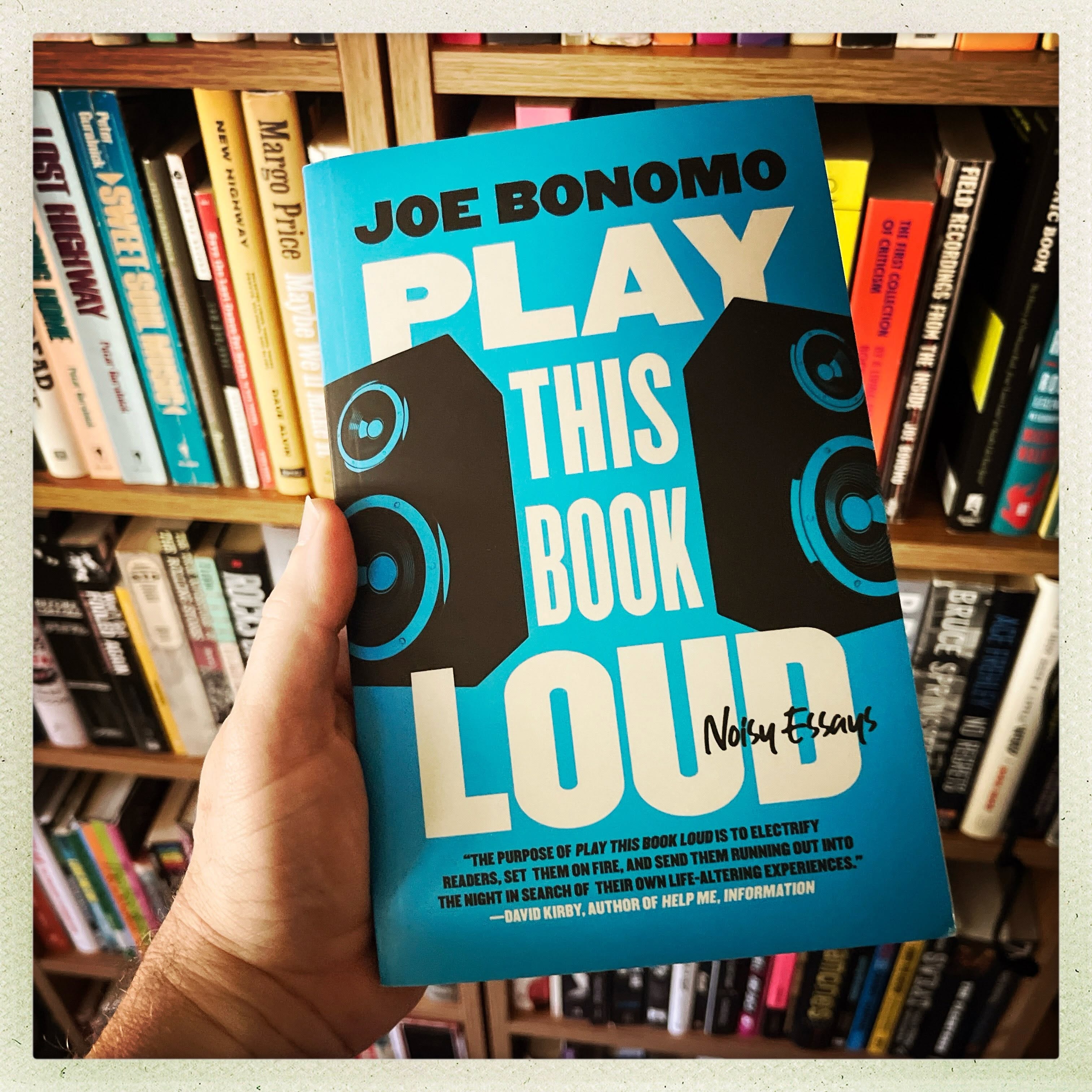
A bit of the ol’ shameless self promotion: if you’re interested in picking up a copy of my latest book Play This Book Loud: Noisy Essays, the University of Georgia Press is running a sale, 50% off all books through the end of July. Use code 08SALE250. No minimum, code valid to July 30, 2026. Cheers.
You might also dig:
Early contact high

I don't remember how this 45 ended up in the Bonomo family basement. I think it came with a promotional bundle of various singles that my folks, or perhaps an older sibling, bought at Korvettes—there were one or two other Buddah singles in that shrink-wrapped stack, too. Regardless of how the song ended up on the family stereo, I spun it endlessly. This…
Airplanes, flying, records, rotating

I have to step away from No Such Thing As Was for a bit. So here’s a post from the archive.
I have not touched the ground in I don't know how long

I recently watched R.E.M. By MTV, the music channel's new feature-length video documentary, and it sent me back to R.E.M.'s vast catalog, and back in time. My self-made R.E.M. iTunes playlist is 9-plus hours, and over the course of this past week I listened, chronologically, from 1982's
Here to spread the good word

Joel Gion was born in 1970, “the year that because of math killed ‘the 60s’.” So begins the first chapter in Gion’s knockabout memoir In The Jingle Jangle Jungle: Keeping Time with the Brian Jonestown Massacre.
The whole apparatus of commercial aviation is designed to convince you that terror is actually a consumer amenity, like the neck pillow they sell you for nine dollars in the terminal shop next to the overpriced paperbacks nobody will read, and I have never once believed it, not for a second, not even now when believing things has become such a low bar that entire nations clear it daily.
The Attack's singer sits on the edge of a sink because there's nowhere else left to sit. I understand him completely. Grief rearranges the furniture of your life without asking, moves the cellar to the top floor, and you spend the rest of your days pretending you always knew where the chairs were.
John Du Cann was such a great guitarist; it's a real shame that more folks don't know about/haven't heard him.